
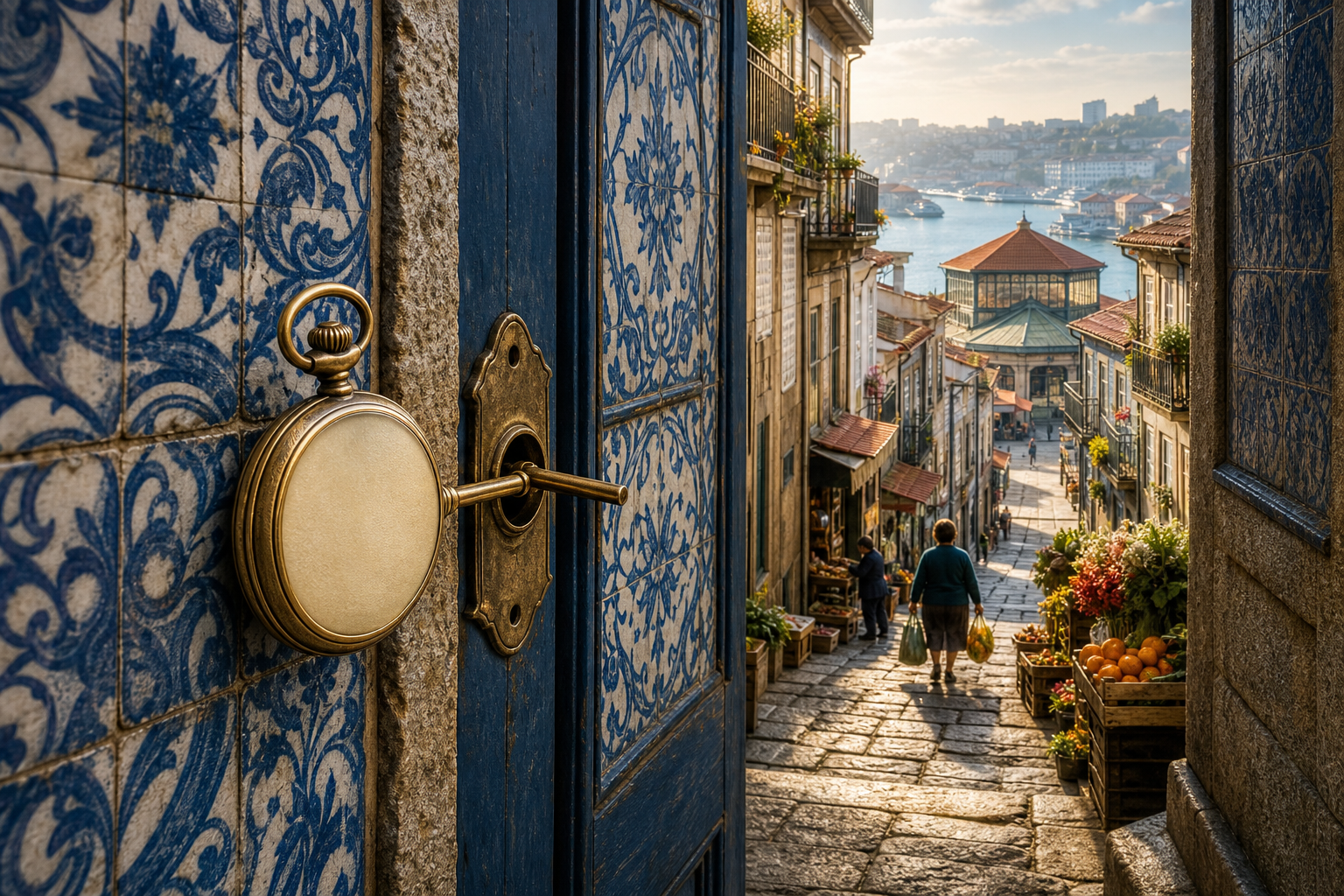
Most people allocate Porto two nights, spend both evenings in Vila Nova de Gaia tasting port at one of the big lodges, and leave thinking they’ve done it. They’ve done the postcard version of it. The actual city — the one that makes people come back — takes longer to find, and it doesn’t announce itself.
View larger map | Map data © OpenStreetMap contributors
Porto is small enough that you can walk almost everything, but hilly enough that you’ll underestimate every route by about 30 minutes. Factor that in before you build any kind of schedule.
The Port Wine Question, Settled Quickly
Yes, do a port tasting. No, you don’t need to do three of them. The big-name lodges in Gaia — Graham’s, Taylor’s, Ramos Pinto — are well-run, have English-language tours on the hour, and the views of the Douro from their terraces are legitimately good. Pick one, do the tour that includes the barrel aging rooms rather than just a quick pour, and spend the saved time on something the city does better than anywhere else.
The difference between a good port tasting and a mediocre one is almost entirely about whether you’re eating something alongside it. Go somewhere that pairs, not somewhere that just pours.
Ribeira Is Worth One Afternoon, Not Your Whole Trip
The UNESCO-listed riverside district is genuinely beautiful and genuinely crowded from about 10am onward in summer. The tiled facades and arched streets do look like the photographs. The restaurants directly on the waterfront are almost universally overpriced and mediocre — not a secret, just easy to ignore when you’re hungry and the view is right there.
Walk through Ribeira in the late morning before the tour groups arrive. Eat lunch somewhere on the slope above it instead, where the prices halve and the quality roughly doubles. The climb is annoying. It’s worth it.
What Actually Deserves More of Your Time
Livraria Lello — But Get the Timing Right
The neo-Gothic bookshop that gets credited (probably incorrectly, but persistently) with inspiring Hogwarts now charges entry — around €5, redeemable against a book purchase. That fee exists because it was being treated as a free tourist attraction and the actual bookshop was becoming non-functional. Go first thing when it opens, buy something if you want the entry cost back, and you’ll have twenty minutes in there before it fills completely. The staircase is the thing worth seeing; the rest is a well-curated but small shop.
The Bolhão Market, Properly Reopened
Bolhão spent years under renovation and reopened in late 2022. It’s a covered two-storey iron-and-granite market in the city center selling produce, fish, cheese, olives, cured meats, and flowers — and unlike a lot of renovated markets across Europe, it hasn’t been entirely converted into a food hall for tourists. Local vendors with long-standing pitches still operate alongside newer artisan stalls. Go on a Saturday morning. Buy a bag of local chestnuts or some decent presunto and walk north toward the Clérigos tower while you eat.
The Foz District
Foz do Douro is where the river meets the Atlantic, about 6km west of the city center. Most short-stay visitors never make it there. It’s a residential neighborhood with good seafood restaurants built for locals rather than tour groups, a long flat coastal promenade, and a lighthouse. Take tram line 1 if it’s running — it follows the river the entire way, which is the point. The seafood at Foz is noticeably better than what you’ll find in Ribeira, partly because the supply chain is shorter and partly because the clientele is more demanding.
São Bento Station for Five Minutes, Not Two
São Bento railway station has around 20,000 azulejo tiles covering its main hall, depicting scenes from Portuguese history. Everyone photographs it for thirty seconds and leaves. Spend five minutes actually reading the panels — there are QR codes now explaining the individual scenes, and the craftsmanship at close range is a different experience from the wide-angle shot everyone takes from the entrance. It’s a working station; your presence costs nothing.
Getting Around: The Trams Are Slow on Purpose
Porto’s historic tram lines (routes 1, 18, 22) are heritage trams, not efficient transit — they move slowly, get stuck in traffic, and cost more than a bus. Line 1 along the Douro is worth taking precisely because of that slowness. The Andante card covers the metro, buses, and some suburban trains; it’s the practical choice for anything more than one hop. The metro connects the airport to the city center in about 35 minutes and is straightforward to navigate.
The hills make ride-hailing more useful here than in flat cities. Taxis and apps work fine; there’s no scarcity problem the way there is in Lisbon during peak season.
When to Go
June through August is hot, crowded, and expensive. September holds reasonable weather — warm enough, crowds thinning noticeably after the first week. October is genuinely good: the Douro Valley wine harvest runs through early October, which gives you reason to add a day trip upriver to Pinhão or Régua on the Douro Line train if you want to see where the port wine actually comes from. The train from Porto Campanhã to Pinhão takes about two and a half hours each way and follows the river through terraced vineyards for most of it.
Winter is mild by northern European standards — rarely below 8°C — but genuinely rainy. Hotel prices drop significantly and Livraria Lello becomes navigable again.
How Many Days You Actually Need
Two nights is enough to see the main sights badly. Three nights is enough to see them well plus one of: a Douro Valley day trip, a proper afternoon at Foz, or a slower morning at Bolhão. Four nights is the point where Porto stops feeling like a checklist and starts feeling like somewhere you’ve actually been.
One genuine caveat: if you’re visiting for the Festa de São João in late June — street parties, grilled sardines, and locals hitting each other with plastic hammers (this is a real tradition) — book accommodation four to six months ahead. The city fills completely and rates spike hard. It’s the one time of year where Porto’s own event calendar overrides everything else in this post.
Add one night to whatever feels right. The best half-day you’ll have in Porto is always the one you didn’t schedule anything for.