
The Case for Going to Kutaisi Instead of Heading Straight to Tbilisi
View larger map | Map data © OpenStreetMap contributors
Kutaisi has its own international airport — Ryanair and Wizz Air both fly there directly from a handful of European cities — and most people who land there treat it as a transfer hub before catching a marshrutka east to Tbilisi. That’s a mistake, and not a minor one. Kutaisi is Georgia’s second-largest city, was the medieval capital of the Kingdom of Georgia at its peak, and sits inside a day’s reach of cave cities, canyon gorges, and a UNESCO-listed monastery that gets a fraction of the foot traffic of anything near Tbilisi.
Two nights is the minimum to make the detour worth it. Three is better if you want to add a day outside the city.
Gelati Monastery Is the Main Reason to Come
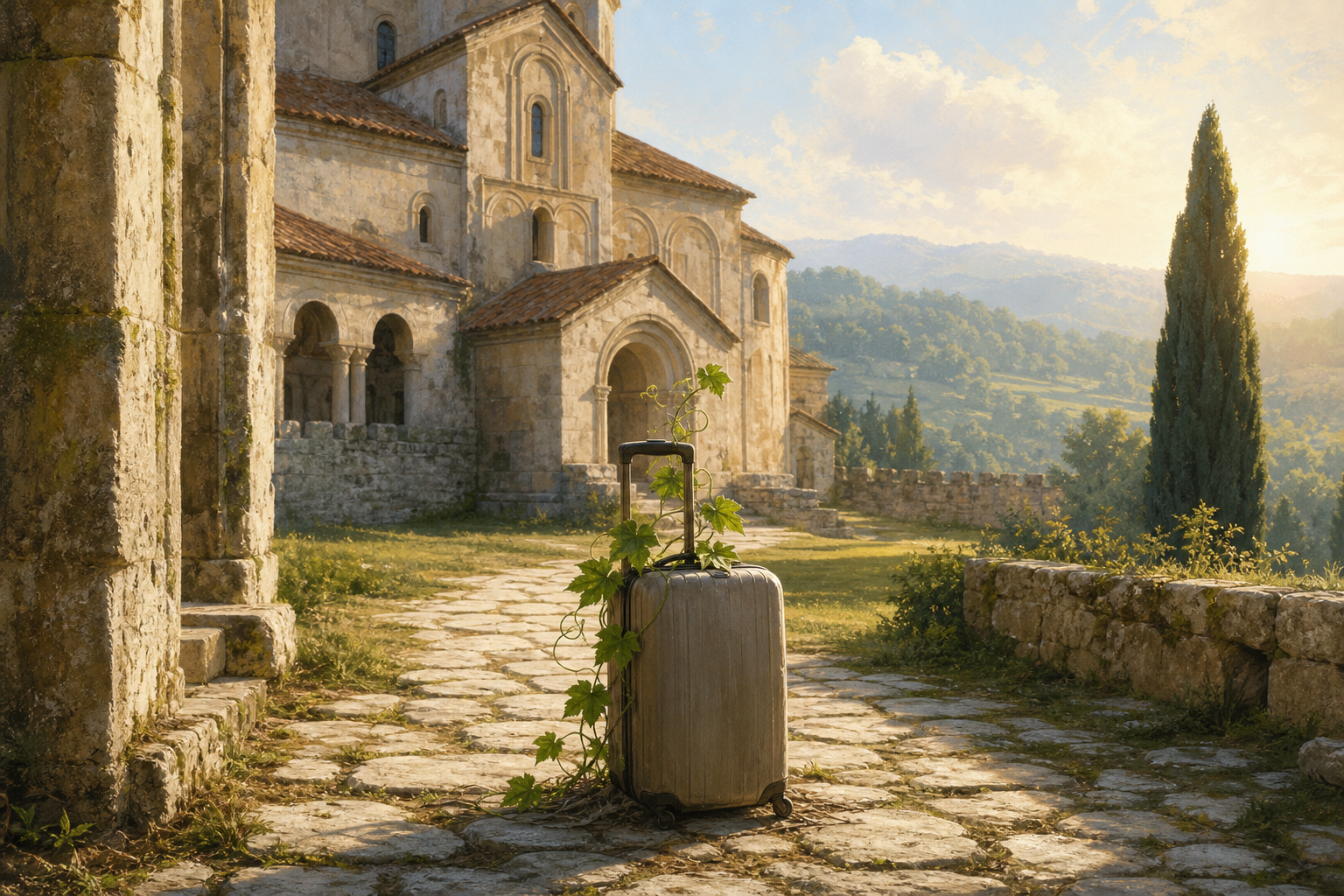
The Gelati Monastery complex, about 11 kilometers northeast of the city center, is the site that earns Kutaisi its historical weight. Built by King David the Builder in 1106, it was the intellectual and spiritual center of the Georgian kingdom for centuries — the king himself is buried at the main gate, specifically so that people would walk over him entering the church, which was apparently his actual request. The main cathedral contains 12th-century mosaics that are among the finest surviving examples of Byzantine-influenced art in the South Caucasus.
The UNESCO listing covers Gelati and the nearby Bagrati Cathedral together. Bagrati is currently mid-restoration and worth seeing for the scale of what’s being reconstructed, though it doesn’t have Gelati’s interior. If you have limited time, Gelati is the one.
Get there early — by 9am if possible. Tour groups from Tbilisi start arriving by late morning, and the monastery courtyard is small enough that a single busload changes the atmosphere completely. A taxi from the city center runs about 15–20 GEL each way. There’s technically a bus, but the schedule is inconsistent enough that it’s not worth gambling on.
Prometheus Cave Isn’t a Gimmick
About 20 kilometers west of Kutaisi, Prometheus Cave is one of the largest cave systems in the Caucasus — 1.4 kilometers of lit passages, stalactites, underground lakes, and a stretch you can exit by boat through an underground river section. It has an entrance fee, set opening hours, and a gift shop. It’s also genuinely spectacular in a way that’s hard to oversell.
The guided tour takes roughly an hour on foot. The boat exit costs extra but is worth adding — the underground river is the most visually unusual section, and rushing the final chambers to skip it is the wrong call. Book the boat segment when you buy your ticket at the entrance, not when you’re standing at the water’s edge trying to negotiate it after the fact.
One honest limitation: the cave stays around 14°C year-round regardless of outside temperature, and the paths are uneven. Wear actual shoes, not sandals. This sounds obvious until you see how many visitors show up underprepared.
Okatse Canyon Is a Better Half-Day Than Anything Near Kutaisi City
The Okatse Canyon, roughly 50 kilometers from Kutaisi toward Tskaltubo, has a suspended walkway cantilevered over a sheer canyon wall for about 780 meters. It’s not a white-knuckle experience for most people, but it is genuinely dramatic — the Okatse River runs through the gorge below, and the walkway puts you over open air at a height that makes the canyon’s scale readable in a way it simply isn’t from the rim.
If you have a car or driver for the day, combine this with the Kinchkha Waterfall, a 20-minute walk from the canyon trailhead. The two together are a solid four-to-five-hour excursion. Public transport to Okatse isn’t practical — hire a driver in Kutaisi for the day, which shouldn’t run more than 80–100 GEL for both sites and the return trip.
The City Itself: Lower Expectations, Genuine Character
Kutaisi’s city center is not a polished tourist district. The Colchi Fountain and the central market area around it are the main reference points for orientation, but the real draw is the pace of a mid-sized Georgian city that hasn’t been reshaped around visitor expectations the way parts of Tbilisi have.
The Green Bazaar (Mtsvane Bazari) is the actual local market — produce, churchkhela (the grape-and-walnut candied string, which is better here than anything shrink-wrapped in an airport), household goods, ambient noise that makes it feel entirely unstaged. Worth an hour in the morning before the day heats up.
Kutaisi has its own specific contribution to Georgian cuisine worth knowing about: the city is associated with Imeretian khachapuri, the flat, round, cheese-filled bread version rather than the boat-shaped Adjarian style more commonly photographed. The filling is milder, the bread is thinner, and it’s the version that actually predates the flashier regional variations. Any bakery producing them fresh in the morning is the right call over a sit-down restaurant version.
Getting There and Where to Stay
If you’re not flying directly into Kutaisi airport, the marshrutka from Tbilisi’s Didube station takes around four hours and costs under 15 GEL. The train exists but runs on a schedule that makes it hard to time around daylight hours for a short visit — the marshrutka is faster and more flexible.
Accommodation is limited compared to Tbilisi and Batumi, but the city is small enough that most guesthouses are within reasonable distance of the center. Family-run guesthouses are the norm at the lower price range and are generally reliable. Booking.com has reasonable coverage; don’t leave it late if you’re traveling June through August, when domestic Georgian tourism fills rooms faster than most visitors expect.
When to Go
May and September are the best months by some margin. Summer in the Kutaisi region is genuinely hot — low-to-mid 30s Celsius — and while the cave stays comfortable, the canyon walks and outdoor excursions are unpleasant in peak afternoon heat. Spring and early autumn give you tolerable temperatures and less competition for guesthouse space.
Winter is cold and wet, and the road to Okatse can be dicey in icy conditions. It’s not impossible, but it narrows your options considerably.
If your Georgia itinerary currently runs Tbilisi → Kazbegi → Tbilisi → Batumi, Kutaisi is the most practical addition that doesn’t require backtracking — it sits right on the westbound route to Batumi, about 90 minutes short of the coast. Two nights there and then onward costs almost no extra travel time. What it does cost you is the excuse that you saw the country.