
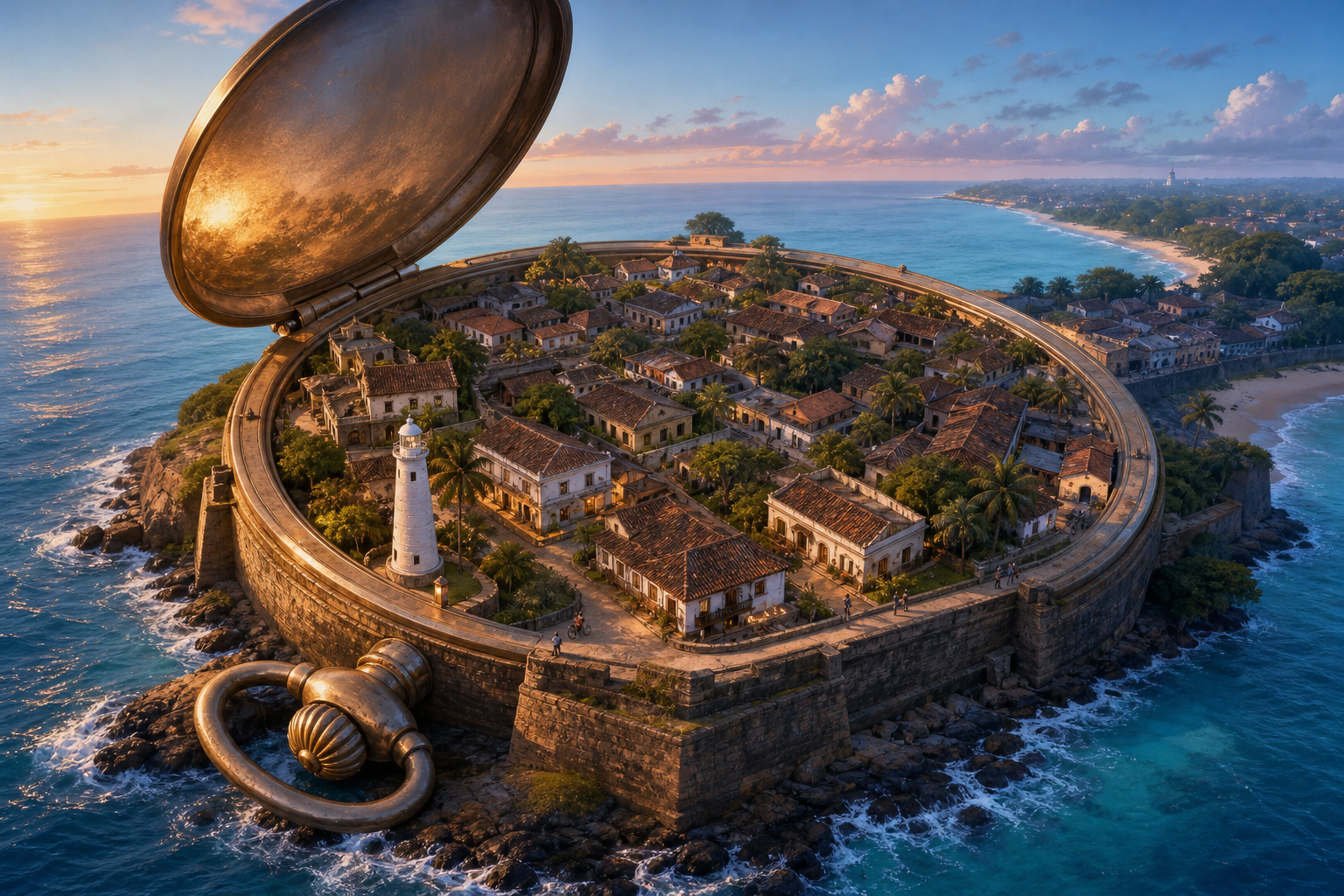
Galle Fort, Sri Lanka: The Walled City Worth Its Own Trip
View larger map | Map data © OpenStreetMap contributors
Colombo gets the flights, Sigiriya gets the photos, and Galle gets treated as a day trip from wherever you’re already staying. That’s the wrong order. Galle Fort — the Dutch-built walled city on Sri Lanka’s southwestern tip — is one of the best-preserved colonial urban environments in Asia, and it earns two nights minimum, not an afternoon bus stop.
The UNESCO listing is for the whole fort, not just the ramparts, and the distinction matters. You’re looking at a functioning small city inside 17th-century Dutch walls: streets laid out on a Dutch grid, churches converted from one colonial power to another, mosques wedged next to guesthouses in 200-year-old buildings, and a lighthouse that still works. It’s dense and walkable and genuinely inhabited — not a preserved-in-amber outdoor museum where the residents were cleared out for tourists.
Where to Start and What Not to Rush
The ramparts are the obvious first move, but do them at 5:30am or at dusk, not midday. The fort sits on a headland and the walls are wide enough to walk, which almost everyone does — but the midday light is flat and brutal, and you’re sharing the path with everyone else who got the same tip from every hotel concierge in the fort. Early morning, the south-facing walls have the Indian Ocean and sometimes nobody else on them at all.
The Dutch Reformed Church on Church Street is one of those buildings that rewards actually going inside rather than photographing the exterior. The gravestones are set into the floor — VOC merchants and their families, buried beneath where you’re standing, inscriptions still mostly readable. The building itself dates to 1755, though a Dutch church occupied the same site before that. Free to enter and almost always quiet.
The Galle National Museum is small and easy to dismiss. Don’t. The VOC artifacts and the carvings in the collection put the fort’s architecture in context in a way that makes the street grid start making sense rather than just feeling like a random European transplant onto a Sri Lankan headland.
The Honest Problem With Staying Inside the Fort
Accommodation inside the fort walls has gotten expensive — boutique guesthouses in heritage buildings regularly charge rates that would feel aggressive in European cities. Some of them are worth it (you’re sleeping inside a 17th-century Dutch merchant’s house with the walls around you), but some are trading on location and architecture more than what they actually deliver in service or rooms.
The practical alternative is staying just outside in Galle town, cheaper by a significant margin and close enough to walk in five minutes. You lose the romance of waking up inside the walls, but you gain better value and easier access to the bus station if you’re moving on to Mirissa or Unawatuna. Worth deciding which matters more to you before you book.
Outside the Fort: What Actually Rewards the Walk Out
Most Galle guides stop at the fort boundary. That’s incomplete.
The market outside the fort gates — the working Galle town that serves the local population — is worth an hour. It’s where you recalibrate prices after time in the fort’s tourist economy. Seafood, vegetables, spices sold by weight to people who live here. The contrast with inside the walls is stark enough to be useful context on its own.
Jungle Beach, a few kilometers northeast of the fort, is one of the better small swimming beaches in the area and hasn’t been overrun the way Unawatuna has. Getting there requires a tuk-tuk negotiation but it’s straightforward. The snorkeling on the rocky edges is decent when the water’s clear — visibility varies a lot with recent rain and currents, so ask locally before assuming it’s worth the effort.
If your timing works, the Galle Literary Festival runs in January and draws genuine names. It started in 2007 and has become one of the more credible literary events in South Asia, not a tourist marketing exercise. Worth checking dates if you’re planning a January visit.
Getting There: The Train Is the Right Answer
The coastal train from Colombo Fort station to Galle takes about two to two and a half hours depending on the service and costs almost nothing in second or third class. It runs along the actual coast for a significant stretch — close enough to the water that spray comes in through the windows in the right conditions. It’s a genuinely scenic route, though I wouldn’t oversell it as a destination experience in itself.
Second class has reserved seating and is worth the marginal extra cost if you want to sit down reliably, especially on weekends when the train fills with local travelers and tour groups. Book the day before through Sri Lanka Railways or at Colombo Fort station directly — online booking exists but the interface is unreliable enough that showing up in person is often faster.
A private car from Colombo takes roughly the same time, costs considerably more, and doesn’t follow the coast the same way. It only makes sense if you have a lot of luggage or are traveling with young kids.
Timing and the Monsoon Problem
The southwest monsoon hits the Galle coast hard — this part of Sri Lanka gets its wet season from May through September, and it’s not a light drizzle situation. The fort is interesting in any weather because you’re not dependent on beach conditions, but the rampart walks and anything coastal are much better October through April.
December and January are peak season, peak prices, and peak crowds — but the weather is reliably good and the Literary Festival falls in that window. March and April are my preference: lower crowds than December, still dry, and shoulder-season pricing on accommodation.
One genuine caveat: parts of the fort sustained significant damage in the 2004 Indian Ocean tsunami, and a few sites have restoration histories that aren’t always transparent about what’s original versus rebuilt. The overall character of the fort is authentic, but specific buildings have complicated conservation histories worth knowing if you’re visiting for architectural reasons rather than just atmosphere.
How Long You Actually Need
Two full days covers the main sites without rushing. Three days lets you add a half-day trip to Unawatuna or Mirissa and still have unhurried time in the fort itself. A day trip from Colombo or from a beach resort means you’re seeing the ramparts, one street, and a café — a reasonable sample, but not the same thing as understanding what the place is.
If you’re routing Colombo to Galle to hill country (Ella or Kandy), you can’t take the coastal train the whole way — you’d backtrack to Colombo or take a bus or car through the interior. Factor that in before you book; it affects whether Galle works as a natural route stop or requires a deliberate detour.
The fort rewards slow walking and repeated circuits — the kind of time most visitors don’t give it because they treated it as a half-day box to check. Give it more, and the streets start to read differently. Portuguese, Dutch, and British occupation compressed into a few city blocks has a texture that most colonial sites don’t. That texture is the reason to be here.