
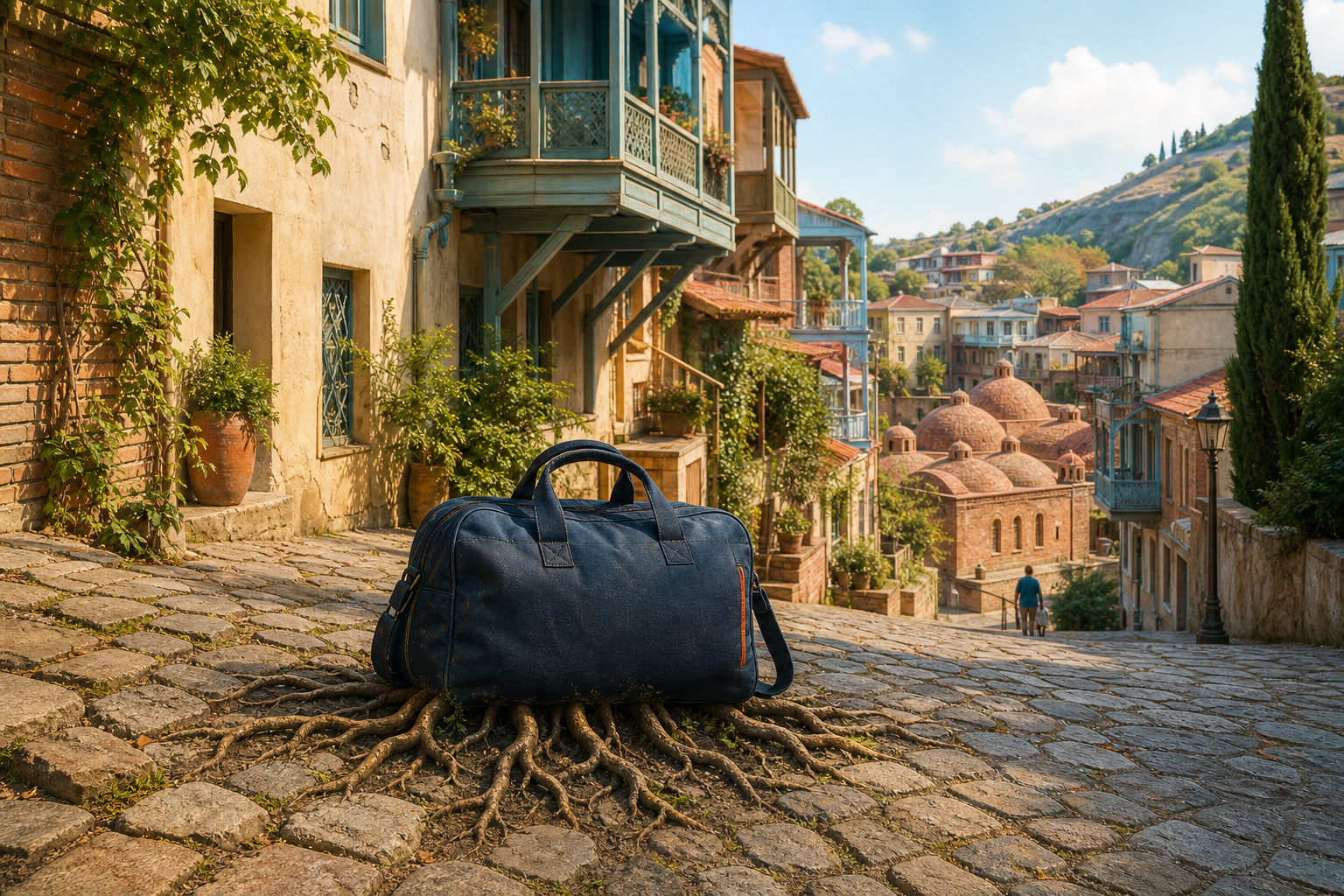
Tbilisi doesn’t have one famous thing everyone flies in to see. No single monument, no UNESCO site that anchors the whole trip. What it has instead is a texture — sulfurous bathhouses, natural wine served in clay cups, a Soviet-era cable car, a medieval quarter where the buildings look like they’re held together by wooden balconies and optimism — that compounds the longer you’re there. Most people budget two nights and end up staying four. We kept returning to it on the map while planning a longer loop through the Caucasus, and it’s the city that’s hardest to leave with a clean conscience about how little time you gave it.
View larger map | Map data © OpenStreetMap contributors
The Neighborhoods Worth Orienting Around
Tbilisi’s walkable core is small enough to cover on foot but varied enough that where you base yourself genuinely changes the trip. Abanotubani — the old bathhouse district — sits at the southeastern edge of the old town, where natural hot springs push sulfurous water up through domed brick structures that have existed in some form since the fifth century. The smell hits you before you see them. A private bath in one of the traditional hamams runs roughly 30–50 GEL per hour (around $10–18 USD at current rates). Pay for the private room rather than communal — not for modesty reasons, but because the experience is categorically different once you’re not sharing the soaking pool with strangers on a tour schedule.
Fabrika is the renovated Soviet textile factory that’s become a courtyard of hostels, cafes, wine bars, and small shops. It sounds like the post-industrial repurposing you’ve seen in a dozen cities, and there’s some of that. But it’s more functional than performative — a genuinely useful place to regroup and figure out where you want to eat next.
The Marjanishvili area across the Mtkvari River is quieter and more residential: better coffee, fewer tour groups, and prices that drop noticeably once you’re away from the main tourist drag along Rustaveli Avenue.
The Wine Situation
Georgia has been making wine for around 8,000 years. The Caucasus region is one of the leading candidates for where viticulture actually originated, based on archaeological and archaeobotanical research — this isn’t a tourism-brochure claim, it’s a live area of academic and genetic study. The method that survives here, qvevri fermentation (large clay vessels buried underground, sealed during fermentation), produces amber wines through extended skin contact that taste nothing like what most people mean when they say “orange wine.” The tannin structure is heavier. The texture is different in a way that takes a few pours to calibrate to.
You can find Georgian wine everywhere in the city, but quality swings wildly. Skip anywhere with a laminated tourist menu showcasing the same three Rkatsiteli pours. Vino Underground near the old town has a serious list and staff who’ll walk you through what you’re actually drinking. G.Vino on Erekle II is smaller and often carries producers that never reach export markets. Neither is cheap by Georgian standards, but both are honest about what they’re pouring.
One timing note worth flagging: during Rtveli harvest season — usually late September into October — wineries in Kakheti, the main wine region about two hours east, open to visitors in a way they don’t the rest of the year. If your dates are flexible, building a day or two in Kakheti around the harvest is worth planning for specifically rather than treating as an afterthought.
What to Actually Eat
Georgian food gets reduced to khachapuri and khinkali in most Western coverage. Both are worth eating. The reduction is still doing a disservice.
Khachapuri has regional variations that are basically different dishes. The Adjarian version — boat-shaped, filled with melted sulguni cheese, topped with a raw egg and butter you stir in yourself at the table — is the one most visitors photograph, and it’s rich enough to be a full meal on its own. The Imeruli version is a stuffed round flatbread, better as a shared side.
Khinkali are the soup dumplings. Hold by the twisted knot at the top, bite a small hole, drink the broth before eating the rest. The knot is a handle, not a garnish — leaving it on the plate is correct. Eating it whole is the tell that you’ve never had them before.
The dishes worth seeking out past those two: satsivi (cold poultry in a walnut sauce that has more conceptual overlap with a mole than with anything neighboring), pkhali (spinach, beetroot, or green beans bound with walnut paste and spices, served as small rolled rounds), and chakapuli in spring when fresh tarragon is actually available. The underlying logic of Georgian cooking is herb-forward and walnut-heavy in a way that’s genuinely distinct from its neighbors — it doesn’t map neatly onto any other regional cuisine.
For a meal that isn’t a tourist restaurant: the covered market at Deserter’s Bazaar (Dezerter Bazroba) north of the train station has a food section where you’ll eat next to people doing their weekly shop. The churchkhela — walnut strings dipped repeatedly in grape must until they solidify — sold at the stalls here are better than anything in the souvenir shops near the old town, and noticeably cheaper.
Narikala and What the Old Town Gets Right
The Narikala fortress ruin sits above the old town on a ridge and is free to walk up to. You can hike up through the old town’s steep streets or take the cable car from Rike Park across the river. Go up once early in your stay — the view is the best orientation point in the city, and understanding the geography from above makes the street-level wandering that follows make more sense.
The old town itself, Kala, rewards not having a specific destination. The wooden balconies — ornamented, cantilevered, layered onto buildings that are themselves half-crumbling — are what you’ll actually remember. The architecture is genuinely unusual; there isn’t another city that looks quite like it, which is a claim most cities don’t earn. Some of the streets between Abanotubani and Narikala are steep enough that walking becomes climbing.
Timing and Logistics
May and September are the practical sweet spots — warm but not the 38°C heat that July brings to the city bowl. Tbilisi sits in a valley and bakes in midsummer in a way that makes afternoon sightseeing a test of endurance rather than pleasure. October is beautiful and catches the tail end of harvest season in Kakheti.
Flights from most European hubs run under four hours. Georgian Lari is the currency; cards work widely in Tbilisi proper, but carry cash for markets and bathhouses. Bolt and Yandex both operate metered taxi service here, cheap enough that negotiating fares is no longer the ritual it used to be.
Visa-free entry covers citizens of over 90 countries, including the US, UK, and EU member states — verify your specific passport against the Georgian e-Visa portal, but the access situation is easier than most people expect for a country outside the EU’s orbit.
Give yourself at least three nights and base yourself in the old town or Marjanishvili. Then notice, around day two, whether you’re already looking at onward flights or quietly checking if your hotel has availability to extend.