
Mombasa, Kenya: What the City Is Actually Worth Beyond the All-Inclusive Buffer Zone
View larger map | Map data © OpenStreetMap contributors
Most visitors to Mombasa spend their time 30 kilometers north of it — at Diani, Watamu, or one of the Bamburi beach resort strips — and treat the city itself as a transfer point. Uber from the airport to the resort, maybe a single afternoon in Old Town if the itinerary is ambitious. That’s the pattern, and it means most people leave Kenya’s second city without a real read on it.
Mombasa is worth two days on its own before you move to the coast. Not because of the beaches — the beaches near the city are not the best ones — but because Fort Jesus alone justifies the stop, and because Old Town is one of the better-preserved Swahili urban environments on the East African coast, which is a category most visitors don’t even know exists.
Fort Jesus First, and Early
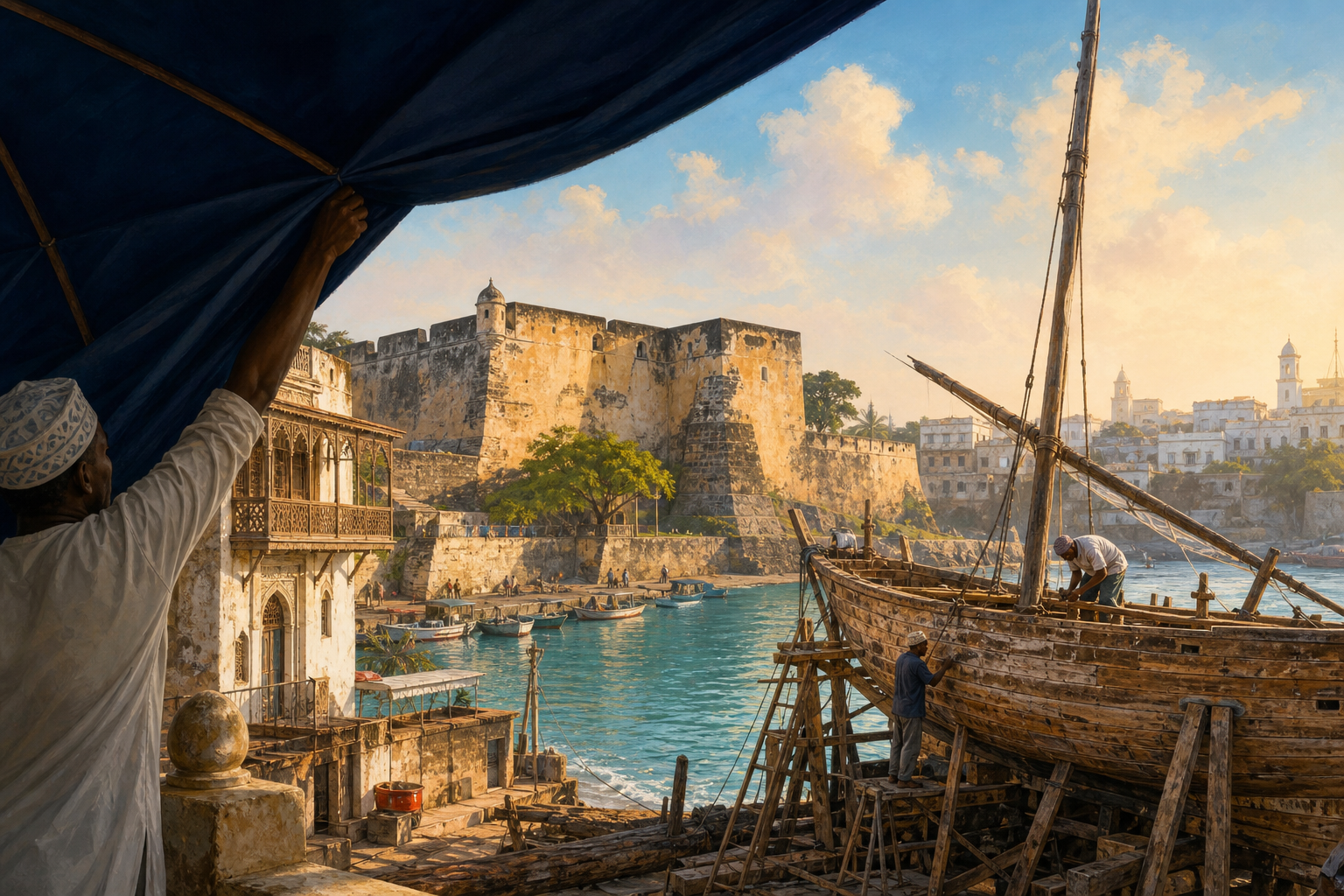
Fort Jesus was built by the Portuguese in 1593 and spent the next two centuries being sieged, captured, recaptured, and partially demolished by Omani Arabs, the Portuguese again, and eventually the British. The UNESCO World Heritage designation it received in 2011 is legitimate — the structure itself, the plan, the coral-rag stonework, and the museum inside all reward time. The Omani house section of the museum has one of the better collections of Chinese porcelain you’ll find in East Africa, which sounds odd until you remember that the Swahili coast was a stop on Indian Ocean trade routes going back to at least the 9th century.
Go before 9am. By midday the tour groups arrive and the guides start competing for volume. The fort doesn’t take all day — two to three hours if you’re reading the exhibits, less if you’re not — but the quiet of the early morning changes the experience the same way early Fushimi Inari does: same site, different visit.
Old Town Is Not a Theme Park
Old Town Mombasa is a working neighborhood, not a curated heritage zone. Some streets are actively crumbling, some buildings are in use as warehouses or workshops, and the carved Zanzibari-style doors that every travel piece mentions are not preserved behind velvet ropes — a lot of them are just someone’s front door, paint peeling, hinges rusting. Go in expecting that and it’s genuinely interesting. Go in expecting a polished medina experience and you’ll be disappointed.
The area around Ndia Kuu Road and the Old Harbour is the actual core. The Old Harbour still has dhows — the traditional wooden sailing vessels that moved cargo around the Indian Ocean for centuries — and while it’s not the busy trading port it once was, there’s usually something being unloaded or repaired if you walk down to the waterfront in the morning. Not engineered for tourists. Just what happens there.
The Mandhry Mosque dates from 1570 and is the oldest mosque in the city. You can view the exterior; entry for non-Muslims depends on the time of day and who’s around to ask.
Eating in Mombasa Properly
The food is the most underrated thing about the city and the one area where Mombasa is strictly better than the resort strips. Swahili coastal cuisine is distinct from upcountry Kenyan food in ways that matter: coconut milk appears in almost everything, biryani here has a different lineage than what you’d find in Nairobi, and the seafood is fresh in a way that resort buffets obscure behind sauces.
Tamarind restaurant, on the Nyali side of Mombasa Creek, is the obvious upmarket option and is genuinely good — order the crab. For something that doesn’t require a reservation or a taxi across the bridge, the stalls around Mwembe Tayari market sell pilau rice and samosas from early morning. The pilau in particular — slow-cooked rice with whole spices, usually beef — is worth eating before you do anything else.
One real caveat: Ramadan changes everything. Many street food stalls operate on a compressed schedule during the fasting month, and some are closed entirely during daylight hours. The evening iftar period is actually a good time to be in Old Town — it’s more alive after sunset than at any other point in the day.
Getting to the South Coast vs. the North Coast
Both directions have beaches worth going to. The logistics differ enough to know before you book.
Diani Beach is south of Mombasa, and getting there means the Likoni ferry — a vehicle and passenger crossing of Mombasa Creek that runs continuously but can involve long waits during morning and evening commuter hours. The crossing itself takes about ten minutes. Diani has the best coral reef snorkeling accessible from shore on this section of coast, and the beach is wider and less built-up than the north coast strips. Accommodation runs from backpacker lodges to genuinely luxurious boutique places.
The north coast — Nyali, Bamburi, Shanzu — is directly accessible without a ferry and carries most of the large all-inclusive resort infrastructure. The beaches are fine. If you’re basing yourself in Mombasa for culture and day trips, staying north is logistically easier. If water quality and beach width are the point, the south coast wins.
What Mombasa Is Not Good For
Driving around the city is slow in a way that goes beyond traffic — the road network, the bridge choke points, and the island layout make cross-city trips take significantly longer than they look on a map. Budget more time than Google Maps suggests for anything that crosses the island.
The city center around Digo Road and the main commercial district is crowded and holds little for visitors beyond practical errands. Skip it unless you need something specific.
Security varies by neighborhood and time of day. Old Town and the tourist-adjacent areas are fine by normal urban travel standards — the same awareness you’d apply in any dense city applies here. Both the State Department and the UK FCO publish current advisories for the coast; worth checking before departure, not because the risk is dramatic, but because conditions do shift and their updates are more granular than anything a travel blog can stay current on.
When to Go
The Kenyan coast has two rainy seasons: the long rains from April through June, and a shorter wet period in November. July through September and December through early March are the driest and most reliable windows. The heat is fairly constant year-round — high 20s to low 30s Celsius most months — but humidity drops noticeably in the dry season, which matters when you’re walking the city for hours.
If you’re pairing Mombasa with a safari, Tsavo East and West are accessible from here without flying, and the dry season that makes the city more bearable also concentrates wildlife around water sources — the timing aligns.
Two days in the city, a day or two on the south coast, and a long weekend in Tsavo is an itinerary that works without treating Mombasa as an inconvenience to route around. The fort and Old Town alone are worth the two days. Whether you stay for the biryani is a much easier decision to make once you’ve had it.