
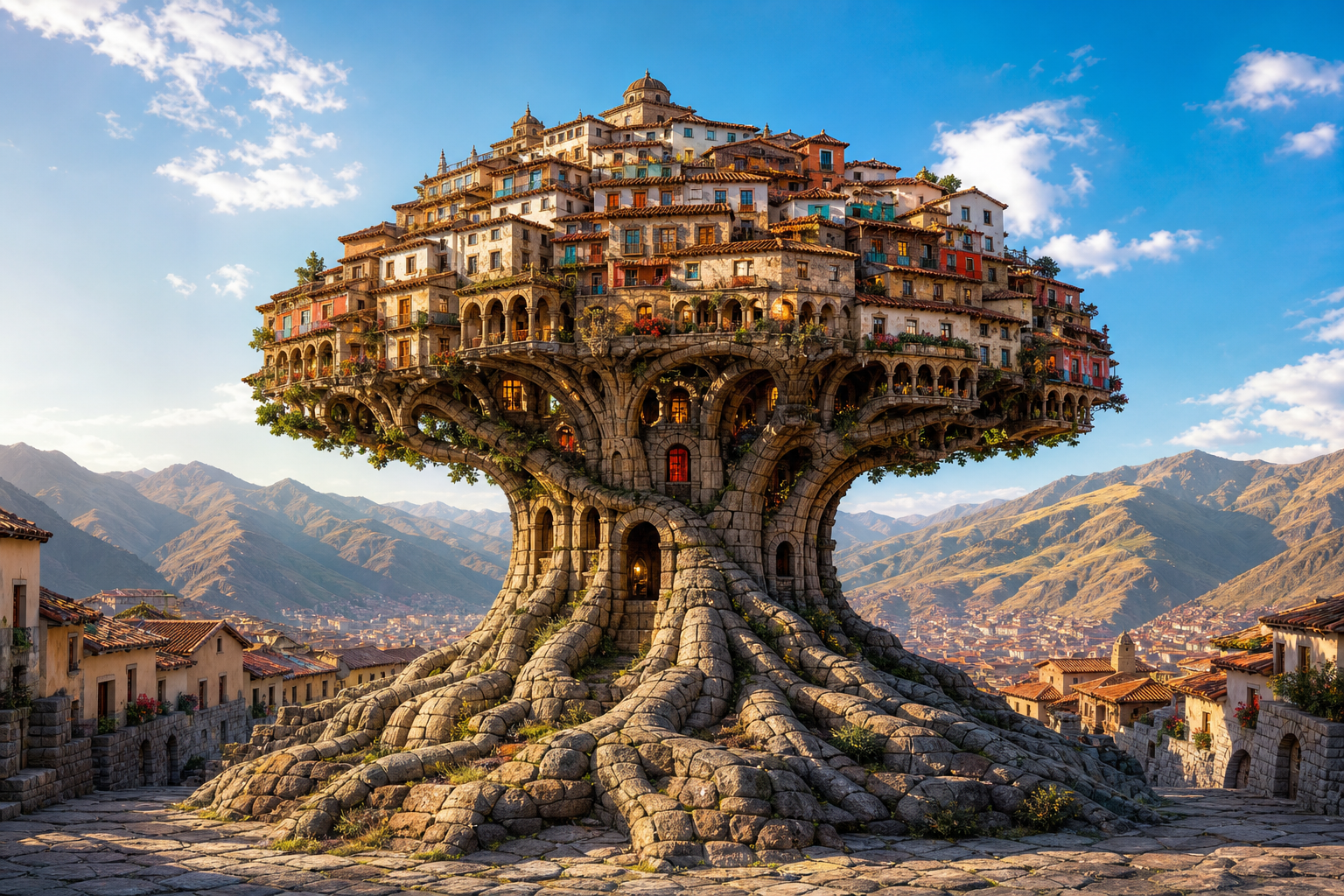
Most people land in Cuzco, spend a night fighting altitude, then catch the early train to Aguas Calientes. The logic is understandable — Machu Picchu is one of the more genuinely spectacular things on earth, and if you’ve come this far, skipping it would be absurd. But treating Cuzco as a staging area is one of those decisions that seems efficient and isn’t.
View larger map | Map data © OpenStreetMap contributors
The city was the capital of the largest empire in pre-Columbian history. The streets in the San Blas neighborhood still follow the exact grid the Inca laid down. Fragments of that stonework underpin colonial churches and Spanish mansions so visibly that you can put your hand on a foundation stone from the 1400s without buying a ticket. This is not a city you need to squint to find interesting.
Altitude First — Seriously
Cuzco sits at 3,400 meters, and that’s not a background detail — it’s the controlling fact of your first 48 hours. The standard symptoms are headache, nausea, and a specific kind of exhaustion where sleeping doesn’t actually help. Alcohol makes it worse immediately. Ibuprofen helps the headache. Coca tea is offered everywhere and does blunt mild symptoms — not dramatically, but enough that it’s worth accepting every cup handed to you.
The actual medical guidance is to spend at least two full days acclimatizing before ascending further. Machu Picchu itself sits lower than Cuzco (2,430 meters), which is one reason the train day tends to go fine even for people who struggled on arrival — you’re descending, not climbing. The Sacred Valley is lower still, which is why staging a night there before Machu Picchu is a sensible way to structure the whole trip. Arriving in Cuzco and pushing on to the Salkantay or Inca Trail the following morning is genuinely risky, not just uncomfortable. If symptoms move beyond headache into vomiting or confusion, the only real fix is going down.
Qorikancha Is the Starting Point
Every itinerary mentions Qorikancha and most visitors give it 25 minutes on the way to lunch. It deserves more. The site was the Inca Empire’s most sacred temple — dedicated to Inti, the sun god — and after 1535 the Spanish built the Convent of Santo Domingo directly on top of the original foundations. What’s visible now is the layering of both histories in a single building: when the 1650 earthquake leveled much of the colonial structure, the Inca stonework beneath it stayed standing. The Spanish parts fell. The Inca parts didn’t. That’s not a coincidence — it’s the result of a construction technique that still isn’t fully reverse-engineered. No mortar, stones cut to interlock with tolerances on some joints of fractions of a millimeter, achieved with bronze tools and abrasives. The corners alone are worth spending time on.
The Neighborhoods Worth Walking
San Blas is the obvious answer, and it’s obvious for good reason: narrow streets, steep grades, artisan workshops, and a feel that’s genuinely separate from the Plaza de Armas tourist circuit. The church of San Blas has a carved pulpit made from a single cedar trunk — it’s been called one of the finest examples of colonial woodcarving in the Americas, and the detail at the top is excessive in a way that rewards standing under it for five minutes rather than photographing it from the door.
The walk up from Plaza Regocijo toward San Cristóbal gives a view over the city’s terracotta rooflines that’s better than anything from a mirador with a tour group. It’s also steeper than it looks on a map, which at altitude means taking it at roughly half your normal pace.
San Pedro Market is where the city actually shops. It gets some tourist traffic but not enough to hollow it out — chicha morada, unfamiliar tubers, market stalls that have occupied the same spot for decades. The caldo de gallina stalls at the back are a reliable altitude headache cure, or at least feel like one.
Sacsayhuamán Is Not Just a Photo Stop
The fortress complex above the city is a 20-minute walk uphill from the Plaza de Armas — genuinely uphill at altitude, so allow more time than you think. Most visitors arrive by taxi, circle the outer terrace, take a photo, and leave. The site extends well past that main terrace, and the interior areas with the ceremonial platforms and water channels are where the scale of the construction actually registers.
Some blocks here weigh over 100 tonnes, transported from quarries kilometers away. The accepted mechanisms involve earth ramps, log rollers, and organized labor that the Inca state could mobilize at a scale few contemporary civilizations matched. What’s not contested is that the Spanish found the site so useful as a quarry that they dismantled much of it to build colonial Cuzco — which is why the stones in the cathedral foundations look exactly like what they are.
The Inca Trail Versus the Train: What to Actually Book
The classic four-day Inca Trail operates under a Peruvian government permit cap of 500 people per day — that includes guides and porters, so the actual hiker count runs closer to 200 to 250. Permits sell out four to six months in advance during peak season (May through September), which means a June trip requires booking around December or January of the prior year.
The train through Aguas Calientes has far more availability and considerably less lead time. It’s a worthwhile journey through the Sacred Valley in its own right. The framing that treats it as a lesser option is wrong — Machu Picchu at the end of the train ride is the same Machu Picchu at the end of the trail. What the trail gives you is the experience of the trail, which is genuinely its own thing. That’s a real distinction, not a consolation.
One practical note: Machu Picchu now runs timed entry with capacity caps, and tickets for peak morning slots sell out weeks ahead. Book site entry before you book the train — if you can’t get in at 8am, the early train departure is pointless.
Where to Stay
The Plaza de Armas is convenient but loud — the square runs lively late into the night and the colonial buildings don’t have the insulation to make that irrelevant. San Blas is quieter and a more interesting neighborhood to be based in, with the trade-off that nearly everything involves a hill. If altitude is already making you feel rough, flat access to a restaurant matters more than you’d expect.
Mid-range hotels in Cuzco are genuinely good — the city has been hosting international visitors for decades and the hospitality infrastructure reflects that. Budget options are plentiful. The high-end properties like Belmond Palacio Nazarenas occupy restored colonial mansions that are notable buildings in their own right, which makes them more interesting than equivalent luxury hotels in cities with less architectural layering.
When to Go
Dry weather runs May through September and overlaps completely with peak season. June and July are the most crowded months. The wet season (November through March) brings afternoon rain, much thinner crowds, and a noticeably greener landscape — Machu Picchu in particular looks different with low cloud over the mountains, and depending on what you’re after, arguably better. The Inca Trail closes entirely in February for maintenance, which removes that option regardless.
There’s no month that gives you both empty ruins and reliable clear weather. Pick your priority and plan around it — that’s a more honest frame than searching for an optimal window that doesn’t exist.
Give Cuzco two nights minimum before you head for the train. If you’re only there to sleep off a flight and catch a connection, you’re visiting a different city than the one that’s actually there.