
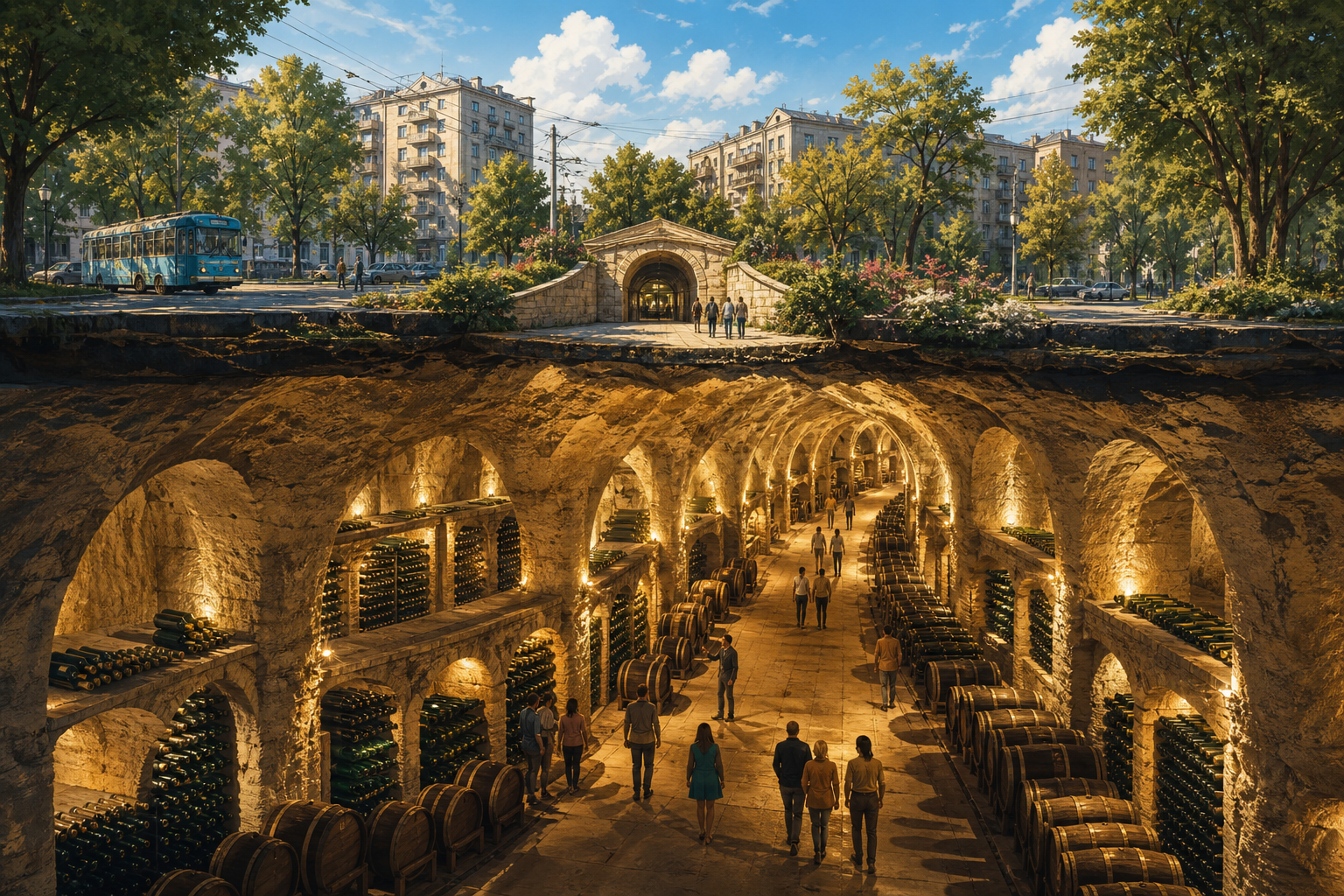
Chișinău, Moldova: The Eastern European Capital That Still Doesn’t Appear on Most Itineraries
View larger map | Map data © OpenStreetMap contributors
Moldova doesn’t come up much in travel conversations, which is part of the point. Chișinău sits between Romania and Ukraine — geographically central, practically invisible on the standard Eastern European circuit. That’s not a complaint; it’s a travel tip dressed as an observation.
The city was leveled and rebuilt under Soviet urbanist doctrine after World War II, and that shows. Wide boulevards, Stalinist architecture punctuated by ugly concrete, parks that sprawl unexpectedly and then turn genuinely pleasant. It doesn’t look like Vilnius or Tallinn — it’s not trying to. First-time visitors who arrive expecting polished old-town cobblestones will misread the place entirely. Come for something else.
Wine: Not a Side Note, Actually the Main Event
Moldova consistently ranks among the countries with the highest vineyard density relative to population — the Codru region covers a substantial part of the country’s center, and most visitors don’t know that some of the largest wine cellars in the world sit within an hour of the capital.
Cricova and Mileștii Mici are both reachable as day trips from Chișinău. Mileștii Mici holds a Guinness World Record for the largest wine collection — around two million bottles stored in an underground tunnel network running roughly 55 kilometers, navigated partly by car. That’s not a figure from a brochure; you actually drive your vehicle through the cellar. Entry and tastings cost very little by Western European wine-tourism standards, and it’s one of those specific, strange experiences that doesn’t exist in quite the same form anywhere else.
Cricova is better known internationally — partly because it’s where Angela Merkel and Vladimir Putin have both reportedly stored personal collections — and does a more polished tour. If you only do one, Mileștii Mici is the weirder and more memorable choice. Book ahead; both limit visitors per slot and the better time windows fill up.
The City Itself
The central market, Piața Centrală, is the practical heart of the city. Not a reconstructed heritage market — an actual working one, loud and crowded on a Saturday morning, with produce sections, a separate meat hall, vendors selling everything from secondhand tools to bootleg DVDs. Worth visiting early if you want to calibrate local prices before buying anything else.
The National Museum of History of Moldova on 31 August Street holds a collection of Dacian and Roman-era artifacts that deserve more attention than they get. The Dacian gold objects are genuinely impressive, and the museum isn’t overrun, which means you can actually look at things without managing around a tour group.
Stefan cel Mare Central Park runs through the center and has a relaxed local energy in the evenings — not a particularly beautiful park by any external standard, but you get a cleaner read on how the city actually functions than you do anywhere near the main tourist-facing streets.
The Triumphal Arch and the Cathedral of Christ’s Nativity are the obligatory photo stops. The arch was built in 1841 to commemorate Russian victory in the Russo-Turkish War, rebuilt after Soviet-era damage, and now anchors a small plaza that fills with people in the early evening. Worth fifteen minutes, not an afternoon.
A Practical Note on Transnistria
If you’re researching Chișinău, you’ll quickly find references to Transnistria — the breakaway state to the east that declared independence from Moldova in 1990 and has existed in international legal limbo ever since, with its own currency, military, and government, unrecognized by any UN member state.
Visiting is possible as a day trip from Chișinău. The entry process involves registering with border authorities and keeping your migration card on you, and the practical advice around this shifts with geopolitical context. Tiraspol, the Transnistrian capital, has been accessible to Western visitors, but this is the one situation on any Eastern European itinerary where checking current FCO or State Department advisories immediately before going is genuinely worth doing — not boilerplate caution, but because conditions here can change faster than most European border crossings.
If conditions are stable when you go, the visit is unlike anything else on the continent — Soviet-era aesthetics maintained without the self-conscious museum quality they acquire in cities that now trade on nostalgia, because Transnistria didn’t shift its aesthetic on purpose.
Getting There, Getting Around
Chișinău International Airport (KIV) has direct connections to most major European hubs; Wizz Air serves it from London Luton and various Central European cities. Flying via Bucharest and crossing by bus or private minibus is the other common approach — roughly three to four hours by coach, less on the faster shared minibus routes.
Within the city, the public transport system works. Soviet-era trolleybuses still run the main routes and cost almost nothing. Taxis via inDrive are cheap enough that getting yourself to the wine cellars independently is genuinely affordable compared to organized tours, if you’d rather not travel in a group.
When to Go
Late spring (May–June) and early autumn (September–October) are the obvious windows. September harvest season makes the vineyard visits particularly worthwhile — the cellars exist year-round, but arriving when the surrounding country is actively producing adds context that changes the experience. Winters are cold and grey in a way that doesn’t add much unless post-Soviet winter atmosphere is specifically what you came for, which is a legitimate reason, just a narrow one.
What Chișinău Is Not
It’s not a city that overwhelms you with sights. Two full days covers the essentials with time to sit in a park and eat well — placinte (stuffed flatbreads), mămăligă (polenta), grilled meat, local wine at a fraction of what equivalent bottles cost in Western Europe.
The honest case for coming: if you’re routing through Eastern Europe and want one stop where the tourist infrastructure hasn’t caught up with what the place actually offers, Chișinău has a real argument. The wine cellars alone are worth building two days around, and they’re genuinely not replicable anywhere closer to the cities most people already have on their list.
Check whether your dates line up with the September harvest window before booking flights — that timing detail does more to shape the trip than almost any other planning decision you’ll make.