
Luang Prabang Doesn’t Fit Neatly Into the Standard Southeast Asia Loop
View larger map | Map data © OpenStreetMap contributors
Most people arrive because it’s a logical stop between Chiang Mai and Hanoi, or because someone told them it was unmissable without explaining why. They book two nights, walk the main peninsula, watch the monk procession once, take the boats to the Pak Ou caves, and leave with the vague feeling they didn’t quite get it. That’s a pacing problem, not a destination problem.
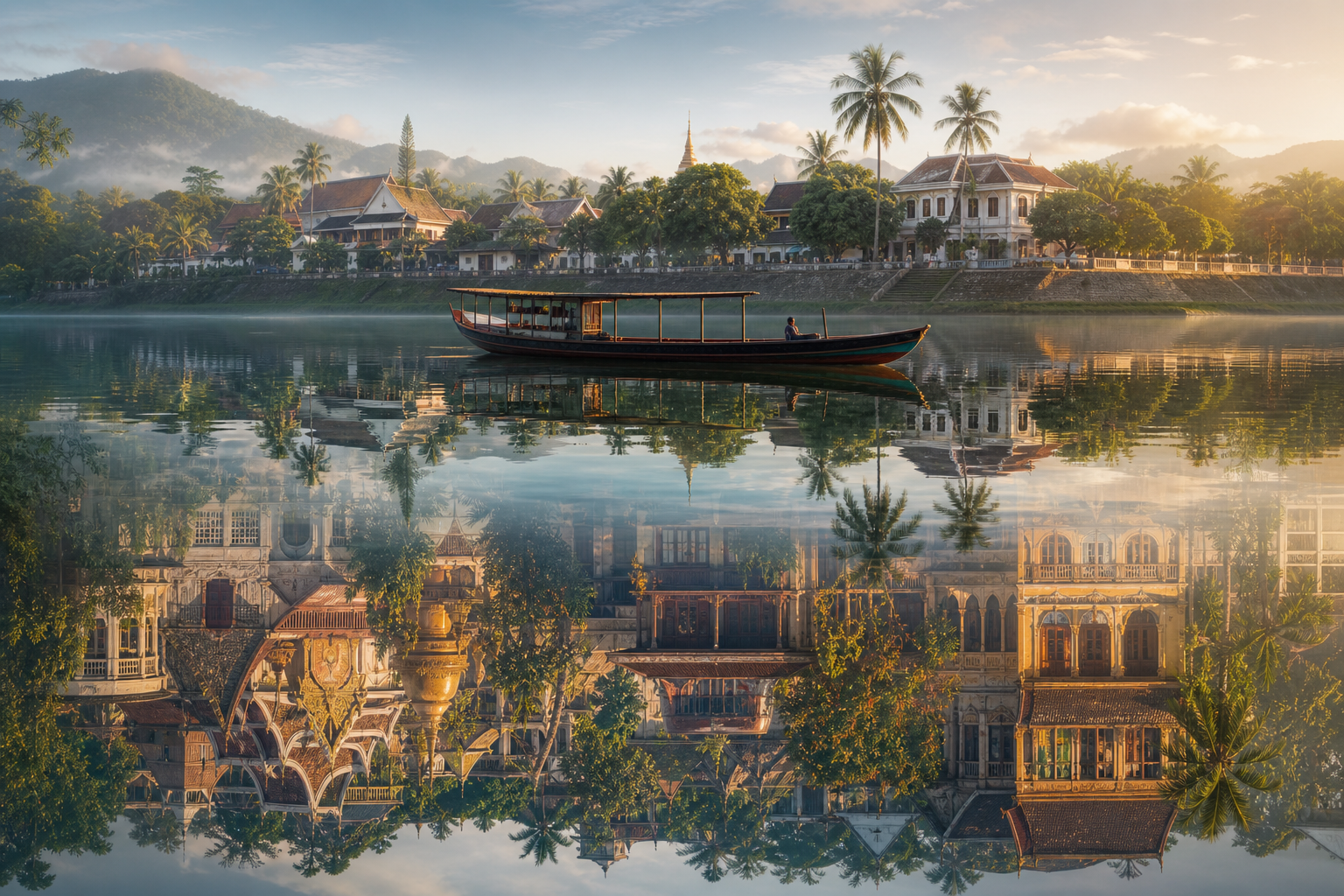
Luang Prabang is one of the better-preserved UNESCO-listed historic towns in Southeast Asia — not in the sanitized, theme-park sense, but in the sense that 33 active temples, the French colonial shophouses, and a working monastic community are still genuinely integrated into how the town functions day-to-day. That takes time to feel, not just to see.
Three nights minimum is the honest answer. Four is better if you’re not in a rush.
The Monk Procession: What It Actually Is and How Not to Ruin It
Tak Bat — the alms-giving procession where hundreds of monks walk the streets at dawn collecting rice from residents — is the most photographed thing in Luang Prabang, and it has a real problem. Tourist pressure has materially changed the experience for the monks and for the local families who participate as a religious practice, not a performance.
If you want to watch: stand well back, no flash, keep quiet, don’t walk alongside the procession. A tripod planted on the pavement next to monks at 5:30am is rude in any country. Several guesthouses near the route now explicitly ask guests not to photograph it at all — worth taking seriously.
If you want to participate in the giving: buy rice from resident sellers, not the packaged tourist offerings on the street, and follow the lead of actual local participants. The meaningful version of this is quiet and brief. The extractive version is why some monks now take alternate routes.
Worth seeing once, early, with genuine care. Not worth setting an alarm every morning of your trip.
What Actually Earns the Days You Spend Here
The Night Market on Sisavangvong Road
Runs every evening along the main street and is genuinely one of the better night markets in the region — not because it’s cheap (it’s not, by Laos standards, and certainly not compared to Vietnam or Thailand) but because the quality of the textile and handicraft work is unusually high. The hill tribe weaving is worth slowing down for. Bargaining is expected but not aggressive; this isn’t Chatuchak.
The food stalls at the south end are worth eating at. Buffet-style Lao dishes at a flat price per plate: good, filling, costs almost nothing.
Mount Phousi
338 steps, a golden stupa at the summit, and views over the Mekong and Nam Khan confluence that are actually as good as the pictures suggest. Go at sunset rather than midday — not primarily for the light but because the midday heat makes the climb actively unpleasant and the view doesn’t change. Small entry fee at the base.
The Kuang Si Waterfalls
About 30km south of town, reachable by tuk-tuk or rented scooter. The falls are a series of turquoise limestone terraced pools that genuinely look like the photographs. They get crowded by late morning during peak season (November through February) and there’s no real workaround — arrive early or accept the people. The upper falls past the main visitor traffic are worth the extra walk.
The bear rescue sanctuary at the park entrance is run by Free the Bears — bears confiscated from bile farms and the wildlife trade. It’s a rehabilitation facility, not a zoo, and it’s worth ten minutes on the way in.
The Mekong, by Boat
The slow boat from Huay Xai on the Thai border takes two days to reach Luang Prabang and is one of the better ways to arrive if your itinerary allows it. The boats are crowded, the wooden seats are hard, and two full days of river scenery is unlike anything you see from a bus window. Arriving by water also makes the town’s geography immediately legible in a way that landing at the airport doesn’t.
The Pak Ou caves — niches of carved Buddha statues in river caves about two hours upstream — are sold as a standard half-day boat trip from town. Honest take: they’re fine, not extraordinary. The Mekong ride there and back is better than the caves. If time is short, the afternoon is spent better elsewhere.
Food: What’s Worth Tracking Down
Lao cuisine doesn’t have the international profile of Thai or Vietnamese food, which is partly why it catches people off guard. The larb here — minced meat with herbs, toasted rice powder, and enough chilli to actually register — is better than most versions you’ll find anywhere it’s been exported. Khao soi in its Lao form (pork broth, ground pork, morning glory — distinct from the Thai coconut curry noodle that shares the name) is served at Phosy Market, where locals shop, starting around 5am and mostly done by 8am before most visitors surface.
The French colonial period left a genuine bakery culture. The baguette sandwiches at the morning market are legitimately good and cost almost nothing — Luang Prabang is the one place on a Southeast Asia trip where ordering bread for breakfast actually makes sense.
Skip the main-strip restaurants with laminated menus in five languages. Eat at market stalls or anywhere running plastic chairs with no English sign out front.
When to Go and What to Know Before You Book
November through February is dry season: cool evenings, clear days, manageable heat. It’s also high season, so guesthouse prices rise and every attraction gets busier. March through May brings heat and regional haze from agricultural burning — air quality is genuinely poor during this window, worth factoring in if you have any respiratory sensitivity.
Most nationalities can get a visa on arrival at the international airport or use the Laos e-visa system, but immigration policy has shifted more than once in recent years, so check current requirements before you book rather than assuming last year’s process still applies.
The town is small enough to walk almost entirely. Rent a bicycle for anything beyond the peninsula — available everywhere for a few dollars a day, and the terrain is flat enough that it’s actually pleasant rather than aspirational.
One Honest Caveat
Luang Prabang has gentrified significantly since its UNESCO listing in 1995, and the pace has accelerated. Boutique hotels have displaced some residents who once lived on the main peninsula, and the tourist economy has made it less affordable for Lao people to live where they’ve always lived. This is the standard outcome of heavy heritage tourism, not unique to this town — but it’s worth being conscious of when you decide where to spend money. Locally owned guesthouses and restaurants exist and aren’t hard to find; they’re usually one street back from the main drag rather than on it.
If your Southeast Asia loop currently skips Laos for the Thailand-Vietnam-Cambodia circuit, Luang Prabang is the most concrete argument for reconsidering. Not because it’s undiscovered — it isn’t — but because it moves at a pace none of those other stops do, and that difference is harder to replicate than it looks. The question worth sitting with before you book: do you actually have three nights to give it, or are you planning to be one more person who leaves with the feeling they didn’t quite get it?