
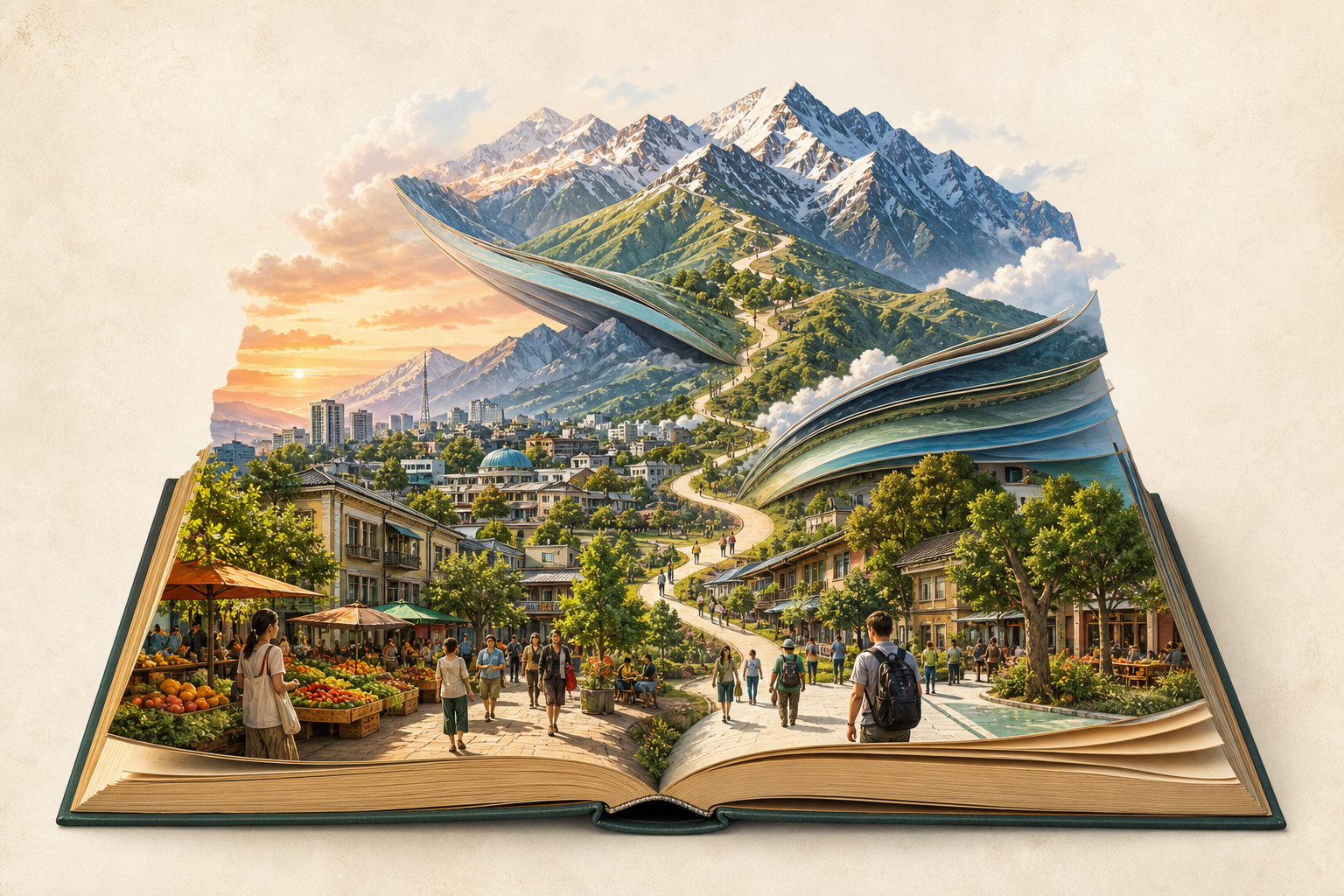
Most Central Asia itineraries get built around Uzbekistan — Samarkand, Bukhara, Tashkent in some order — and then tack on Almaty as a cheap flight hub at the start or end. That’s the wrong framing. Almaty isn’t a logistics node. It’s one of the more genuinely livable, walkable, and surprising cities in the region, and treating it as a one-night layover means you spend zero time actually in it.
View larger map | Map data © OpenStreetMap contributors
The city sits at around 900 meters in the valley, with the Zailiysky Alatau range — part of the Northern Tian Shan — rising directly behind it to over 4,000 meters. That’s not a backdrop you see in postcards and forget about. You’re in the foothills visually from anywhere in the southern half of the city, and you can be at a legitimate alpine trailhead within 30-40 minutes by car from the center. This is what most itineraries throw away by not allocating enough days here.
How Many Days You Actually Need
Three full days is the minimum before Almaty stops feeling rushed. Two days gives you the city or the mountains, not both. Four or five days and you’re into genuinely comfortable territory: a big hiking day, a slower market day, and evenings that aren’t just recovering from travel.
One honest caveat: Almaty is expensive relative to the rest of Central Asia. Not by Western European standards, but noticeably more than Bishkek or Tashkent. The gap shows up most in restaurants and accommodation, so budget for it before you arrive rather than after.
The Mountains, Specifically
Medeu is the skating rink and dam complex about 15km up into the hills. It’s where most visitors stop, and it’s scenic, but stopping there means you’ve done about 20% of what’s accessible. The road and gondola continue up to Shymbulak ski resort, and from there trails push higher into proper alpine terrain. The Furmanov Peak route takes most hikers around 5-6 hours round trip and gets you well above the treeline into rock and scree. No technical gear required in summer, but it does require reasonable fitness and actual hiking boots — not the sneakers you’ll see on half the tourists at Medeu.
Big Almaty Lake is the other mountain stop worth making. It’s south of the city via a different canyon, genuinely turquoise at altitude, and sits inside a restricted border zone that required a permit until fairly recently. Rules have loosened somewhat, but check current requirements before you go — enforcement is inconsistent and being turned back at a checkpoint is a bad way to spend half a day.
The City Itself
The Green Bazaar (Zelyony Bazar) near the center is the real one — not a tourist market, a functioning daily market where Almatians actually buy food. The dried fruit and nut section alone is worth an hour. The kurt (dried salty cheese balls) are an acquired taste that most visitors don’t acquire, but worth trying once.
Panfilov Park has the wooden Zenkov Cathedral, built entirely without nails in 1904 and one of the few structures to survive the 1911 Kebin earthquake that destroyed most of the city. The engineering is worth pausing over: colorful in a way that reads as slightly unreal in photographs, and the fact that it’s still standing while everything around it collapsed tells you something about the joinery. The park itself is popular with local families on weekends and is one of those places where you mostly just sit and watch the city move.
The First President’s Park area to the south of the center is newer and more manicured — the kind of development that says more about the 2000s oil boom than about Almaty’s actual character, but the architecture around Nurly Tau is at least interesting as an artifact of that period.
For food: the range has improved significantly over the past decade. Beshbarmak — boiled meat and flat pasta, literally “five fingers” because it’s traditionally eaten by hand — is the dish to order at least once at a proper local place rather than anywhere tourist-facing. Plov here differs from the Uzbek version: less oily, often made with horse meat rather than lamb, which surprises people. There’s a reasonable cluster of restaurants around the Arbat pedestrian street, though the better local places sit slightly off that corridor where rent is lower.
Getting Around and Getting There
Almaty’s airport (ALA) connects reasonably well to Istanbul, Dubai, Moscow, and Beijing, plus direct routes to the other Central Asian capitals. It’s about 15km from the city center. Yandex Go dominates rideshare here, works reliably, and is cheap relative to negotiating with street taxis — which is the right call unless you enjoy haggling on principle.
Within the city, the metro has one line running roughly east-west through the main central corridor. It’s Soviet-built, clean, and fast for the stops it hits. For the mountains you need a car. Marshrutkas (shared minibuses) run to Medeu but schedules are loose and the return trip in late afternoon can involve a real wait.
When to Go
June through September for the mountain hiking — trails above Shymbulak are snow-covered outside that window. July and August are the busiest and warmest. May and September are genuinely good shoulder months: trails open, the city isn’t hot, accommodation slightly cheaper.
Winter is viable if skiing is the goal. Shymbulak is a real resort with decent vertical drop and far fewer crowds than comparable European resorts. January and February are the core ski months. The city at -10°C or colder is functional but not pleasant for extended outdoor exploration.
If your Central Asia trip is built entirely around the Silk Road heritage circuit in Uzbekistan, Almaty probably isn’t the right add-on — the cultures and architecture are quite different, and the tonal mismatch is real. But if you want mountains, a genuinely urban Central Asian city that hasn’t been optimized for tourism, and somewhere that still has a little friction to it, Almaty earns the days you give it.
Book your mountain day before anything else is in place — the logistics of getting to the right trailhead at the right time shape everything else around them.