
Sucre, Bolivia: The Colonial Capital That Most South America Itineraries Skip
View larger map | Map data © OpenStreetMap contributors
Most Bolivia itineraries run La Paz → Uyuni → maybe Potosí, then fly home. Sucre gets added as an afterthought or dropped entirely. That’s a bad call, and the reason is simple: Sucre is the most liveable, walkable, genuinely pleasant city in the country — which matters more than it sounds when the rest of your Bolivia trip has involved altitude headaches and dusty bus terminals.
The city sits at 2,810 meters — high, but nearly a thousand meters lower than La Paz. That difference is physical, not just statistical. You breathe easier. You sleep better. You actually want to walk around.
What Makes the Old Center Worth Your Time
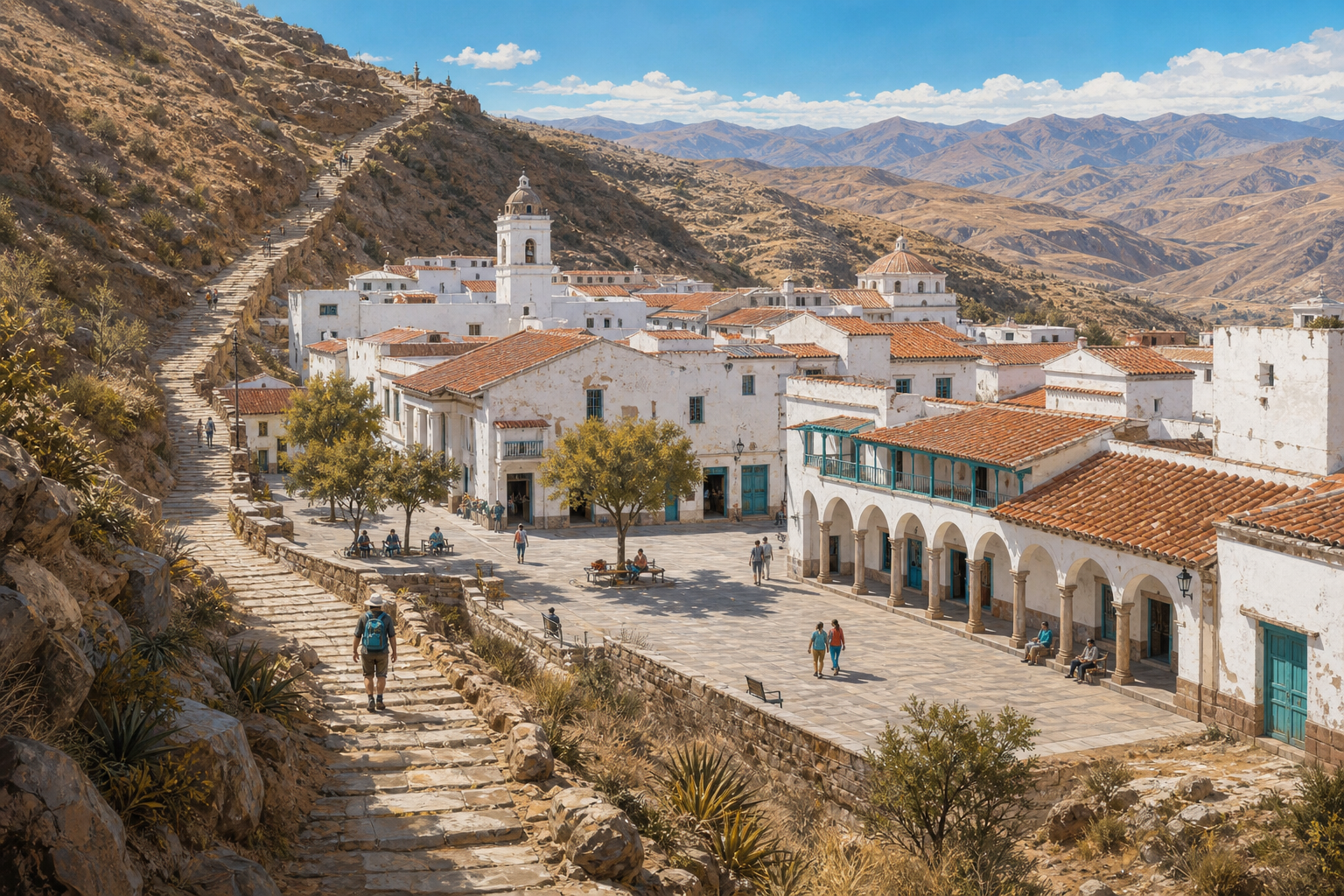
Sucre’s historic center is a UNESCO World Heritage site, and unlike some cities where that designation covers a few nice streets and a lot of wishful thinking, here it’s earned. The whitewashed colonial architecture is consistent enough that the whole center reads as coherent rather than spotty. Plaza 25 de Mayo is the obvious anchor — the cathedral, the Corte Suprema building, and the Casa de la Libertad are all within a few minutes’ walk of each other.
Casa de la Libertad is worth the entry fee. This is the building where Bolivia’s declaration of independence was signed in 1825, and the main hall has been preserved well enough that the weight of it actually lands. Skip the guided tour if your Spanish is limited and the guide’s English isn’t strong — the signage holds up if you read slowly.
The Museo Charcas at the Universidad San Francisco Xavier is less visited and better than it has any right to be: colonial art, indigenous artifacts, a mummies room that’s genuinely unsettling in the way good museums are. The university itself was founded in 1624, which puts the whole colonial period in perspective in a way that reading about it doesn’t.
The Dinosaur Tracks Are Not a Gimmick
Parque Cretácico, about 5 kilometers from the center, holds what paleontologists have documented as one of the largest concentrations of dinosaur footprints anywhere — over 5,000 tracks from at least eight species, preserved in a near-vertical limestone slab exposed by cement quarrying in the 1990s. Sauropods, theropods, prints large enough that you understand viscerally why these animals ran the planet as long as they did.
The viewing platforms are set back from the cliff face, which is both a safety measure and a frustration — you’re looking across a gap at the prints, not standing next to them. Binoculars genuinely help. The on-site museum explains the geology of how the tracks ended up near-vertical (tectonic uplift over millions of years), and it’s actually interesting rather than filler.
Taxis from the center are cheap and take about 15 minutes. Worth half a day, not a full one.
Eating in Sucre
The Mercado Central on Calle Junín is the honest version of market eating — stalls selling mondongo (tripe soup), fricasé, saice (a meat stew specific to the Chuquisaca region), and fresh juices from produce you won’t always recognize. The lunch crowd is local, the prices are low, and the food is real. No romanticizing required.
The restaurants around Plaza 25 de Mayo cater to tourists but aren’t uniformly bad. Look for places advertising Chuquisaca-region specialties rather than generic Bolivian menus. Saice tarijeño shows up here even though it originates in Tarija — a reminder that food follows trade routes regardless of what the map says.
Sucre also has a chocolate tradition that’s easy to dismiss as a tourist trap and actually isn’t. Bolivian cacao from the lowland regions is genuinely good, and a few producers in the city are doing serious work with it. Worth buying some to carry out if you’re continuing through South America.
Getting There and How Long to Stay
Sucre has its own airport (IATA: SRE) with flights from La Paz on Boliviana de Aviación — about 45 minutes in the air. The bus from La Paz runs 12–15 hours and is only worth considering if you’re on a tight budget and have the time. From Potosí, it’s a 3-hour ride on decent road, and that pairing is the most natural sequence if you’re doing both cities.
Two full days is the minimum that makes the detour worthwhile; three is better. One day covers the historic center and Casa de la Libertad well. A second handles Parque Cretácico and the markets. A third opens up the Recoleta neighborhood — hilltop, good views back over the white city, a convent worth wandering through — plus any of the day hikes in the surrounding valley.
There are multi-day hikes in the hills around Sucre through indigenous Jalq’a communities, usually organized through local agencies. The terrain is high and dry and the logistics require more lead time than a standard city visit. Real option, not just a brochure listing — but it needs proper acclimatization before you attempt it. Don’t arrive from sea level and try to hike at altitude on day two.
One Honest Caveat
Sucre is quieter than La Paz, which is part of the point — but it also means fewer travelers passing through, thinner logistics, and more situations where functional Spanish is the only way to sort out a problem. The tourist infrastructure exists but it’s lean. If you’ve been managing fine in La Paz or Cusco, Sucre is no harder. If you’ve been relying heavily on English-speaking hotels and booking apps, add an extra hour to every practical task here.
The altitude still catches people at 2,810 meters, especially arriving from lower elevations. Keep the first day slow regardless of how fine you feel off the bus or plane.
If your Bolivia route is already set, the real question isn’t whether Sucre deserves a stop — it does — but whether you cut Potosí or extend your total time. Potosí is a harder, darker place to visit (the mine tours are intense and genuinely not for everyone), and the two cities pair well precisely because they’re so different in character. But Sucre works on its own even without the Potosí contrast. If you’re building the route from scratch, start there.