
Why Jaffna Gets Skipped — and Why That’s a Mistake
View larger map | Map data © OpenStreetMap contributors
Most Sri Lanka itineraries run Colombo to Kandy to Ella to the south coast and call it done. Jaffna, sitting at the very top of the island on a narrow peninsula jutting into the Palk Strait, gets treated as a logistical inconvenience — six hours by train from Colombo, far from the beach resort belt, and only properly accessible to tourists again since the end of the civil war in 2009. The civil war part is why people hesitate. The 2009 part is why they’re wrong to.
Jaffna has been rebuilding for fifteen years. What you find now is a city that is genuinely itself: Tamil rather than Sinhalese in language and culture, Hindu rather than Buddhist in its major temples, drier and flatter than the rest of the island, and substantially less crowded than anywhere on the tourist trail south of Anuradhapura. The cuisine alone justifies the train ticket.
Getting There and How Long You Actually Need
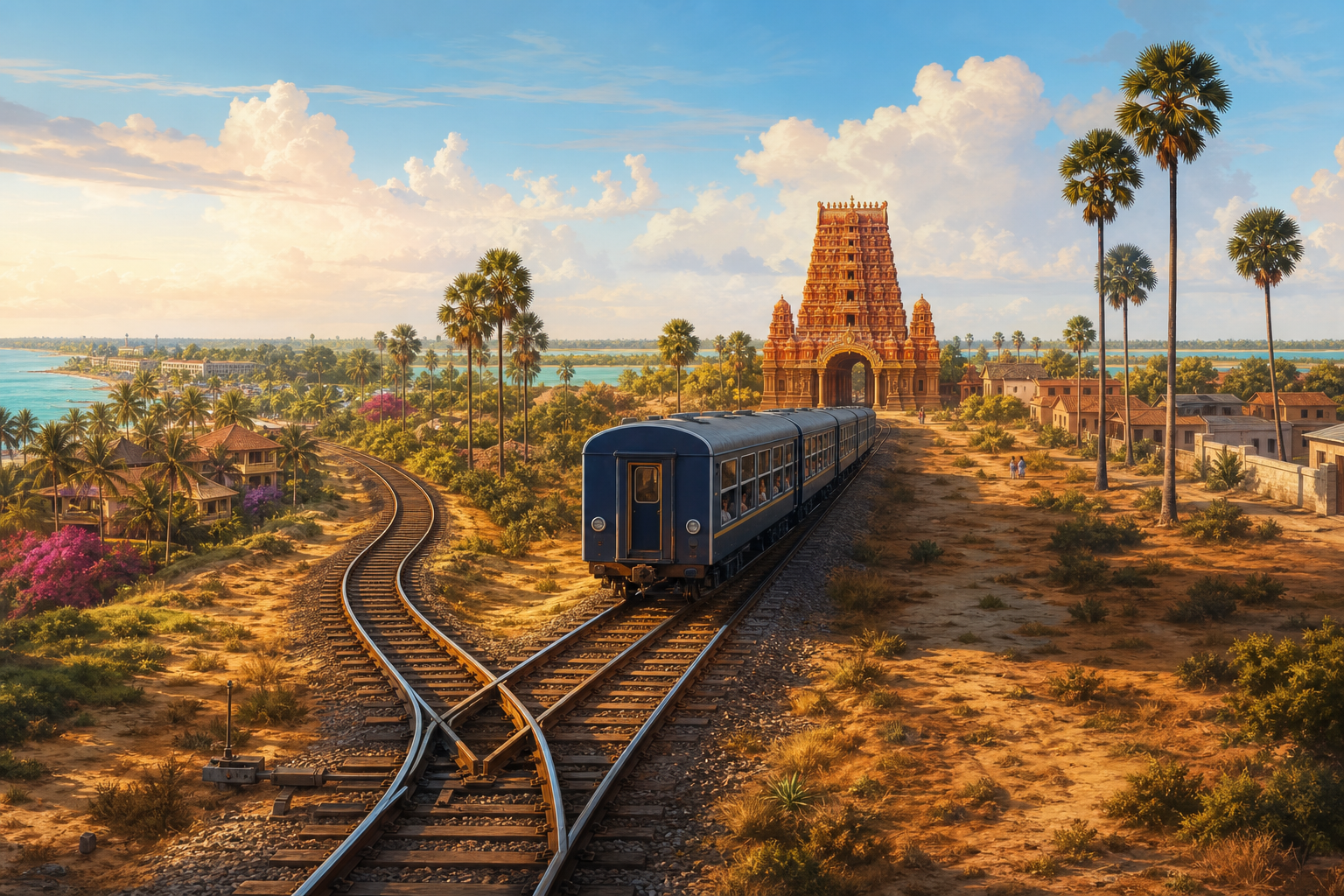
The Yal Devi express from Colombo Fort takes around six hours on a good day. Sri Lanka Railways has chronic scheduling slippage on this route, so build buffer into any onward connection. The train is still the better choice over the bus — the scenery through the Vanni, the flat northern plains you cross, is legitimately interesting, and first-class carriages have air-conditioning. Book ahead: the Expo Rail observation car fills up fast among local travelers, not just tourists.
Flying is possible — FitsAir and Cinnamon Air both operate small-plane services from Colombo in around 45 minutes — but the frequency is limited enough that a cancellation leaves you stranded more badly than a delayed train would, and the price difference is substantial.
Three nights minimum, four is better. Two nights is the tourist-trail reflex, and it leaves you rushed at the exact places that reward staying still.
The Nallur Kandaswamy Temple
This is the one thing in Jaffna that almost every visitor mentions, and the mentions don’t oversell it. The Nallur Kandaswamy Temple is one of the most important Hindu temples in South Asia — dedicated to Murugan, the Hindu god of war — and during the annual Nallur Festival (July–August, running 25 days) it draws hundreds of thousands of pilgrims. Outside festival season it’s still busy with daily worshippers, and the gopuram (the tiered gateway tower, painted in the characteristic South Indian style) rising above the flat Jaffna streetscape is genuinely arresting.
Dress codes are enforced here: shoulders and legs covered, shoes off before entering. The temple staff are active about it, not perfunctory. The inner sanctum restricts non-Hindus during certain puja times, so check the schedule on the day you visit rather than assuming full access throughout.
Jaffna Fort and What It Actually Is
The Portuguese built the original fort in 1618. The Dutch took it in 1658 and rebuilt it substantially. The British took it from the Dutch and used it administratively. During the civil war it served as a Sri Lankan Army stronghold. Four centuries of continuous military and colonial use, and it shows — in a way that’s more interesting than a purely preserved monument would be.
The fort is partially open to visitors, and the star-shaped Dutch fortification design is legible enough from the walls to appreciate the engineering logic: overlapping fields of fire, bastions positioned to eliminate blind spots. The grounds inside are scrappy — this was a working military installation until recently — but the walk along the outer walls with views over the lagoon toward Kayts Island is worth the entry fee on its own.
The Islands: Nainativu and Delft
The Jaffna Peninsula is ringed by islands in the lagoon, and two of them are worth the boat trip.
Nainativu is a short ferry from Kurikattuwan jetty north of town and holds the Nagapooshani Amman Temple, another major Hindu pilgrimage site. The island itself is tiny — you can walk across it in ten minutes — and the contrast between the religious intensity of the temple and the quiet lagoon surrounding it is genuinely striking. Go on a weekday if you can; weekend pilgrimage crowds make moving around the temple difficult.
Delft (Neduntivu in Tamil) is the wilder option. The Dutch brought horses to the island centuries ago, and a population of semi-wild horses now roams freely across the flat, wind-scoured landscape. There’s also a baobab tree — almost certainly Portuguese-introduced — that is among the largest in Asia. Delft has almost no tourist infrastructure: bring your own water and food, and the ferry schedule is limited enough that you need to plan your day around it rather than assuming any flexibility.
Food: The Actual Reason to Come
Jaffna cuisine is Tamil cuisine, and it’s distinct from what you eat in Colombo. The signature dish is Jaffna crab curry — mud crab in a dark, deeply spiced gravy that has nothing in common with the coconut-forward curries of the south. Palmyra palm products show up everywhere: padaneer (fresh palmyra juice), odiyal kool (a thick seafood and palmyra root porridge that takes getting used to but is worth trying), and various palmyra-based sweets. The kothu roti here is also notably different from Colombo’s version — chopped finer, spice levels calibrated for people who eat this way every day.
Rasavalli and Rolex on Hospital Road are the names that come up consistently among locals for reliable Jaffna-style cooking without the tourist markup. Skip anywhere that hands you an English-only menu with photos — same rule as everywhere else.
One Honest Caveat
Jaffna’s tourist infrastructure is thin relative to the south. Good accommodation options exist but they fill up — during the Nallur Festival you need to book months ahead, full stop. Outside that window there’s more flexibility, but the better guesthouses (Thinnai, and Jetwing Jaffna for those who want something more comfortable) run at higher occupancy than their equivalents in Kandy or Ella. Don’t treat this like a place you can figure out on arrival.
Power outages still happen more frequently in the north than in Colombo. Not dramatically, but enough to matter if you’re relying on charged equipment or working remotely.
When to Go
The north runs on a different monsoon calendar than the south. The northeast monsoon hits between October and January — exactly when the west and south coasts are at their best. Jaffna’s dry season runs roughly March through September, which means a north-then-south or south-then-north routing within a single trip is genuinely viable rather than a compromise.
Unless the festival is specifically why you’re going, avoid the Nallur Festival window (July–August). Crowded, hot, and logistically complicated in ways that are rewarding if the religious spectacle is the point and frustrating if you just want to see the temple.
The train north departs from Colombo Fort Station. Book first-class air-conditioning, bring your own food, and give yourself the full day. The Vanni is flat enough that some people find it meditative and others find it dull — you’ll know which you are about an hour in. Either way, Jaffna is at the end of it, and it’s unlike anywhere else on the island.