
Queenstown Without the Adrenaline Marketing: What the South Island Town Is Actually Worth
View larger map | Map data © OpenStreetMap contributors
Every piece of Queenstown marketing leads with bungee jumping or skydiving. That’s not wrong — the town genuinely built its tourism infrastructure around adventure sports, and if you want to jump off something at speed, the operations here are professional and well-run. But that framing pushes a lot of travelers away who would otherwise love the place, and it causes the ones who do come to underuse it.
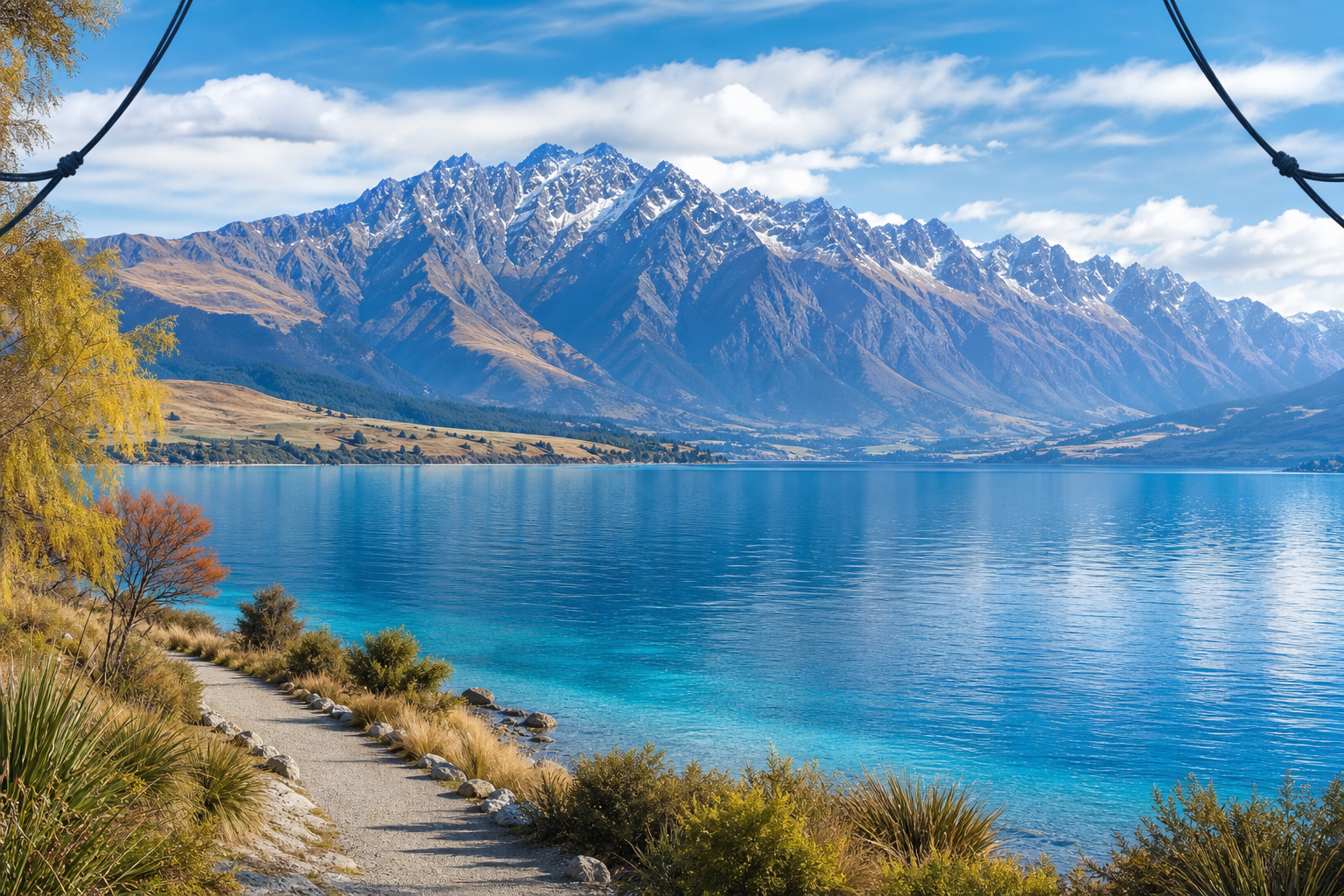
The actual asset Queenstown sits on is the landscape. Lake Wakatipu is one of the more extraordinary bodies of water in the Southern Hemisphere — long, cold, glacially carved, with the Remarkables rising sharply on the far side. You can absorb most of that for free, at any pace, without a harness involved.
How Much Time You Actually Need
Two nights is enough to scratch the surface. Three or four lets you use Queenstown as a base for the Milford Sound day trip and still have time left over for the lake and at least one proper hike. Longer than that and you’re either doing multi-day treks — the Routeburn Track is one of New Zealand’s Great Walks, bookable through the Department of Conservation, with slots that fill months ahead in summer — or you’re killing time in a town that doesn’t reward slow wandering the way a market city does.
Summer in New Zealand runs December through February: long days, clear mountains, everything fully open, accommodation prices at their peak, waterfront crowded. The shoulder months of March-April and October-November give you better rates and the same landscape with thinner crowds. Winter (June-August) is for skiing — Coronet Peak and The Remarkables ski fields both operate out of Queenstown — and the town has a completely different feel in that season. Smaller, quieter in the right ways, genuinely local-feeling compared to the peak-summer version.
What’s Actually Worth Your Time
The Routeburn and Ben Lomond — pick one
If you’re a day-hiker and not doing the full multi-day Routeburn, Ben Lomond is the one hike that earns the view. It’s a genuine climb — the summit sits at around 1,748 metres, roughly five to six hours return from town — and the upper section involves scrambling over loose rock. The panorama from the top covers the full length of Lake Wakatipu, the Remarkables, and on a clear day most of the central Otago high country. No guide needed; the trail is well-marked and starts from the Gondola upper terminal, which you can ride up to skip the lower switchbacks if conditions are marginal. Check the forecast before you commit — the summit clouds in fast, and that scramble section is unpleasant wet.
Milford Sound as a day trip
Milford Sound is technically in Fiordland, about four hours of driving from Queenstown through some of the most dramatic highway in New Zealand. The Homer Tunnel alone is worth the trip — a single-lane, ungated bore through solid rock that drops you into the fiord basin. The Sound itself is genuinely otherworldly, especially after rain when temporary waterfalls cascade off every cliff face. Most visitors do a boat cruise; two hours gets you out past the main cliffs to where the fiord opens toward the Tasman Sea, which is enough.
One honest caveat: the road to Milford gets heavy coach traffic in summer, and the car park at the Sound fills by mid-morning. If you’re driving yourself, leave Queenstown by 6am or book a coach tour that handles the timing. The DOC campsite at the Sound books out months in advance for anyone wanting to stay overnight and catch the fiord in early morning light — that’s the genuinely uncrowded version, but it takes real planning to access.
Arrowtown over Queenstown for an afternoon
Twenty minutes outside Queenstown, Arrowtown is a gold-rush-era settlement that somehow avoided becoming a theme park version of itself. The main street has kept its original stone and timber storefronts, the small museum does a serious job on the history of Chinese gold miners who were systematically excluded from the fields, and the autumn colours in April-May — deciduous trees planted by early settlers — are why photographers come specifically to Otago in that season. Half a day, not a full one, but a more grounded half-day than another lap of the Queenstown waterfront.
Eating and drinking
Central Otago is a serious wine region. Pinot Noir grown here at the world’s southernmost commercial wine latitudes — cool nights, dry summers — produces wines that are structurally quite different from comparable Pinots out of Burgundy or Oregon; the fruit tends to be more restrained, the tannins finer, the acidity higher. Amisfield Winery is twenty minutes from town on the road to Arrowtown and has a bistro sourcing almost entirely from surrounding farms. Not cheap, but the most grounded version of the local-produce argument you’ll find in the region. Several smaller producers in the Gibbston Valley, 30-40 minutes east of Queenstown, do cellar-door tastings without the full restaurant overhead if you just want the wine.
Queenstown’s town-centre restaurant options are tourist-priced and inconsistent. The places that survive on repeat local business rather than foot traffic are worth finding but require some navigation — ask your accommodation rather than defaulting to the main waterfront strip.
Getting There and Getting Around
Queenstown Airport (ZQN) has direct flights from Sydney, Melbourne, Brisbane, and Auckland, plus some seasonal international routes. Rent a car — public transport doesn’t reach Milford Sound, Arrowtown, or the Gibbston Valley wineries. Roads are well-maintained but mountain passes require attention; the Crown Range Road between Queenstown and Wanaka is the highest sealed road in New Zealand and closes in heavy winter snow.
Wanaka, 60km north over the Crown Range, is worth considering as an alternative base: smaller, less commercialised, and closer to Mount Aspiring National Park. The trade-off is fewer services and a longer drive to Milford. If the choice is between the two and you’re primarily there for landscape rather than nightlife or structured activities, Wanaka is the better answer — but it’s a genuinely different trip rather than a superior version of the same one.
The itinerary mistake we see most consistently: people plan the adventure activities first and the landscape second, and end up with a schedule full of things that could happen anywhere and not enough time for the things that could only happen here. Lock in the Milford day trip first, check the DOC site for Routeburn availability if multi-day trekking is on the table, and make the bungee decision last — it’ll still be there.