
Saint-Louis, Senegal: The Former Colonial Capital Most West Africa Trips Skip
View larger map | Map data © OpenStreetMap contributors
Most Senegal itineraries run Dakar to Casamance and stop there. Saint-Louis, three hours north on the coast near the Mauritanian border, gets treated as a curiosity for serious birders — the Djoudj National Bird Sanctuary nearby, a UNESCO World Heritage site, draws ornithologists from November through April — and largely ignored by everyone else. That’s a miscalculation.
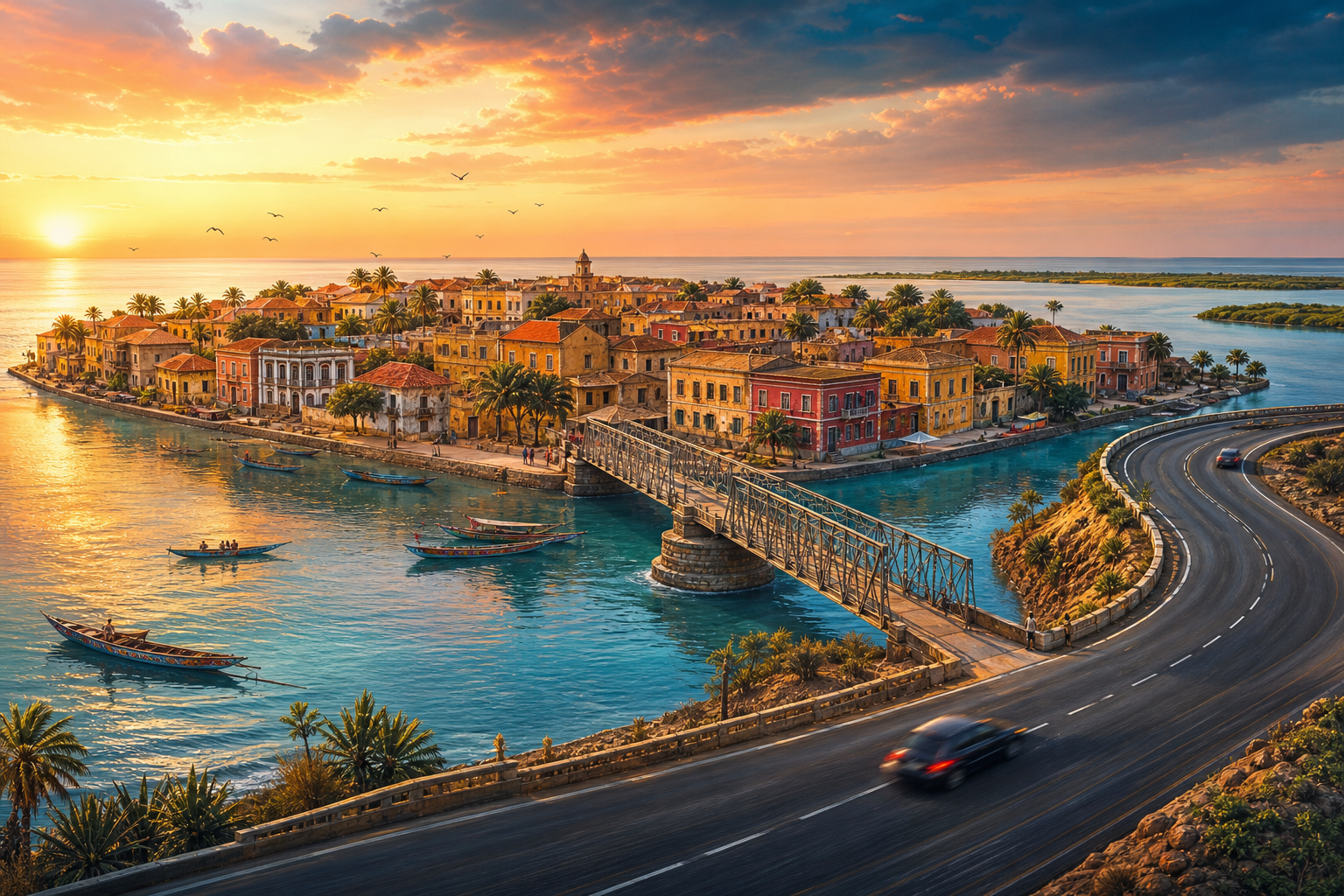
Saint-Louis was the capital of French West Africa before that role moved to Dakar in 1902, then capital of Senegal until 1958. The island forming the historic center, Ndar, is roughly one kilometer long and 400 meters wide, built up over three centuries into a dense layering of crumbling French colonial architecture, horse-drawn carriage traffic (calèches, still the practical way to move around the island), and buildings in fading ochre and terracotta that look better at dusk than in any photograph. The whole island is a UNESCO site. Unlike a lot of UNESCO-listed colonial towns, it isn’t staged for visitors — people live and work there, which means the atmosphere is real and the infrastructure is patchy.
The Island and the Two Bridges
Ndar sits between the Senegal River on one side and a narrow channel on the other, connected to the mainland by the Pont Faidherbe — a nineteenth-century iron bridge brought over from a cancelled project in Egypt and reassembled here, designed by Gustave Eiffel’s engineering office — and to the Langue de Barbarie peninsula on the other side by a smaller bridge. Cross the Pont Faidherbe on foot at sunset when the light hits the river; it’s worth doing once, and the traffic management on it is informal enough that walking gives you more control than you’d think.
The Langue de Barbarie is the narrow sand strip on the Atlantic side, where the fishing quarter Guet Ndar operates. Pirogues — traditional wooden fishing boats painted in vivid blues and greens and oranges — launch through the surf in the mornings and return mid-afternoon. The surf is genuinely dangerous. Saint-Louis has one of the highest rates of fishing fatalities in West Africa because the sandbar at the river mouth creates a break that’s difficult to navigate in anything but calm conditions. The beach looks inviting; the current isn’t.
What to Actually Spend Time On
The afternoon fish landing at Guet Ndar — roughly 3pm to 5pm depending on when the boats went out — is the most visually arresting thing in the city. Not a tourist performance: the practical unloading of the day’s catch, buyers negotiating on the sand, and a smell you won’t forget. Go with a guide the first time if you haven’t navigated a working West African fish market before; it’s easier to orient and less likely you’ll end up in the middle of serious commerce.
The Musée Municipal de Saint-Louis on Ndar is small and underfunded but worth an hour. It covers the city’s administrative history, early photography from the colonial period, and some material on the tirailleurs sénégalais — the West African soldiers conscripted into the French army, a history that gets almost no attention in Europe-facing accounts of the two World Wars. The museum isn’t reliably staffed; try the morning and have a backup plan.
For food, the local version of thiéboudienne in Saint-Louis uses a smoked fish base that differs from the Dakar preparation — less sweet, more aggressive. A few restaurants on the island serve it properly rather than the softened version calibrated for French package tourists. Ask whoever you’re staying with for a recommendation rather than consulting TripAdvisor rankings, which skew heavily toward those same package-tourist spots.
Djoudj and the Surrounding Area
The Djoudj National Bird Sanctuary is 60 kilometers northeast of the city, accessible by road then boat. From November through April it holds one of the larger concentrations of migratory waterbirds on the continent — pelicans, flamingos, herons, African spoonbills — and was among the first wetlands designated under the Ramsar Convention. If you’re not a birder it’s still a worthwhile boat trip through flooded acacia scrubland. If you are, it needs more than a morning; book a guide who knows the specific roost sites rather than joining a generic half-day group where you’ll see the obvious concentrations and miss the rest.
Djoudj works as a day trip from Saint-Louis, but it’s a long one. The roads are unpaved for the last stretch and passable conditions depend on that year’s flood levels from the Senegal River. Confirm access before committing to a departure time — this is one of those situations where whoever you’re staying with has more current information than any website.
Practical Matters
Getting here from Dakar: the shared sept-place — seven-seater Peugeot wagons that form the backbone of intercity transport in Senegal — leaves from Gare Routière Pompiers and takes three to four hours depending on traffic leaving the capital. Cost is well under 5,000 CFA. Private cars can be arranged through Dakar guesthouses if you want door-to-door.
The best places to stay on Ndar are guesthouses built into restored colonial-era maisons. Staying on the island is worth a small premium over mainland hotels for the atmosphere alone. Book ahead between November and January, when Djoudj draws visitors and the harmattan winds make the climate genuinely manageable rather than punishing.
A real caveat: poverty in Guet Ndar is not backdrop, and the tourist economy here is thin. The flip side of a place that hasn’t been polished for visitors is that the infrastructure reflects that too — power cuts are routine, water pressure unreliable, and not everywhere that looks open is operational. Build slack into the day, and weight the guesthouse owner’s opinion on what’s actually worth visiting over anything written by someone who hasn’t been recently.
Saint-Louis suits travelers who are genuinely interested in a place rather than efficiently collecting it. If your Senegal trip has three days, it probably doesn’t fit. If you have a week with Dakar as your entry point, two nights here changes what the whole trip feels like — and that’s the question worth deciding before you book anything else.