
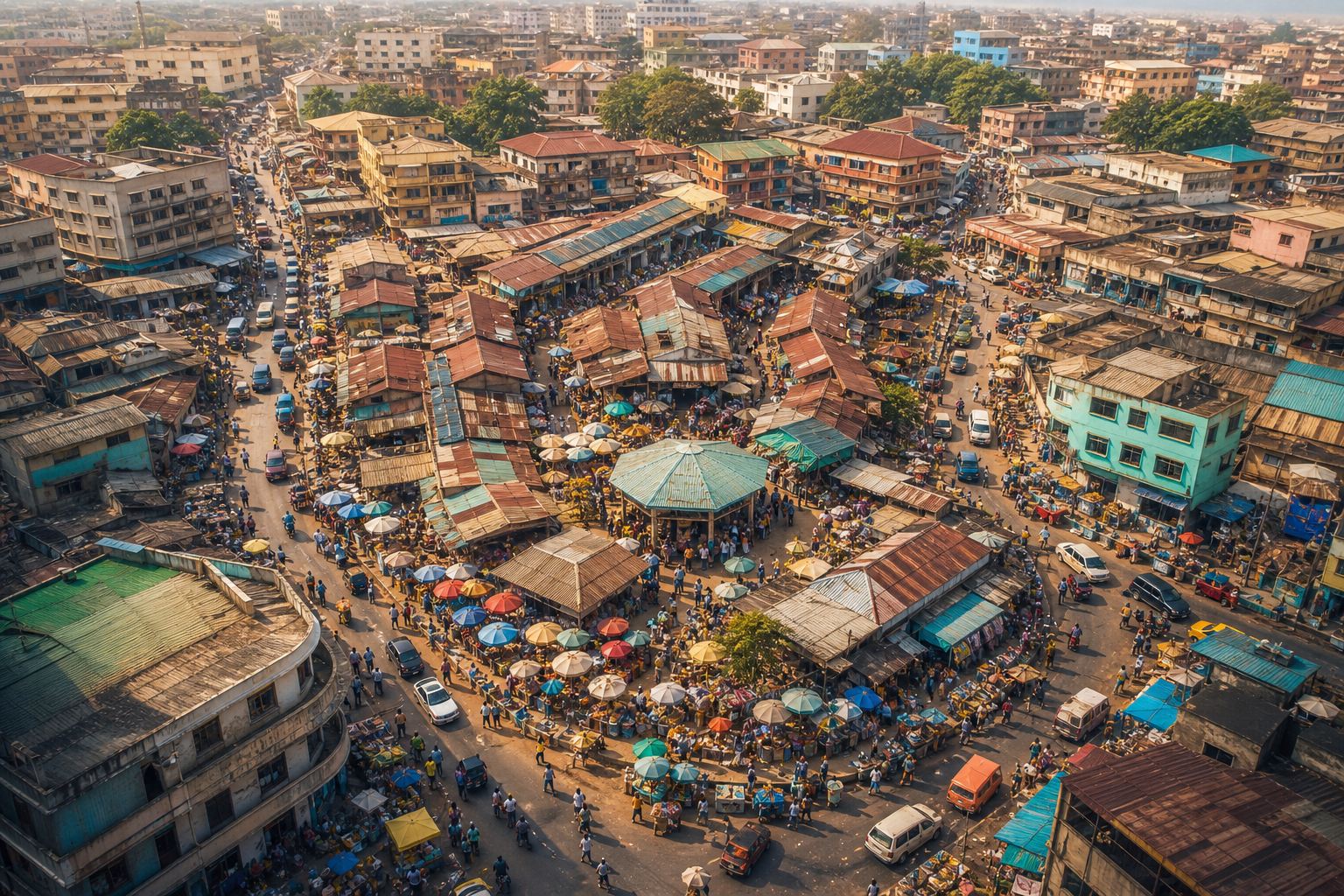
Accra, Ghana: The West African Capital That Moves Fast and Sits Deep
View larger map | Map data © OpenStreetMap contributors
Most West Africa itineraries treat Accra as a transit formality — arrive, clear customs, sleep, move on to Cape Coast or the north. That’s a mistake, and not a small one. Accra is one of the most genuinely dense cities on the continent for things that are actually worth your time, and most visitors spend theirs in the wrong neighborhoods.
The beach clubs along Labadi get the Instagram traffic. Skip them unless you specifically want a loud weekend crowd and a 50-cedi entry fee. The city earns its time in other directions.
Where to Actually Be
Jamestown is the starting point. The colonial-era lighthouse, the boxing gyms that have been running for decades, the pastel-and-rust fishing harbor — this is the oldest part of the city and it rewards slow walking more than any curated tour. Friday evenings you’ll sometimes catch the community boxing sessions that have made Accra’s Jamestown gyms modestly well-known in West African sports circles. It’s not a performance for tourists, which is exactly why it’s worth catching if the timing works.
Osu is where you’ll eat and drink without effort — dozens of restaurants compressed into a walkable strip, ranging from local chop bars to Lebanese-run spots that have been feeding Accra’s business community for thirty years. The neighborhood is busy, occasionally chaotic, and functional in a way that purely tourist-facing areas never are.
Labone and Cantonments are quieter and more residential — this is where longer-stay visitors and expats tend to settle, and there are small galleries and coffee shops scattered through both that don’t appear in most first-trip guides. The Nubuke Foundation in Labone is one of the better contemporary art spaces in the city and is almost always uncrowded.
Makola Market and the Commercial Center
Makola Market is enormous, genuinely working (not a tourist market), and not for the directionally uncertain. It sells fabric, food, electronics, hardware, household goods, and things that don’t have obvious categories — in a grid that doesn’t quite behave like a grid. Go with time and without a hard agenda. Kente fabric is sold here at a fraction of the price you’ll pay in craft markets targeting visitors; quality varies and knowing the difference takes experience, but asking vendors directly is generally fine and the shopping pressure is lower than you’d expect.
The streets around Makola toward Tudu are where public transport converges and the city shows its actual commercial logic — STC buses, tro-tros, street food vendors, money changers, and the specific organized chaos of a city that runs on informal systems that work once you understand them.
The Cape Coast Question
Cape Coast Castle and Elmina are the places every visitor to Ghana is told they must see, and the instruction is correct — but the framing matters. These are active sites of memory around the transatlantic slave trade, including the Door of No Return through which enslaved people were loaded onto ships. The guided tours are harrowing and deliberately so. Going in expecting a historical tourist site and leaving having understood something different about the weight of what happened there is the standard experience, and it should be.
The drive from Accra takes roughly two to three hours depending on traffic out of the city. It’s doable as a day trip, but a night in Cape Coast itself gets you the castle at opening time before the larger tour groups arrive, and the town is worth an evening walk on its own terms.
Practical Things Worth Knowing
Ghana has had multiple peaceful electoral transitions since the 1990s and is among the more politically stable countries in West Africa — worth stating plainly because the regional assumption many travelers carry (that the whole subregion operates at the same risk level) is inaccurate here. That said, Accra has real traffic, real petty crime in crowded areas, and the normal health considerations for the region apply: yellow fever vaccination is required for entry, and malaria prophylaxis is worth discussing with a travel medicine clinic before you go.
The Ghanaian cedi fluctuates. Check the rate the week you arrive rather than relying on anything printed months earlier. Mobile money under the Ghana Interbank Payment and Settlement Systems is how large portions of the local economy actually move, and some vendors will prefer it over cash — though as a visitor you’ll mostly be using cash or card.
Humidity in the south is year-round. The dry harmattan winds from the Sahara arrive between roughly November and March, which makes those months hotter in feel but lower in absolute humidity. The major rainy seasons run April–June and September–October. Neither window is unusable, but if you’re heat-sensitive, harmattan months give you the most tolerable conditions.
Food Worth Seeking
Waakye — rice and beans cooked with sorghum leaves, served with shito, fried plantain, and usually a protein — is the breakfast and lunch dish that most visitors leave Ghana having never tried because they defaulted to restaurant menus. Find it at a street-side waakye seller before noon; it’s typically sold out by early afternoon. The combination is heavy and good in the way that only carb-forward breakfasts before a walking day can be.
Jollof rice is the dish Ghana and Nigeria have argued about on the internet for a decade. The Ghanaian version is smokier and uses a different tomato base. Form your own opinion rather than arriving with allegiance already declared.
Light soup with fufu requires the most local direction to find well-made. Ask whoever you’re staying with rather than a hotel concierge — the concierge will send you somewhere comfortable for foreigners, which is not the same thing.
How Long You Actually Need
Two full days in Accra plus the Cape Coast trip is a minimum that starts to feel adequate. Three days in the city lets you move slower and eat better. If you’re planning to go north to Kumasi or Mole National Park — both genuinely worth the effort — use Accra as your arrival city and re-evaluate it on the way back when you’re less jet-lagged and know what you actually wanted more time with.
Kumasi is Ghana’s second city and the cultural center of the Ashanti region; the Kejetia Market there is one of the largest open-air markets in West Africa and makes Makola look manageable by comparison. Mole is the largest national park in Ghana with reliable elephant sightings at the watering hole, but it requires either a flight north or a long road trip, and road conditions vary significantly by season.
The one thing worth front-loading before any of this: Accra disorients people who expect a city organized around visitor convenience. It isn’t, and that’s the whole point. Arriving without a tight agenda for the first day — just neighborhood walking and a waakye breakfast — does more to calibrate your sense of the place than any amount of pre-trip research.