
Windhoek Is Not a Jumping-Off Point
View larger map | Map data © OpenStreetMap contributors
Every Namibia itinerary treats Windhoek the same way: fly in, sleep at an airport hotel, rent a 4WD the next morning, and drive north toward Etosha or south toward Sossusvlei. The capital exists, in most people’s plans, as a logistical parenthesis. That’s a genuine waste — and it’s usually based on the assumption that Namibia’s value is exclusively in the wilderness, which is only half right.
Windhoek is a small city of around 430,000 people at 1,650 meters elevation. Mornings are sharp and evenings are cold enough to need a layer even in summer. It’s also one of the safer cities on the continent by crime statistics — not zero-risk, but the kind of place where walking around the central district during the day is genuinely fine rather than aspirationally fine.
Two Days Is Enough — But You Need Two
One night doesn’t work. The things worth doing here require a morning, an afternoon, and then another morning. You can’t compress that into a layover.
The Historic District and German Colonial Leftovers
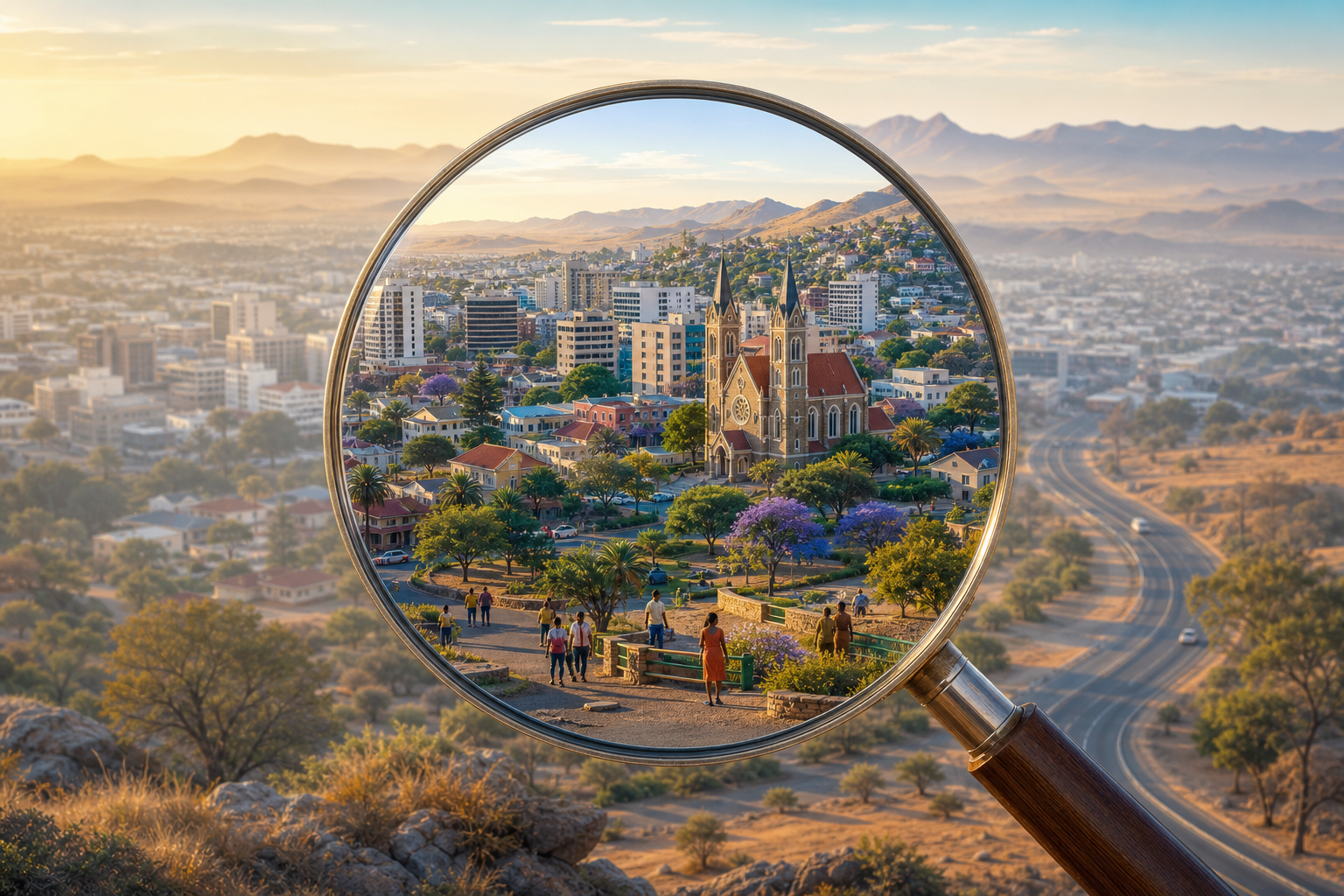
Windhoek was a German colonial administrative center, and that history is visible in the built environment in ways that are genuinely strange to walk around. The Christuskirche — a Lutheran church finished in 1910 in a hybrid neo-Romanesque and Art Nouveau style — sits on a low hill above the CBD and is still the clearest landmark in the skyline. The Old Fortress (Alte Feste) next to it houses the Independence Memorial Museum, worth an hour of your time: the exhibition on the 1904–1908 Herero and Nama genocide is one of the more honest museum treatments of German colonial atrocity you’ll find anywhere. Germany issued a formal apology only in 2021, and the political weight of that history is still active here in ways you feel when you’re standing in front of the displays, not just reading about it later.
The Tintenpalast — literally “Ink Palace” — is Namibia’s parliament building from 1913. You can walk the grounds. It’s in use, so the interior is off-limits, but the building and the rose garden surrounding it are open and oddly quiet for something that central.
Katutura: The Part of the City Most Itineraries Skip
During apartheid, Windhoek’s Black African population was forcibly relocated to Katutura — the name translates roughly as “the place where we do not want to live” in Otjiherero. The neighborhood is now home to around half the city’s population, and it’s where the actual food scene lives.
The Katutura Open Market on Saturday morning is where you want to be. Kapana — charcoal-grilled beef strips cut to order from a carcass hanging on a hook — is the thing to eat. You pay by the pile, not by weight, and it comes with fat slices of onion and a green chili sauce that varies in heat by stall. Go before 11am. By noon it’s over.
First morning in Windhoek, do this with a guide rather than solo — not because it’s dangerous, but because navigating Katutura’s layout without any bearings is genuinely disorienting. Several operators run half-day food tours out of the Post Street Mall area; they cover the market plus a shebeen lunch for around NAD 500–600 per person. The context is worth at least as much as the food.
Joe’s Beerhouse Is a Cliché for a Reason
Yes, it’s the most famous restaurant in Windhoek. Yes, it’s touristy. But if you want to eat game meat — oryx, kudu, warthog, crocodile — in a setting that isn’t a hotel restaurant making a half-hearted effort, Joe’s Beerhouse on Nelson Mandela Avenue is where you go. The game platter is reliable and the portions are large. Book ahead for dinner, especially on a Friday. The outdoor garden mixes locals and tourists in a way that feels earned rather than staged.
Daan Viljoen Game Reserve Is 25 Minutes from the City Center
Most people find out about this only after leaving Namibia. Daan Viljoen is a small reserve immediately west of Windhoek with zebra, giraffe, eland, kudu, and around 200 bird species. No big predators, which means you can walk the trails unguided. The morning loop — roughly 4km, not strenuous — starts at the main camp and takes about two hours at a relaxed pace. You will see animals. Not guaranteed megafauna, but zebra on a Windhoek morning while you’re still adjusting to the country is a better first few hours than sitting in your hotel room waiting for jet lag to pass.
Entry runs around NAD 100–120 for international visitors. Namibia Wildlife Resorts manages the reserve and takes bookings for the chalets on-site — they overlook a waterhole, and the bird activity at dawn is worth setting an alarm for.
Practical Notes Worth Knowing
Hosea Kutako International Airport is 45km east of the city center. Budget 45–60 minutes for the drive. There’s no rail link and no reliable airport bus service. Car hire desks are at the airport, which is where most people pick up their 4WD; if you’re doing two days in Windhoek first, decide before you land whether to collect the car on arrival (useful for Daan Viljoen) or on day three (simpler if you’re exhausted from a long-haul flight).
The Namibian dollar (NAD) is pegged 1:1 to the South African rand, and rand is accepted everywhere in Namibia at the same rate. Cards work in most restaurants and shops in the central city. Outside Windhoek, carry cash.
Malaria risk in Windhoek itself is essentially zero — the city is too high and too dry. The north of the country, including the Caprivi Strip and Etosha’s northern edges, is a different situation. Check your specific itinerary rather than applying a blanket answer for the whole country; the range of risk within Namibia is wide enough that a single yes/no answer is misleading.
When to Go
Namibia’s dry season runs May through October — peak game viewing, but also when every lodge at Etosha is booked months in advance. Windhoek in June and July is cold at night, down to around 5°C, but reliably clear. The wet season (November–April) brings afternoon thunderstorms that are dramatic without being catastrophic, and the landscape around the city turns green in a way that dry-season photos never show. If Etosha is your main event, book the dry season and do it early. If you’re more focused on the coastline or Sossusvlei, the shoulder months — April–May or September–October — give you workable weather without peak-season lodge prices.
One timing note that actually matters: Sossusvlei requires booking Sesriem camp or a lodge near the gate well ahead if you want to enter at dawn. The dunes at midday are flat and washed out. The first hour after sunrise is a different place entirely, and you only get that window if you’re already past the gate when it opens.
Put two nights in Windhoek at the start of the trip, not bolted on at the end when you’re tired and out of time. You’ll be sharper, the city will make more sense, and Namibia generally reads differently once you’ve spent a morning in Katutura rather than just passed through an airport terminal — it’s the difference between having some purchase on what you’re looking at and just looking.