
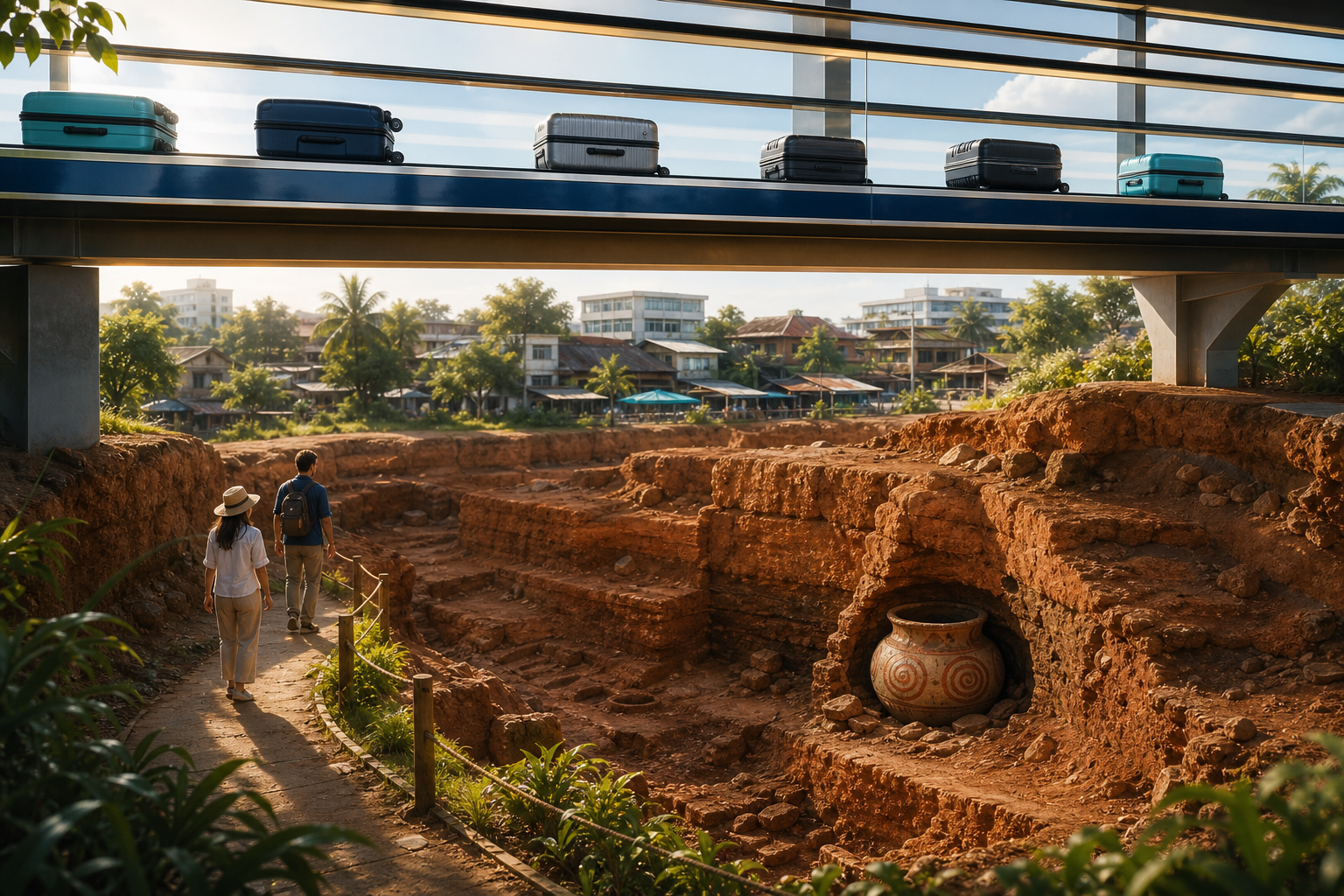
Udon Thani sits in Thailand’s northeast, about an hour’s flight from Bangkok, and most travelers pass it without a second thought — it’s a transit node for people heading to the Mekong river towns or crossing into Laos at Nong Khai. That’s a mistake. Spend two or three nights here and you’ll find a mid-sized Thai city with almost none of the backpacker infrastructure that makes places like Pai or Koh Samui feel like theme parks, and almost all of the things that make northeastern Thailand — Isaan — genuinely different from the rest of the country.
View larger map | Map data © OpenStreetMap contributors
Why It Gets Overlooked
The honest answer is convenience. Bangkok to Chiang Mai has dozens of daily flights and a well-worn tourist circuit. Udon Thani has flights too — Thai AirAsia and Nok Air both serve it from Bangkok, under an hour, often under 1,500 baht if you book ahead — but nobody’s writing three-part Instagram guides about it. No famous cooking school. The temples aren’t in every travel magazine.
What it does have: a genuinely local food scene built around Isaan cooking, which is a distinct regional cuisine that’s spicier, sourer, and heavier on fermented fish paste (pla ra) than the Thai food most visitors are used to. Larb moo, papaya salad made with the fermented crab version you won’t find on tourist menus, grilled pork neck from the street vendors on Prajak Road at night — this is the kind of eating that makes you realize how much mainstream Thai restaurants abroad have rounded off the edges of a cuisine that, in its home region, doesn’t do that.
Ban Chiang: The Archaeological Site Worth Building Your Itinerary Around
About 50 kilometers east of the city, Ban Chiang is a UNESCO World Heritage site that most people have never heard of. It contains some of the earliest evidence of bronze production in Southeast Asia — artifacts dating back over 3,000 years, pottery with distinctive swirling red designs that’s become a regional motif, and a site museum that’s small but genuinely good at explaining what was found here and why it matters.
One of the museum buildings has an actual excavation pit left partially exposed — a section of the dig preserved so you can see the layers of burial goods exactly as archaeologists found them. Not a reconstruction. The real thing, and it puts the glazed reproductions for sale at every market stall in the region into completely different context.
Getting there without a car is doable but takes planning. Songthaews (shared pickup trucks) run from the Udon Thani bus terminal toward Ban Chiang, but schedules are loose and the last return runs early afternoon. The easier move is hiring a tuk-tuk driver from the city for a half-day — around 400–600 baht — which takes the logistics pressure off entirely.
The Red Lotus Lake (Talay Bua Daeng)
From roughly December through February, Nong Han lake — about 45 minutes south of the city — fills with red lotus flowers. The only way to see it properly is by boat, hired from the small pier at Ban Diam before 8am, when the flowers are open and the light is low. By midday the blooms start closing and whatever crowd exists — this is not Fushimi Inari — has come and gone.
Be precise about timing here: outside December–February, this isn’t worth a trip. The lake is there year-round, but without the lotus bloom it’s just a lake. If your dates fall in the hot season (March–May) or wet season (June–November), skip it and reallocate the half-day elsewhere.
Nong Khai Is 55 Kilometers Away — Don’t Ignore It
Udon Thani pairs naturally with Nong Khai, the Mekong river town right on the Lao border. They’re connected by Route 2 and a regular bus service that takes about an hour. Nong Khai is quieter, strung along the riverbank, with an evening market that’s one of the more relaxed ones in the region — but its real draw is Sala Kaew Ku, a sculpture park built by a mystic monk named Luang Pu Bunleua Sulilat that contains some of the strangest religious art in Southeast Asia. Giant concrete figures, multi-armed deities, a massive pumpkin-shaped building you climb inside to find increasingly bizarre tableaux floor by floor. It sounds gimmicky. It isn’t. The scale and oddness of the place is genuinely hard to absorb on first visit.
Nong Khai also has the Friendship Bridge crossing into Vientiane, Laos, which is why some travelers are here at all. Using it purely as a border crossing and not spending a night in the area is the version of this trip you’ll regret.
When to Go and How to Book
November through February is the obvious answer — cool and dry, the lotus lake is active, the heat hasn’t arrived yet. March pushes temperatures into the high 30s Celsius and April (Songkran) makes logistics complicated in ways that are either interesting or exhausting depending on how much you enjoy being soaked in water on the street.
Hotels in Udon Thani are cheap by Southeast Asian standards — midrange options with pools run 800–1,500 baht a night, and the city has a handful of business hotels that are well-maintained without being characterful. Don’t expect boutique. The Centara is the reference-point option if you want something reliable and centrally located; smaller guesthouses cluster around the UD Town mall area and the night market.
Book flights at least two to three weeks ahead for the cheaper fares — the routes exist but capacity isn’t Bangkok–Chiang Mai level, and prices climb fast in the December–January window when Thai nationals travel domestically for the holidays.
One Honest Caveat
Udon Thani doesn’t hand you its appeal. There’s no clear tourist circuit, signage at historical sites is sometimes Thai-only, and the kind of local interaction that makes Isaan food culture legible requires either some Thai language or a willingness to point at things and look willing. If that sounds like friction rather than texture, this probably isn’t your city. But if you’ve done the obvious Thailand itinerary and found it a bit too smooth, Udon Thani is the version of the country that hasn’t been sanded down for you.
Before you book, it’s worth asking honestly: are you going to Thailand to see Thailand, or to see a version of it pre-arranged for foreign visitors? Udon Thani answers that question clearly in one direction.