
Why Shkodër Keeps Getting Passed Over
View larger map | Map data © OpenStreetMap contributors
Most Albania itineraries run Tirana–Berat–Gjirokastër and call it done. The north gets skipped, or at best treated as a one-night staging post for the ferry to Montenegro. That’s a real waste. Shkodër is one of the oldest continuously inhabited cities in the Balkans — Illyrian roots, Roman occupation, Byzantine layering, Ottoman centuries, then a particularly grim stretch under Hoxha’s bunker-building isolationism — and it wears all of that visibly, not just in plaques but in how the city is actually structured.
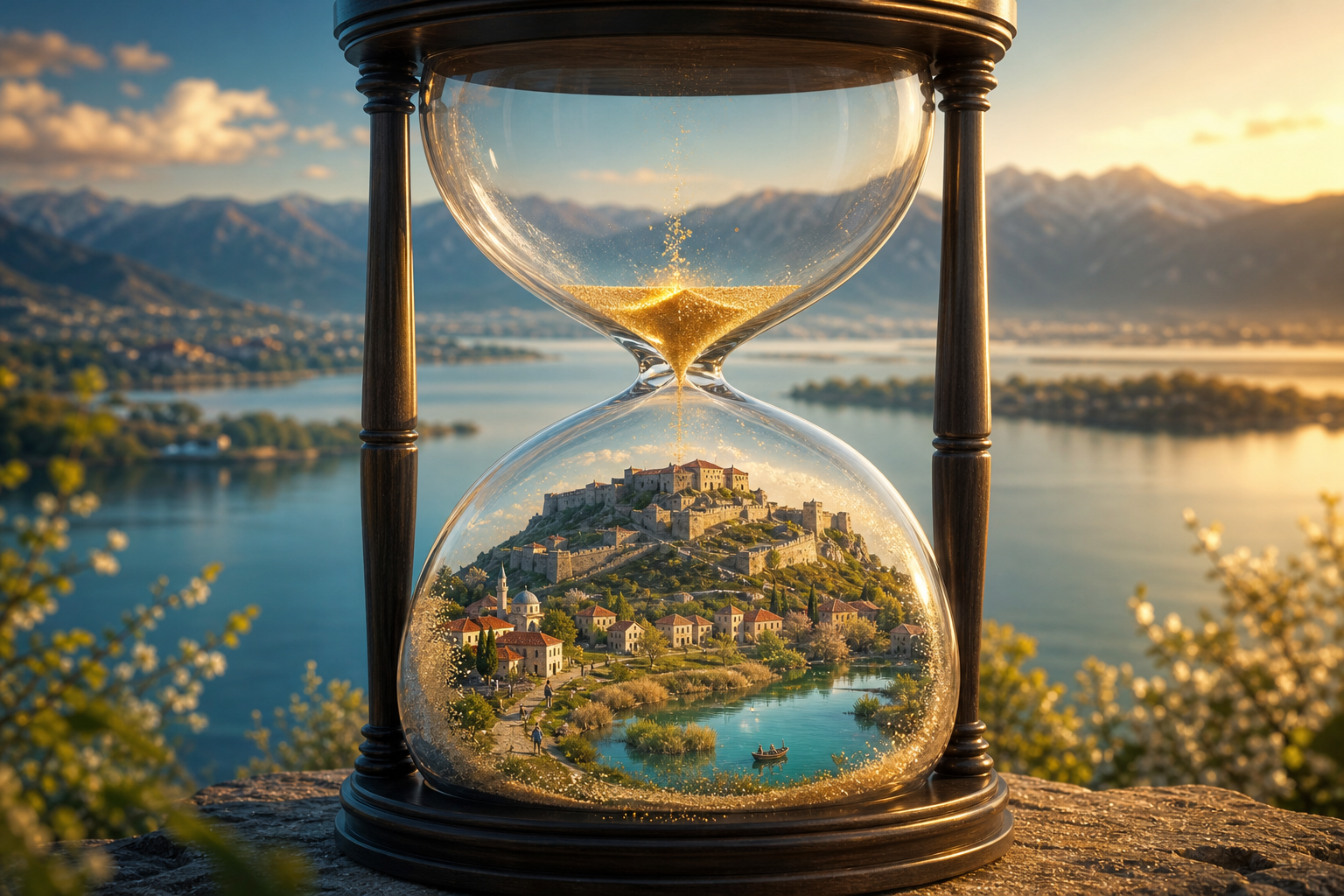
It also sits at the confluence of two rivers and a lake, which means the light here is different from Tirana: softer, reflective, the kind that makes the Rozafa Castle hill look luminous in late afternoon in a way that’s hard to photograph and easy to underestimate from a distance.
Rozafa Castle First, and Properly
The castle isn’t a ruin in the romantic-collapse sense. It’s a working historical site with intact walls, several layers of fortification from different centuries, and a small museum inside covering the Illyrian kingdom of the Ardiaei, who built the original citadel around the 4th century BCE. The views from the upper terrace take in Lake Shkodër — the largest lake in Southern Europe, shared with Montenegro — to the west, and the Buna and Drin rivers below. On clear days you can see into the mountains of Albania’s northeast.
The entry fee is minimal. Go in the afternoon when the light hits the lake properly, not midday. Plan two to three hours, not forty-five minutes — the site is large enough to reward moving slowly between levels, and the museum alone takes time if you’re actually reading.
There’s a foundation myth attached to the castle involving the wife of one of three brothers being walled alive into the structure so it would stand — which sounds like standard folklore until you realize the same story appears in Serbian, Macedonian, and Romanian folk traditions with nearly identical structure. Read about it before you go. The site means more with that context in your head.
The Pedestrian Core and What’s Actually in It
Kola Square and the Rruga Kolë Idromeno pedestrian street are where the city lives in the evenings. Shkodër has a large Catholic population — unusual for Albania broadly — and the mix of mosque and church architecture within a few hundred meters of each other in the old center isn’t a tourist talking point, it’s just the physical reality of layered history. The Ebu Bekër Mosque and the Cathedral of Saint Stephen are both worth visiting as structures.
The Historical Museum on Sheshi Demokracia is underrated. Albanian museums often have sparse English signage, and this one is no exception in places, but the section on communist Albania’s internal surveillance apparatus — the Sigurimi secret police — is well-documented and genuinely uncomfortable to stand in. Shkodër was particularly hard hit by the regime’s paranoia; the city’s Catholic identity made it a target. Some of the personal testimonies in that exhibition are the most direct account of the Hoxha period you’ll find displayed anywhere in the country.
Lake Shkodër and Getting on the Water
The lake is easily missed if you stay in the city center and don’t make a deliberate effort to reach the shore. Shiroka, about 8 kilometers west, is the nearest village with water access and a handful of fish restaurants. Order koran if it’s available — it’s a salmonid endemic to the lake, not something you’ll find elsewhere — rather than whatever the tourist-facing menu leads with. The bike or drive along the lake road in the early morning, before summer heat builds, is straightforwardly worth doing.
Boat trips are bookable at the water, not something that requires advance planning from outside Albania. Prices are negotiated on the spot, which creates the usual uncertainty around what’s fair, but the lake is calm enough that small local fishing boats are the normal mode rather than organized tour vessels.
The Marubi National Museum of Photography
This is one of the genuinely surprising museums in the region. The Marubi dynasty of photographers documented Albanian life continuously from 1858 through the early communist period — a visual archive across a century of extraordinary change, covering the late Ottoman period, both World Wars, and the immediate post-war years before Hoxha sealed the borders. The collection is large and the building is well-designed; the presentation has clearly had real effort put into it, which Albanian cultural institutions don’t always manage.
Budget two hours minimum. If you care about documentary photography or just about what Balkan life actually looked like in the late 19th century, this is one of the stronger collections in southeastern Europe — and it’s genuinely not on most visitors’ radar, which means it’s also not crowded.
Getting There and Practical Notes
From Tirana, Shkodër is about two hours north by furgon (shared minibus) — they leave from the Zogu i Zi area regularly through the morning, no advance booking required. You show up, pay a few hundred lekë, and go. The Tirana–Shkodër bus is the slower, cheaper alternative and runs closer to three hours.
From Kotor in Montenegro, the trip crosses the border at Muriqan and takes roughly two hours. This is the route that turns Shkodër into a convenient waypoint — and the mistake is treating it like one. Two nights is the minimum that makes the city feel like a destination rather than an overnight stop. Three nights lets you add a day toward the Valbona Valley or Theth without feeling rushed, though those are genuinely separate destinations that deserve their own time.
One honest note: infrastructure is improving but uneven. Some streets in older residential areas remain poorly lit and unpaved, accommodation options are narrower than in Tirana or Berat, and restaurant quality varies more than in cities with higher tourist volume. That’s not a deterrent — it’s just the actual situation. It’s also changing fast enough that specific hotel recommendations go stale quickly, and booking two to three months ahead in summer is now genuinely advisable. Shkodër has started appearing on itineraries in a way it simply wasn’t five years ago, and the bed availability hasn’t fully caught up.
When to Go
May and September are the obvious answers and they’re right. July and August are hot, drier, and increasingly busy as Albanian domestic tourism peaks. Winter is mild by Balkan standards but the lake light is often overcast for days at a stretch, which matters for Rozafa’s views more than you’d expect. Spring brings the rivers up and the surrounding landscape is genuinely green in a way it isn’t by July.
Shkodër also has an old carnival tradition in the days before Lent — one of the older such traditions in Albania — worth timing around if you’re in the region in late February or early March.
Most Balkan itineraries don’t leave room for wandering without an objective. That’s exactly what Shkodër rewards. If you’ve been moving fast through the south, give the city a real two nights and see whether it doesn’t change your sense of what the country actually is.