
Loja, Ecuador: The Southern Andes City Most Itineraries Never Reach
View larger map | Map data © OpenStreetMap contributors
Most Ecuador itineraries run a predictable triangle: Quito, the Galápagos, maybe Cuenca if there’s time. Loja sits four hours south of Cuenca by bus and barely appears on the shortlist — which is exactly why it’s worth going.
At 2,100 meters, Loja sidesteps Quito’s altitude problem and Cuenca’s weekend-tourist crowding. It’s a university city with a functioning downtown, a pedestrian street that actually has locals on it, and a music culture disproportionate to its size. Ecuador’s national anthem was composed here, and the city takes that seriously in ways that show up in its festivals and its conservatory.
What to Actually Do
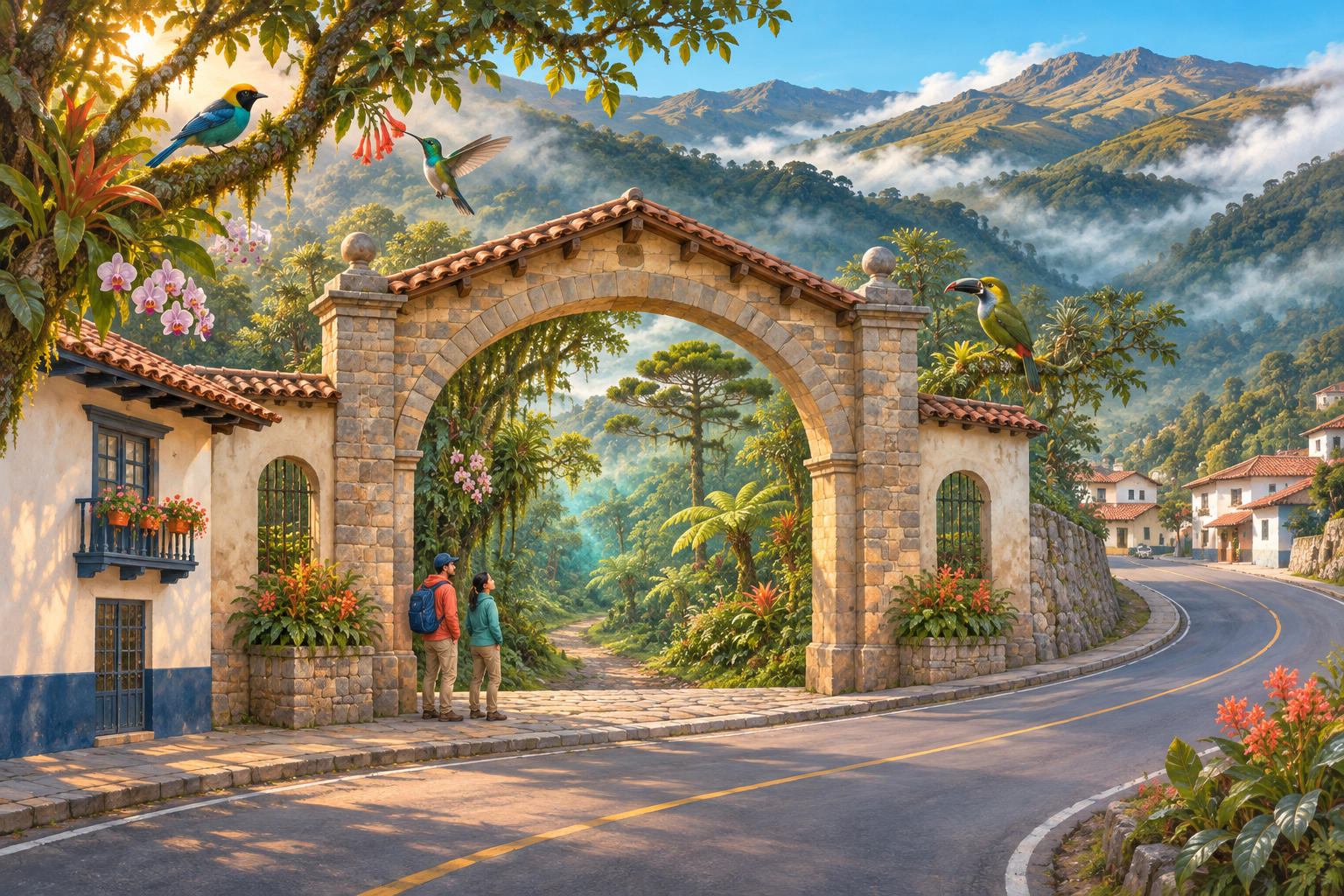
The historic center is compact enough to cover on foot in an afternoon without feeling rushed. The Plaza de la Independencia is the obvious starting anchor, but walk east toward the Puerta de la Ciudad — an odd castle-like gate built in the 1980s as a civic monument — and you get a better sense of how the city thinks about itself, which is with slightly more architectural ambition than the tourist infrastructure would suggest.
The Iglesia de Santo Domingo has an interior worth the door. The painted columns are the kind of thing guidebooks would photograph extensively if Loja had more guidebooks written about it.
Calle Lourdes is the pedestrian strip, and it’s genuinely pleasant in the early evening — not performed for visitors, just busy with the city doing its thing. Street food here runs cheap even by Ecuadorian standards.
Podocarpus National Park
This is the main practical reason to come south. Podocarpus spans two altitude zones — Andean highland and Amazonian lowland — which means bird diversity that’s hard to match anywhere in Ecuador outside of a dedicated rainforest trip. The park is legitimately undervisited, partly because access requires planning and partly because Loja itself is off the main tourist track.
The highland sector entrance at Cajanuma is the more accessible approach: about 15 kilometers from Loja by taxi, then a ranger station where you pay a small entrance fee. Trails range from a two-hour loop to a full-day hike to the páramo. Cloud forest most of the morning, clearing by early afternoon most days. Take that pattern seriously — start early, and don’t count on clear skies past noon.
The lowland sector near Zamora involves a separate trip east and adds a day if you want both. The birding there is different enough that serious birders treat the two sectors as separate destinations. Casual visitors are fine sticking to Cajanuma.
One real caveat: trail signage inside Podocarpus is inconsistent. Download a GPS track before you go — the park boundaries show up in most mapping apps, but internal trail accuracy varies — and treat posted signs as a secondary reference, not a primary one.
Vilcabamba: Worth the Half-Day Trip, Not an Overnight
Vilcabamba is 45 minutes south of Loja and carries an outsized reputation as a “Valley of Longevity” — a claim that got international media attention in the 1970s and has never been reliably verified, but has permanently shaped the town’s identity. It’s pleasant enough: small, surrounded by hills, with a mix of Ecuadorian retirees and long-term foreign residents drawn by the mild climate.
The honest version: Vilcabamba is a good place to spend a morning, rent a horse for two hours, and have a decent lunch. It’s not worth anchoring a whole trip around unless you’re specifically looking for somewhere to slow down for a week at very low cost — in which case it actually works well for that, with guesthouses priced around what you’d pay for a hostel dorm in Quito.
Going as a day trip from Loja makes more sense than the reverse.
Getting There
Loja has an airport — La Toma (LOH) — but it sits 35 kilometers from the city at a lower altitude, which means a 45-minute taxi ride into town. Flights connect to Quito via LATAM and smaller regional carriers. Check schedules carefully; the route isn’t high-frequency and cancellations happen, particularly during the rainy season (roughly October through May, with March and April being the wettest months).
The bus from Cuenca is the more reliable option. Direct buses run regularly, take around four hours, and cost a few dollars. Cooperativa Loja and other operators serve this route from Cuenca’s Terminal Terrestre. The road is paved and the scenery through the southern Andes earns a window seat — this isn’t a ride to endure, it’s one to actually look out the window for.
From Loja’s bus terminal, a short taxi gets you to the center.
When to Go
June through September is the drier window, which makes Podocarpus more accessible and the trails less muddy. The Fiestas de Independencia in November are Loja’s biggest cultural event, but if you’re prioritizing hiking over festivals, the dry months are the cleaner call.
Loja doesn’t have a crowd problem the way coastal Ecuador does. Weather is the variable here, not visitor volume. Even in the wet season, mornings tend to be clear enough for hiking — it’s messier underfoot, not a writeoff.
Where to Stay
Mid-range hotels are concentrated near the center, mostly around the Plaza de la Independencia. Nothing here is a design hotel, but several options are clean, reasonably priced, and walkable to everything worth walking to. Booking ahead only really matters during the November independence festival; outside that window, same-day availability is usually fine.
If you’re using Loja as a base for Podocarpus day trips, staying central and hiring taxis each morning is more practical than trying to lodge near the park entrance, where options are thin.
Loja isn’t going to replace Cuenca on the Ecuador itinerary for most people, and it doesn’t need to. What it offers is the southern Andes with almost no other tourists in the frame, a national park doing something genuinely different in terms of biodiversity, and a city that exists for its own population rather than for people passing through. That combination is rarer than it sounds.
If Podocarpus is on your radar at all, build the trip around Loja rather than trying to squeeze it in from Cuenca — the extra distance is real, but two or three nights there instead of one is not a marginal difference.