
The Problem with Thailand’s Northwest
View larger map | Map data © OpenStreetMap contributors
Most people who make it past Bangkok and Chiang Mai stop at Chiang Rai. That’s understandable — the White Temple is genuinely unlike anything else in the country, and the Golden Triangle has a pull that itineraries don’t resist easily. But Mae Hong Son, another four to five hours northwest of Chiang Rai by road, gets a fraction of the visitors and earns at least as much time.
The geography is what keeps people away. Route 1095 from Chiang Mai passes through 1,864 curves before it reaches Mae Hong Son — Thai tourism authorities have actually been marking that count on the route for years. Most travellers see that and book a flight instead. Reasonable call if you’re prone to motion sickness, but it means skipping the part that makes the destination make sense.
What Mae Hong Son Actually Is
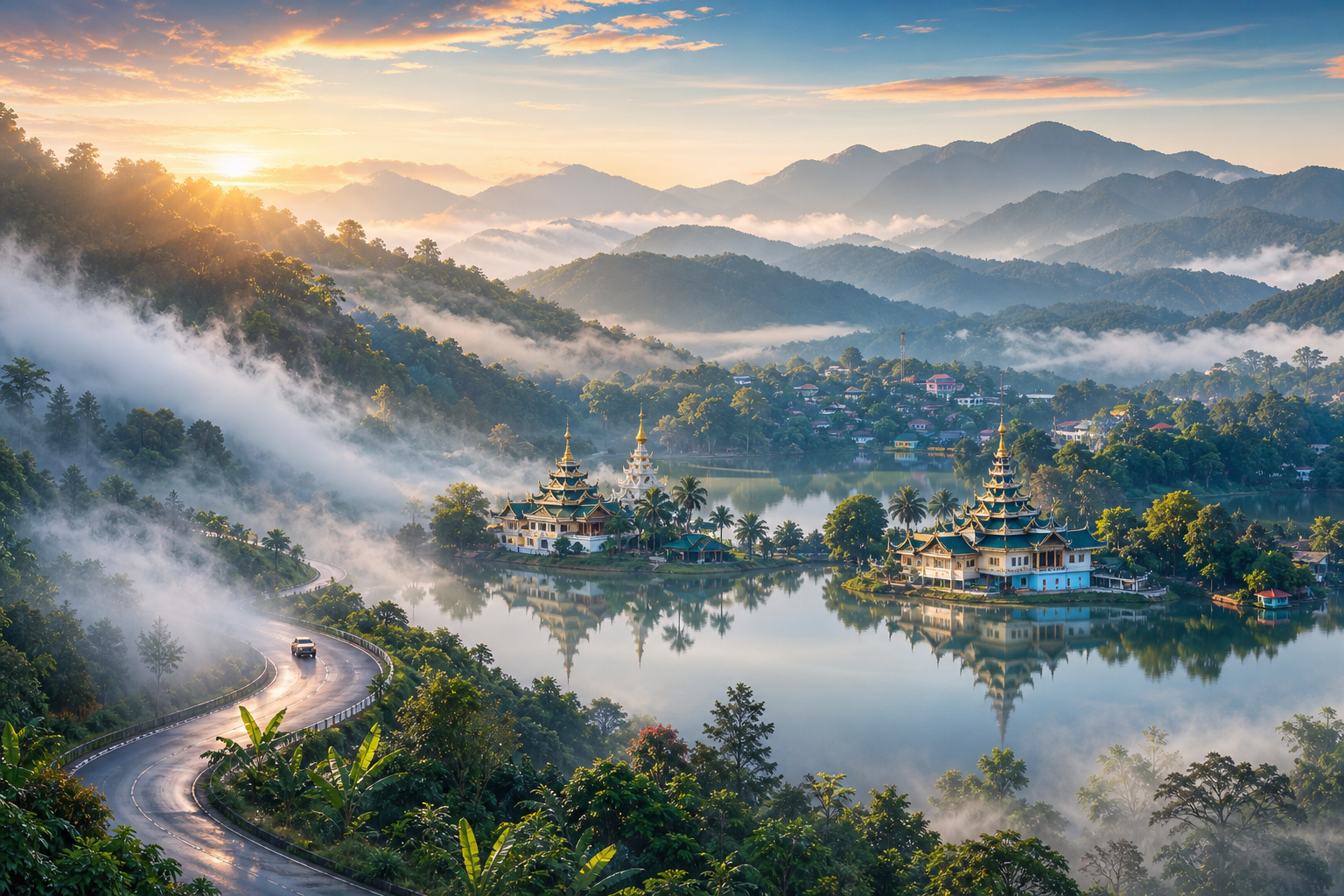
The town itself is small. Roughly 10,000 people, a lake at the center — Nong Jong Kham — and two temples right on its edge that are among the more photographed spots in northern Thailand without most tourists being able to name the town they’re in. Wat Chong Kham and Wat Chong Klang sit at the water’s edge and photograph best at dawn when morning mist sits on the lake and the mountains behind them are still grey. By 9am the mist is gone and the scene is pleasant rather than otherworldly. Set an alarm.
Mae Hong Son sits at around 800 meters elevation and shares a border with Myanmar for much of its province. The population mix reflects that: Karen, Shan, and Lahu communities in the surrounding villages, and a town that feels markedly different from the Thai-Chinese cultural blend of Chiang Rai. The food shows it — Shan-influenced noodle dishes, fermented soybean paste used as a base, things you won’t find the same way two hours south.
Wat Phra That Doi Kong Mu First
The hill temple above town is the practical first move on any itinerary. Two chedis sit at the top of Doi Kong Mu, the smaller hill immediately west of the town center, and the walk up takes about fifteen minutes from the base. From the top you get the best available view of the lake, the valley, and the mountains pushing into Myanmar. In the early morning, fog fills the valley in a way that makes the descent into town look like arriving somewhere that doesn’t quite exist.
Do this before breakfast on your first morning. It’s the kind of view that resets what the rest of the trip feels like, and it takes less than an hour including the climb. Don’t save it for the afternoon.
The Surrounding Province Is the Real Reason
The town is the base. Mae Hong Son province is the destination.
Tham Pla Fish Cave, about 17 kilometers north of town, is exactly what the name says: a cave shrine set into a limestone cliff face, with a stream running through it full of large carp considered sacred. It’s genuinely strange in the way that makes Thai religious sites interesting rather than just picturesque. Combine it with Pha Sua Waterfall, another 10 kilometers north, if you’re already on a motorbike — which you should be. The roads in this direction are good and traffic is light enough that the ride is the experience, not just the transport.
Ban Rak Thai — literally “the village that loves Thailand” — is about 45 kilometers north near the Myanmar border. It was settled by Kuomintang soldiers after 1949, and the result is a small lakeside community that feels aggressively Chinese despite being in Thailand: tea houses, Yunnan-style architecture, dried goods you’d find in Kunming. The oolong grown on the surrounding hills is genuinely good. This is the kind of place that sounds like a tourist recreation but is actually a lived-in, functioning village that happens to be strange to visit. Worth the drive.
Pai Is Closer Than You Think (But Don’t Confuse Them)
Pai is 111 kilometers east of Mae Hong Son on Route 1095, which sounds simple until you remember the curves. Budget two hours minimum. Pai has its own character — a well-established backpacker scene, a hot spring, enough cafés to make it feel like a destination rather than a waypoint. Routing through it rather than backtracking to Chiang Mai on the same road makes sense, but the two towns aren’t interchangeable. Mae Hong Son is quieter, more substantive, and less built around the idea of being discovered.
Getting There and When to Go
Kan Air and Bangkok Airways run small prop flights from Chiang Mai — about 35 minutes, and the approach into the mountain valley is worth the window seat. The aircraft are small and sell out; book ahead. There’s no train. Buses from Chiang Mai run along both the northern and southern routes, with the northern route through Pai being the more scenic option.
October through February is the honest answer for when to go. Cool-season mornings keep the mist lower in the valley, the hiking is comfortable, and the light does things that justify the trip. March and April bring smoke from agricultural burning across northern Thailand and Myanmar — air quality gets genuinely bad, not inconvenient-bad, and the haze kills the views that make Mae Hong Son worth visiting in the first place. The rainy season (May–September) has lush green hills but muddy roads and variable visibility.
One Practical Caveat
ATMs exist in town but the network sometimes rejects foreign cards without obvious explanation — bring cash from Chiang Mai. Accommodation runs from basic guesthouses around the lake to a handful of mid-range resorts on the edge of town; nothing in the five-star tier. The best-located places sit on or immediately adjacent to Nong Jong Kham and book up faster than you’d expect given how small the town is. Reserve ahead if you’re coming in December or January.
Two nights is the minimum that makes the drive or flight worthwhile. One night and you’ll see the lake temples and leave. The second night is what gets you into the province — which is the part that actually justifies putting Mae Hong Son on the itinerary. If you’re already budgeting time in northern Thailand, the question isn’t really whether to go; it’s whether to come from Chiang Mai through Pai or loop back the same way.