
Flores, Guatemala: The Town Most Petén Itineraries Completely Waste
View larger map | Map data © OpenStreetMap contributors
Nearly everyone who lands at Mundo Maya International Airport in Santa Elena is mentally already at Tikal. Flores — the small island town connected to the mainland by a single causeway — gets treated as a logistics base: one night in, one night out, maybe a beer by the lake. That’s a significant misreading of the place.
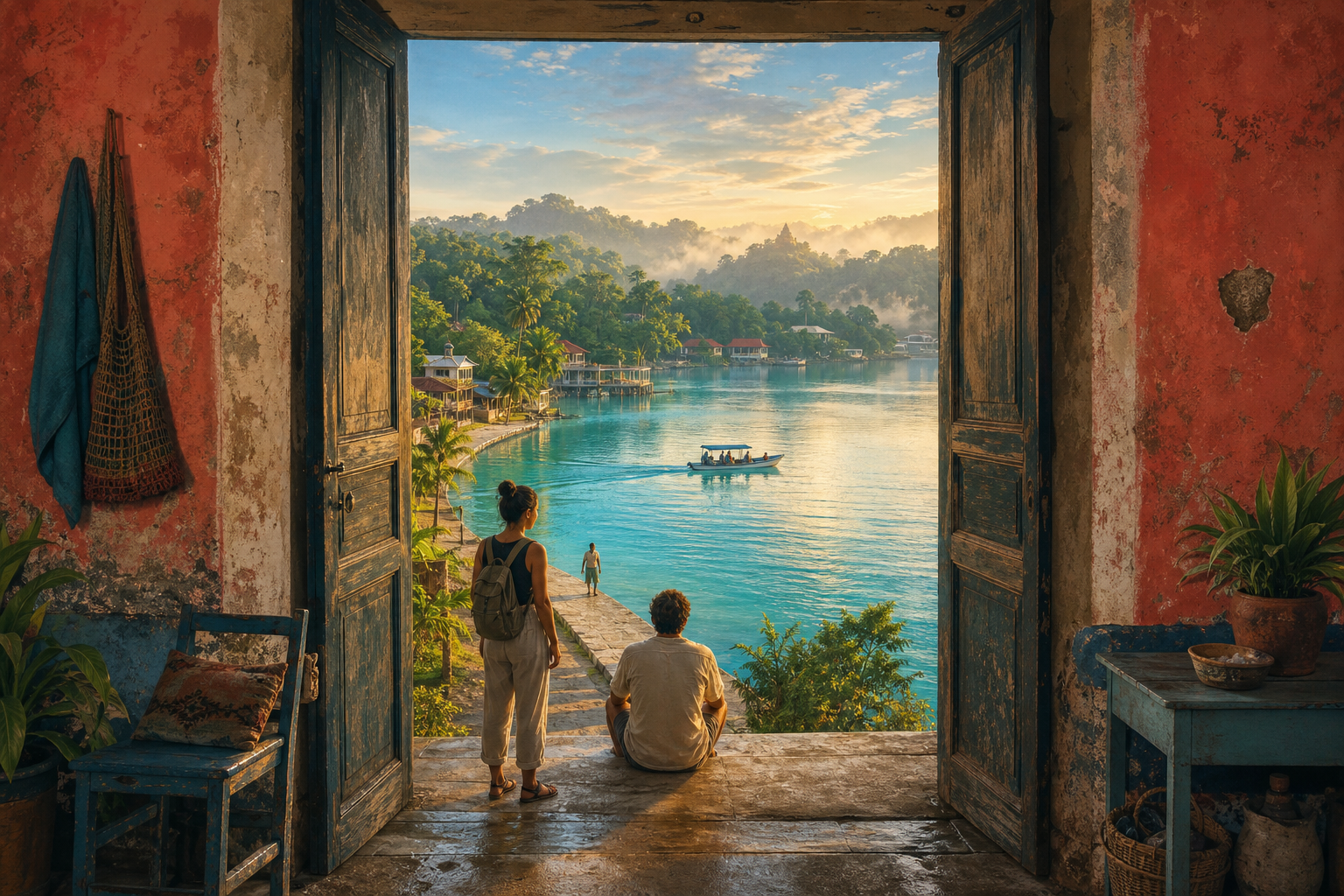
Flores sits on a small island in Lago Petén Itzá, and the town itself is genuinely pleasant in a way that has nothing to do with the ruins an hour north. The streets are narrow enough that cars are barely worth the trouble. The architecture is faded colonial — not preserved and polished like Antigua, but lived-in and honest. The lake is warm enough to swim in year-round. None of that makes it a destination on its own, but it does make it a place worth actually being in rather than just sleeping in.
Tikal — Yes, Go, but Do It Right
You’re going to Tikal. Of course you are. But the difference between a mediocre visit and a genuinely extraordinary one is almost entirely about timing.
The park gates open at 6am, and Tikal rewards early arrival more than almost any other archaeological site in the Americas. By 9am, tour buses from Flores and the Belize border have already deposited their first wave of visitors. By 10am the main plaza is noisy and hot — temperatures in Petén regularly push past 35°C between March and May, with humidity that makes it feel worse. The pre-dawn light through the jungle canopy at Temple IV is the thing people who’ve done this right actually remember.
The move most visitors skip: staying inside the park overnight. There are a handful of small lodges right at the site — Tikal Inn and the Jungle Lodge are the main options — and they’re not cheap relative to Flores accommodation, but waking up to howler monkeys at 5am with a ten-minute walk to the temples is categorically different from doing a day trip. The ruins after the last day-trippers leave in the afternoon are also something most people never experience.
One genuine caveat: if you have mobility limitations or aren’t comfortable walking several kilometers on uneven jungle paths in heat, Tikal is hard going. Most visitors only cover the central core of the site, but that’s still several hours of hiking on rough terrain. Bring more water than you think you need.
What Flores Actually Rewards Beyond Tikal
The lake towns around Petén Itzá are the thing almost no one investigates. San Andrés and San José, on the north shore, are reachable by lancha (small motorboat) from Flores and take you into communities where Spanish is still competing with the local Itzaj Maya language — one of the most endangered languages in the Americas, with fluent speakers now numbering in the dozens according to linguists working with the community. The language revitalization project in San José is accessible to visitors and worth a few hours if that kind of thing interests you.
El Remate, at the eastern end of the lake, sits at the junction of the road to Tikal and makes a quieter alternative base to Flores proper. It’s smaller, cheaper, and actually on the lakeshore rather than above it. If you’re staying more than two nights in the Petén region, splitting time between Flores and El Remate is more interesting than staying in one place.
Yaxhá: The Tikal Alternative That Isn’t Overcrowded
Yaxhá is about 65km east of Flores on the road toward Belize, and it’s the second-largest known Maya site in Guatemala. Most people have vaguely heard of it because a season of Survivor was filmed there. Visitor numbers are a fraction of Tikal’s — on a weekday morning you can realistically have major temples to yourself. The site sits between two lakes, Laguna Yaxhá and Laguna Sacnab, and the view from Temple 216 at sunset is legitimately one of the better views in Central America.
Getting there without your own transport requires some organization — shared shuttles from Flores exist but aren’t always reliable, and tuk-tuks won’t make it that far. Most guesthouses in Flores can sort a day tour or shared minivan, and booking the day before rather than morning-of is worth it. Budget roughly Q150–200 for the park entrance on top of transport.
El Mirador: Only If You’re Serious About It
El Mirador gets mentioned in every Petén conversation, and the reality of visiting it is completely different from the casual way it comes up. The site contains some of the largest Maya pyramids ever built — La Danta is among the largest pyramids in the world by volume — and it’s only reachable by a multi-day trek through jungle or by helicopter. The trek is typically five to six days return from the nearest road access at Carmelita, with a guide required. This is not a Tikal day-trip alternative. It’s an expedition.
If that’s what you’re planning, start organizing it before you arrive in Guatemala, not in Flores. The community guides in Carmelita need advance notice, and the rainy season (roughly June through October) makes the trail genuinely difficult — knee-deep mud is real, not a dramatic exaggeration.
Practicalities Worth Knowing
Flores is small enough that you don’t need to book far ahead for most of the year, but Semana Santa (Holy Week, the week before Easter) is the exception — Guatemalan domestic tourism fills the town completely, prices spike, and the atmosphere is chaotic in a way that may or may not suit you. December and January are pleasant and relatively dry, which makes them the obvious shoulder option if your dates are flexible.
The causeway town of Santa Elena, across from Flores island, is where the bus terminals and market are. Chicken buses — the repurposed US school buses that are the backbone of Guatemalan public transport — connect Santa Elena to Guatemala City in around eight to nine hours: uncomfortable, cheap, and a genuine cross-section of how most of the country actually moves. The tourist shuttle services that leave from Flores are faster and more comfortable but put you in a bubble that sees nothing.
The Belize border crossing at Benque Viejo del Carmen is about two hours east by bus from Santa Elena, which makes a Flores-to-Cayo route a logical extension if you’re building a longer itinerary through the region. Belize City is another three hours from there. The crossing itself is straightforward but cash-only on the Guatemalan side for the exit tax.
What This Place Actually Is
Flores isn’t going to be the highlight of a Central America trip for most people — Tikal probably will be. But giving the Petén region three or four days instead of one night makes the difference between ticking a box and actually understanding what you’re looking at: a region that was one of the most densely populated places on earth during the Classic Maya period, largely depopulated by around 900 CE for reasons archaeologists still don’t fully agree on, and now covered by jungle that’s actively under pressure from agricultural encroachment on its edges.
If you’ve already done Chichen Itza and Palenque and want something with less infrastructure around it, Petén is the right direction. Start with Tikal at dawn. That part everyone gets right — the rest of the itinerary is where the extra days pay off.