
Beirut Deserves More Than a Crisis Headline
View larger map | Map data © OpenStreetMap contributors
Beirut has been filtered through disaster coverage for so long that most travelers have stopped thinking of it as a place to visit at all. That’s a mistake — not a naive one, because the city’s problems are real and ongoing, but a mistake about what Beirut actually is and what a visit there involves in practice. The city remains one of the most genuinely interesting places in the eastern Mediterranean, precisely because it’s carried contradictions for decades that most cities only experience in passing.
The practical question comes first: is it safe to visit? The honest answer is that it depends when and where, and anyone who gives you a flat yes or no without qualifiers isn’t being straight with you. Check your government’s current travel advisory directly — not a travel blog’s summary of one, the actual advisory — because the situation does change. Southern Lebanon and the areas near the Syrian border are categorically different from Beirut’s central neighborhoods, and conflating them is where most of the confusion lives. The city itself, particularly Gemmayzeh, Mar Mikhael, and the Hamra district, functions as a city. People go out, eat, run businesses. It is not a war zone to walk around in.
What the City Actually Looks Like on the Ground
Beirut sits on a peninsula jutting into the Mediterranean, and the topography alone makes it distinctive — sea on three sides, Mount Lebanon rising almost immediately to the east, snow-capped in winter. The city is compact enough that most things worth seeing are within a few kilometers of each other, but don’t mistake compact for simple. The neighborhoods have different personalities sharply enough that moving between them feels like changing frequencies.
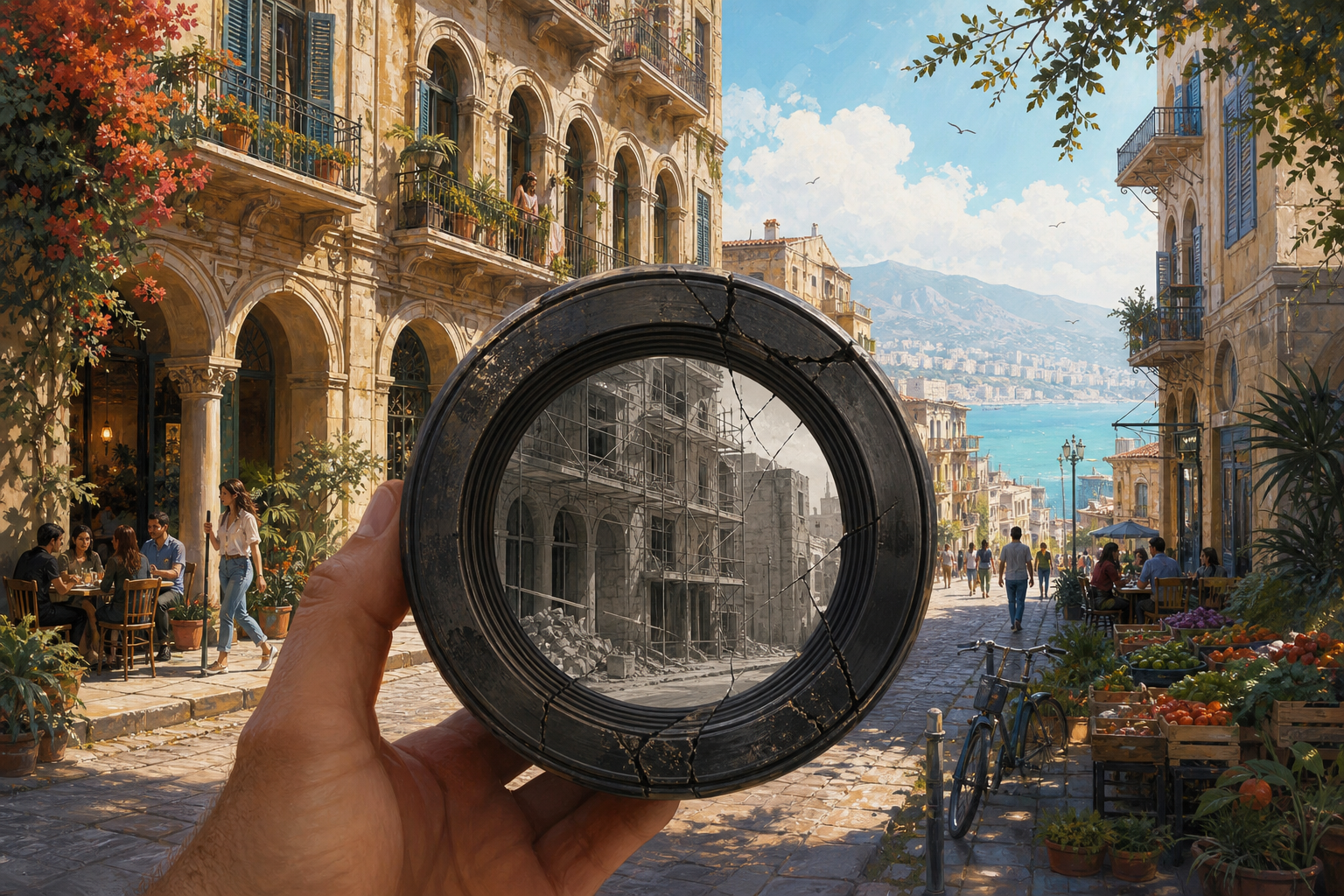
Gemmayzeh and Mar Mikhael, running roughly parallel along the eastern edge of the city center, are where most visitors end up spending evenings. The architecture here is the classic Beiruti triple-arch style — Ottoman-era buildings with arched windows stacked in triplicate across each floor — many of them pockmarked with bullet holes that nobody has bothered to fill, because they’re part of what the buildings are now. The August 2020 port explosion did serious structural damage to this area. Some buildings have been restored, others remain shored up with scaffolding or are simply gone. Walking through it is not comfortable in the way a sanitized old town is comfortable. It’s more honest than that.
Hamra, on the western side, is the historically cosmopolitan neighborhood — universities, old bookshops, café culture that predates the word. It’s more workaday than the bar district to the east, and better for getting a sense of the city as a place where people actually live rather than a destination assembled for visitors.
The Food, Which Is Not a Small Thing
Lebanese food is one of the genuinely great culinary traditions, and eating in Beirut means eating it at the source rather than the approximation. Mezze as a format — dozens of small dishes arriving in no particular order, shared across a table, constituting the entire meal — works differently when the hummus is made same-day from dried chickpeas, when the kibbeh nayyeh (raw minced lamb with bulgur and spices) is something the kitchen takes seriously rather than a nod toward authenticity.
The Souk el Tayeb market runs Saturday mornings in the Saifi district and is one of the better farmers’ markets in the region — local producers, regional cheeses, seasonal produce, preserved goods like za’atar blends and olive oils that are actually worth carrying home. It started as an effort to support rural Lebanese producers and has kept that orientation rather than drifting toward the tourist-market version of itself.
For a proper sit-down meal, the restaurants in Badaro — quieter than Gemmayzeh, slightly more residential — tend toward the serious end of the Lebanese food spectrum without the price markup that comes with nightlife proximity.
What’s Worth the Trip Outside the City
Lebanon fits inside a footprint roughly the size of Connecticut, which means day trips from Beirut reach genuinely significant places in an hour or two by car.
Byblos (Jbeil in Arabic) is one of the oldest continuously inhabited cities on earth, and the archaeological site there layers Phoenician, Egyptian, Persian, Crusader, and Ottoman history in a single compact area above the Mediterranean. The Crusader castle built from recycled Roman columns is worth the trip on its own. The old fishing port next to it is a reasonable place to have lunch afterward.
The Jeita Grotto, about 18 kilometers north of Beirut, is a system of interconnected limestone caves with an underground river running through the lower section, which you navigate by boat. It sounds like a minor tourist sight; it isn’t — the scale of the lower cave is genuinely extraordinary. Check current hours before going rather than assuming it’s open, since access has varied.
Driving east over the mountains into the Bekaa Valley reaches Baalbek, where the Roman temple complex is among the largest ever built. The six remaining columns of the Temple of Jupiter are a scale that photographs do not adequately prepare you for. The drive over the mountains is part of the experience — the elevation change is abrupt, the views back toward the coast are clear on a good day, and the cedars in the Shouf reserve are worth stopping for. Baalbek sits in a part of the country where travel advisories sometimes carry specific guidance separate from Beirut. Check before you go; this is exactly the kind of distinction that matters.
The Practical Layer
Currency is a real complication. Lebanon’s financial collapse starting in 2019 effectively destroyed the official exchange rate, and a parallel dollar economy has operated since. Most transactions happen in US dollars rather than Lebanese pounds, and the rates you’ll encounter reflect black-market dollar values rather than any official figure. Bring US dollars in cash, in small denominations. Cards may or may not work — assume they won’t and plan accordingly.
Power outages are a feature of daily life rather than an exception. Most buildings run on private generators during the hours when the national grid goes down, which can be most of the day. Hotels manage this adequately, but you’re not in a city with reliable infrastructure and it’s worth knowing that going in.
Getting in: the practical option is flying into Rafic Hariri International Airport (ICAO code: OLBA), which operates normally. There’s no functional intercity train system in Lebanon. Car hire or shared taxis are how you move once you’re outside Beirut.
Timing: spring (April–May) and fall (October–November) give you Mediterranean temperatures without summer heat and the crowds that come with it. Summer brings a significant wave of Lebanese diaspora returning, which pushes prices up and changes the feel of the city noticeably. Winter is mild on the coast while the mountains are in ski season simultaneously — a strange and specific combination that Lebanon has always leaned into.
One Honest Caveat
Visiting Beirut right now involves holding a degree of uncertainty that most destinations don’t ask of you. The city’s trajectory isn’t settled. Businesses you read about may have closed; the neighborhood you planned to stay in may be easier or harder to navigate depending on when you arrive. If managing that kind of open variable sounds exhausting, the timing might genuinely be wrong for you.
But if you go, go with actual curiosity rather than disaster tourism impulse. The city has been attracting outside narratives about itself for fifty years and has its own interior life that persists regardless. Finding that is the actual point.
Read the current FCDO or State Department advisory for Lebanon specifically — not the region, Lebanon — before you book anything. Then decide from there, rather than from either the panic coverage or the breathless “Beirut is back” travel pieces. Both are simplifications of the same complicated place.