
Bridgetown, Barbados: What the Capital Actually Rewards When You Leave the Resort
View larger map | Map data © OpenStreetMap contributors
Most people who fly into Grantley Adams, grab a transfer north to Speightstown or west to Holetown, and spend a week on a beach have technically visited Barbados without spending a meaningful hour in its capital. Bridgetown is where around 100,000 Bajans actually live and work, and it’s a UNESCO World Heritage site — the historic garrison and city center have been on the list since 2011 — but you’d never know it from the way most Caribbean itineraries are structured.
This isn’t a post arguing that Bridgetown is secretly a world-class city. It isn’t. But it has a few hours’ worth of genuinely interesting things that most resort guests skip entirely, and if you’re already on the island for a week, skipping all of it is a specific kind of waste.
The Historic Center: What’s Actually There
The UNESCO designation covers two distinct areas: the Garrison, about 1.5 kilometers south of the city center, and the historic commercial district of Bridgetown itself. The Garrison was the British military headquarters for the entire Caribbean — the savannah in the middle is one of the oldest horse racing tracks in the western hemisphere, still in active use on public holidays — and the ring of 17th and 18th century military buildings around it is far better preserved than you’d expect. The Barbados Museum occupies the old military prison on the Garrison grounds and is worth ninety minutes of your time. The natural history section is uneven, but the social history floor, which covers the full arc from pre-Columbian Arawak settlement through the sugar economy and emancipation, doesn’t sanitize much.
The commercial center is scruffier and more interesting. Broad Street is the main shopping drag and mostly unremarkable, but the streets behind it — particularly Swan Street and its immediate surroundings — are where Bridgetown actually functions as a city. Swan Street runs dense with small traders, fabric vendors, and the kind of hardware and provisions stores that serve actual residents. It’s not photogenic in any curated sense, but it’s the most honest version of the city you’ll find.
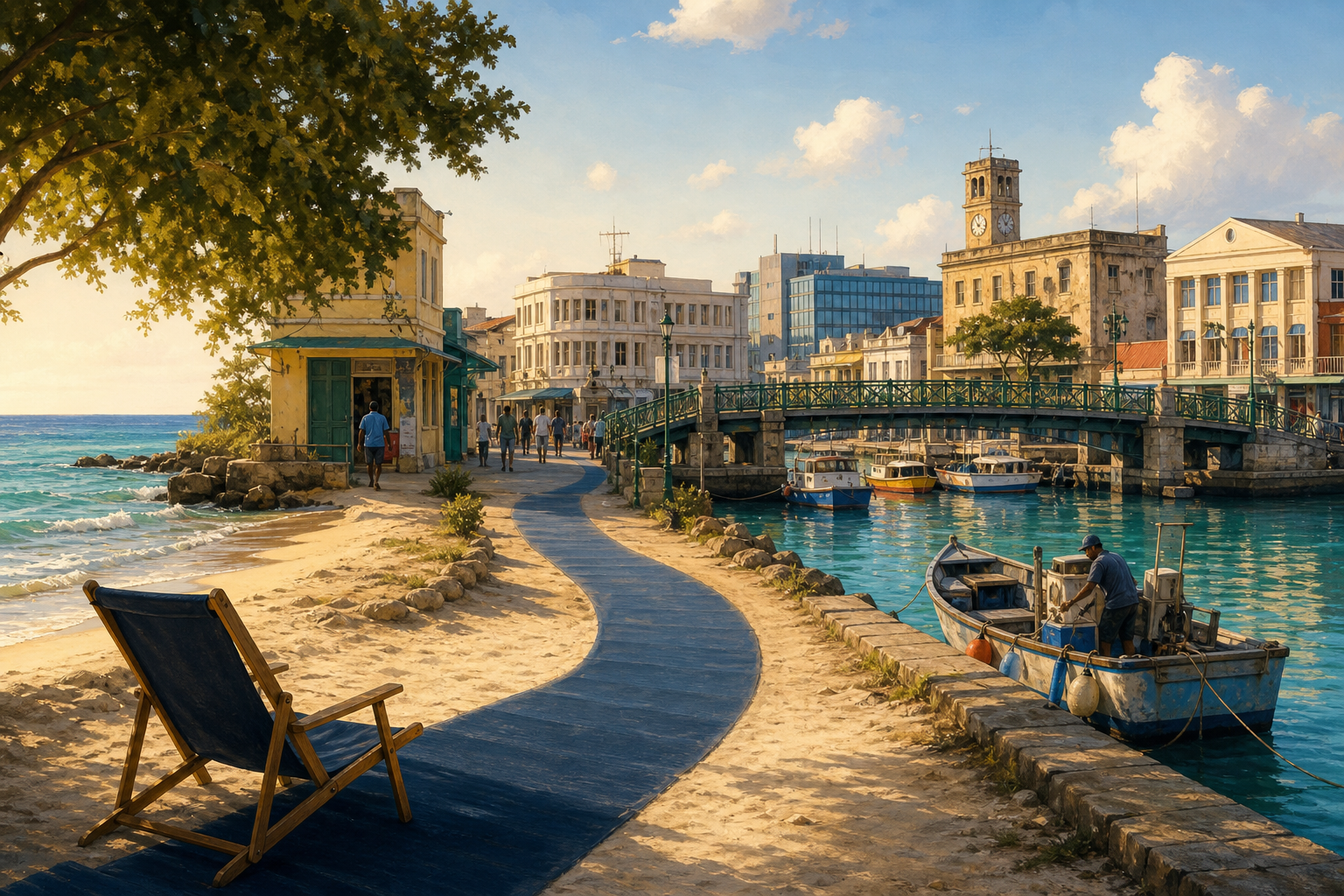
Chamberlain Bridge and the Careenage — the small inner harbor where boats are moored — are the most photographed part of central Bridgetown, and they’re worth twenty minutes rather than two hours. The best view is looking back toward the Parliament Buildings from the bridge itself; the buildings are Victorian neo-Gothic from 1874 and look slightly incongruous in the Caribbean sun, which is part of what makes them worth seeing.
The Garrison Savannah and Its Racing Calendar
If you can arrange your Bridgetown visit around a race day at the Garrison Savannah, do it. The Barbados Turf Club runs meetings throughout the year, with the main season concentrated between January and May. Race days here are a genuine local event, not a tourist spectacle, and the stands are mixed enough that you’re not obviously in a visitor enclosure. Getting in is cheap. Betting is cash. A Saturday afternoon at the races is better than anything you’d engineer from a resort excursion list.
No racing during your dates? The Savannah is used every morning for walking and running, and the Garrison Heritage Walk is a self-guided route around the historic buildings with good interpretive signage. It’s an easy two-hour loop.
Food in Bridgetown Specifically
The fish fry at Oistins — a coastal town about 8 kilometers east of Bridgetown, technically not part of the capital — gets all the coverage, and it’s worth going once, on a Friday night when it’s at full volume. It’s also extremely known at this point, and the prices reflect that.
Inside the city, the market at Cheapside is the more useful food stop. It runs daily and has stalls selling cut fruit, rotis, and cooked food that functions as actual lunch for people who work nearby. The fish market adjacent to it is where the day’s catch moves in the morning; if you’re there by 7am you’ll see it in operation, though it’s not a tourist attraction and shouldn’t be treated like one.
For a sit-down meal, the options inside the city are thinner than you’d hope. The Waterfront Café on the Careenage is the obvious tourist choice and is fine without being remarkable. The better move is to ask at your accommodation what’s open for lunch in the Swan Street area specifically — the answer depends on the week and changes faster than any written list stays current.
Getting There and Practical Notes
From most resort areas on the west or south coast, a taxi to central Bridgetown takes 20 to 40 minutes depending on traffic, and traffic on the ABC Highway into town on a weekday morning is real. The ZR van network runs constantly and is how most Bajans move between parishes, but the routes aren’t immediately legible if you don’t know the system already. For a first visit, a cab or rented car is more practical.
Parking in the city center is available but genuinely annoying — the lot behind the Central Bank building is the most reliable option. If you’re driving, arriving before 9am is noticeably easier than rolling in at midday.
One thing worth knowing upfront: Bridgetown closes early. Most businesses in the historic center are shut by 5pm on weekdays and by early afternoon on Saturdays. Sunday is near-silent in the commercial district. Plan a morning visit, not an evening one, unless you’re going to the Careenage waterfront specifically, where the bars stay open later.
How Long to Spend
Half a day is the right unit — three to four hours covers the Garrison and museum, the commercial center, and lunch without rushing. A full day is only warranted if you hit a race day or you want real depth in the museum. An hour-long stop on the way somewhere else won’t get you past the Parliament Buildings photo and the Careenage, which is fine, but it’s not Bridgetown.
The version of Barbados most visitors take home is the beach, the rum, and the sunset. That’s a legitimate trip. Bridgetown just happens to be sitting there with a solid half-day of genuine history and city texture that doesn’t require any particular enthusiasm for UNESCO designations — it requires not spending every daylight hour facing the water.
If your itinerary has a loose morning before checkout, this is where to put it. The Garrison before the heat sets in is a good reason to set an alarm.