
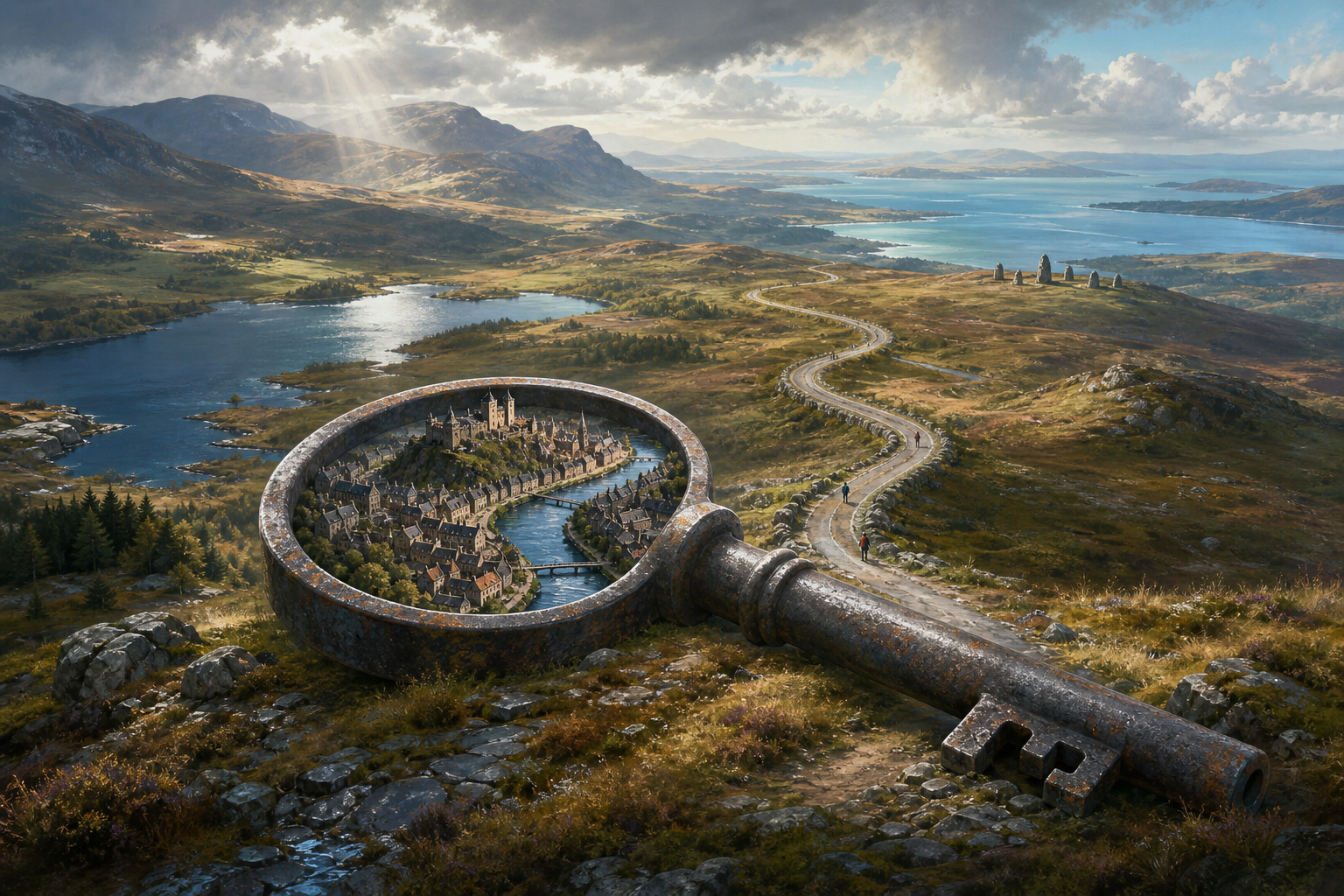
Inverness Gets Undersold — Here’s the Actual Case for Staying
View larger map | Map data © OpenStreetMap contributors
Most people arrive in Inverness because of a monster. They book one night, do the loch cruise, and leave. The city itself barely registers. That’s a mistake, but not because Inverness is secretly a world-class destination — it’s a mistake because the surrounding 50-mile radius is some of the most varied landscape in the British Isles, and Inverness is the only sensible base for any of it.
Two full days is the right amount. Less than that and you’re just sleeping near the A82. More than three and you’re probably bored unless you’re a serious walker or whisky tourist with a list.
What the City Itself Is Worth
Inverness city center is small. The River Ness runs straight through it, castle on the hill, Victorian market building on Academy Street, pedestrian high street behind that. You can walk the meaningful parts in a morning. The castle isn’t open for tours in the traditional sense — it’s been a working sheriff court for over a century and only recently started limited public access — so treat it as a view and a photo rather than a destination.
The Victorian Market is the thing people walk past without going into. Don’t do that. It’s a covered arcade built in 1876 that still has actual local shops rather than the chain-store replacement that happened to most British market buildings. Worth twenty minutes of your time.
The food scene is better than the city’s size suggests, which isn’t something you can say about most Highland towns — one decent pub and four tourist-trap chip shops is the more common ratio. Rocpool on Ness Walk has held its reputation for years: Scottish seafood, sensibly priced for what it is. For something less formal, the Tooth and Claw near the castle does well by a simple brief.
The Actual Reason to Use Inverness as a Base
Culloden Moor is 5 miles east of the city center and genuinely important — the 1746 battle fought here wasn’t just a military defeat for the Jacobites, it functionally ended the Highland clan system within a generation. The National Trust site handles it well: the battlefield is largely preserved, the visitor center doesn’t over-dramatize, and the audio guide is the right tool because the markers are spread far enough apart that you need the spatial context to make sense of the sequence. Go on a weekday if possible. Weekend visitor numbers can make the moor feel like a heritage park rather than a place where 1,500 people died in under an hour.
Clava Cairns is a ten-minute drive from Culloden and almost no one goes there, despite being arguably more interesting. Bronze Age burial cairns arranged with precise solar alignment, surrounded by standing stones, largely unrestored. It’s free, unstaffed, and you can walk right up to the stones — compare that to Stonehenge, which costs £28 and keeps you behind a rope line 30 feet from the monument.
The Black Isle peninsula across the Kessock Bridge deserves a half-day. It’s not actually an island — it’s a fertile peninsula sitting between two firths, and it manages to feel completely unlike the Highland terrain on the opposite shore. Two stops worth making: Fortrose Cathedral, roofless since the Reformation and still standing, and Chanonry Point, where bottlenose dolphins appear in the Moray Firth at incoming tides. The Moray Firth population is one of the most northerly resident bottlenose groups in the world, and the tidal concentration of salmon near the point makes it one of the more reliable land-based dolphin-watching spots in Europe. The sighting isn’t guaranteed, but the odds are better here than almost anywhere else you can reach without a boat. Check tide tables before you go — incoming tide is the operative variable.
Loch Ness: Yes, You Should Go, But Calibrate Expectations
Loch Ness is worth doing, and the creature is obviously not there. The loch itself is remarkable for different reasons: it holds more fresh water than all the lakes of England and Wales combined, the peat staining makes it near-opaque below a few meters, and the canyon it sits in is dramatic in a way photos don’t fully capture. Drive the southern shore on the B852 rather than the main A82 to get views from above instead of just the road running alongside the water. Urquhart Castle is the obligatory stop — partially ruined tower house on a promontory, genuinely photogenic, very busy in summer. Book entry online to skip the ticket queue.
The Loch Ness Centre in Drumnadrochit recently relaunched with a full exhibition update. It takes the research history seriously rather than just selling the legend, which makes it more interesting than it sounds. That said, the mystery angle is still the marketing hook — what you’re getting is a well-produced visitor attraction built around the absence of evidence, and knowing that going in makes it easier to appreciate what it actually does well.
Getting There and Practical Notes
Inverness has its own airport (INV) with direct flights from London Heathrow, Gatwick, and several other UK hubs — around 90 minutes in the air versus roughly 8.5 hours by train from London Euston via Edinburgh. The train is scenic from Perth north but genuinely long if you’re time-limited. Flying is the practical choice from anywhere south of Edinburgh.
Car hire at Inverness Airport is close to essential unless you plan to stick to the city itself. The Black Isle, Culloden, and the Loch Ness southern shore are all technically reachable by bus, but frequency drops off and you lose the flexibility that makes the base-camp approach work in the first place. In July and August, car hire books up fast — leaving it more than two weeks out during peak season means slim pickings and steep prices.
Weather is the honest variable. Inverness sits at roughly 57°N and gets genuine Highland weather: June and July offer the longest daylight (it barely gets dark in midsummer) and are the driest months on average, though “driest” is relative in the Highlands. A waterproof layer is load-bearing equipment regardless of what the forecast says.
One Thing Worth Reframing
Inverness gets compared unfavorably to Edinburgh — smaller, fewer museums, less to do. That framing misses the point. Edinburgh is a city you visit for the city. Inverness is a city you use to access a landscape. Arriving with an Edinburgh mindset and leaving disappointed because the castle is smaller and there’s no Royal Mile equivalent is a category error, not a verdict on the place.
If you’re routing a Scotland trip, the sequencing question worth sitting with is whether Inverness goes before or after Edinburgh. Before, if you can handle the longer first leg — the drive south through Cairngorms National Park is a natural transition, and you arrive in Edinburgh having already seen the landscape instead of spending the whole Highland leg thinking about the city waiting at the end.