
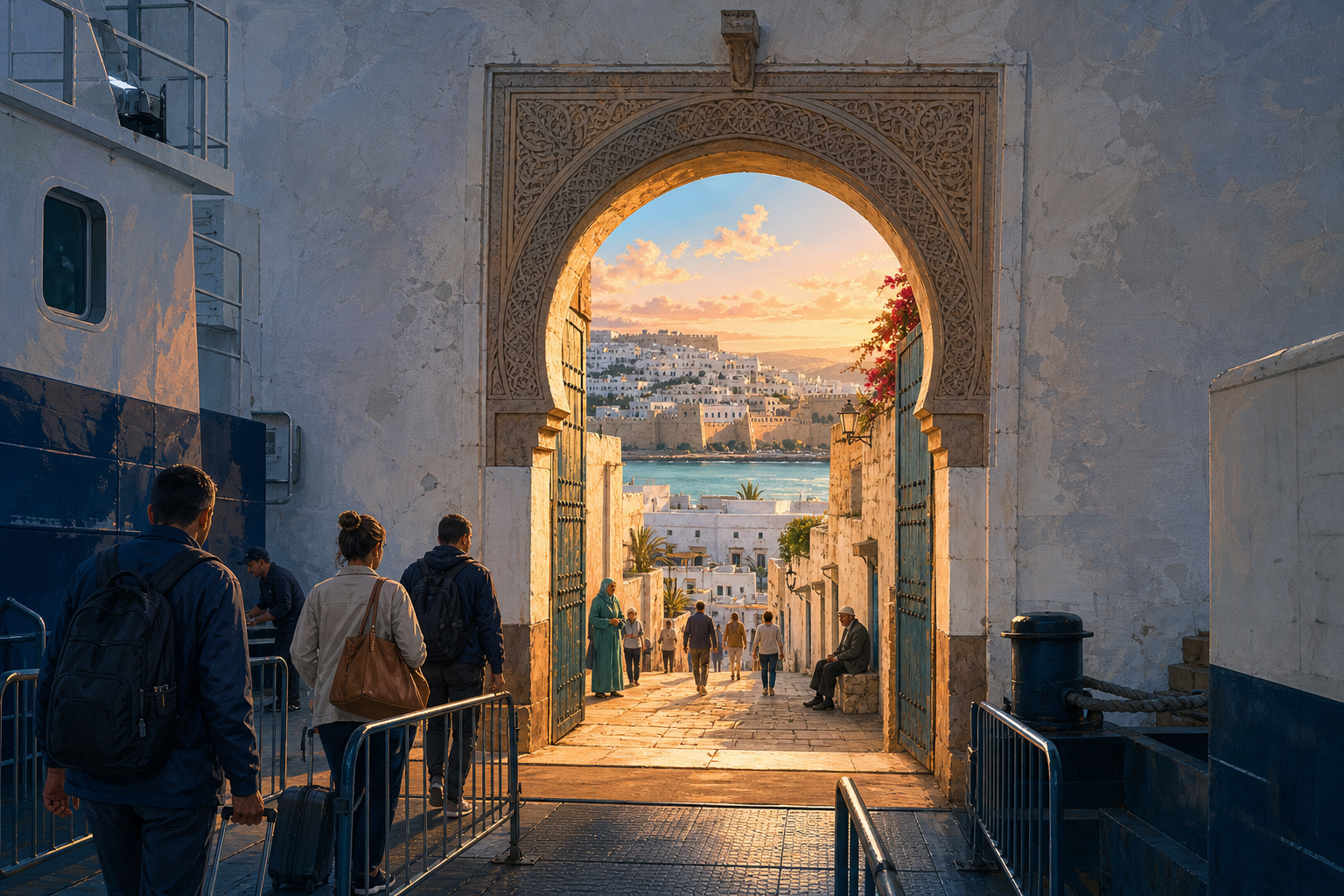
Tangier has one of the worst reputations of any city in the Mediterranean, and most of it was earned by people who arrived on the Tarifa ferry, got shepherded into the medina by an unofficial guide they didn’t ask for, bought a tagine they didn’t want, and left before dinner. That experience is real. It’s also not what the city is actually like if you spend more than half a day in it.
View larger map | Map data © OpenStreetMap contributors
The city sits at the northwestern tip of Africa, where the Atlantic meets the Mediterranean — a geographic fact that shapes everything about how Tangier looks and feels. The light here is different than in Marrakech or Fes. The food is different. The pace is different. And the crowd of travelers is thinner, because most people still treat it as a crossing point, not a destination.
The Medina Is Worth It — But Navigate It Yourself
Tangier’s medina is smaller and less disorienting than Fes el-Bali, which is either a drawback or a relief depending on what you’re after. You can cover most of it on foot in a few hours without losing your bearings completely. The Petit Socco — the small square at the medina’s center — is where the city’s historical edge shows up most clearly. In the early twentieth century this was genuinely one of the more dissolute corners of the world, a free-trade zone with no laws worth mentioning, and the cafés here still carry some of that residual atmosphere even if they’re now serving tourists mint tea instead of something more questionable.
The unofficial guide problem concentrates at the ferry port and around the Grand Socco, less so once you’re inside the medina proper and moving with purpose. Having a specific address pulled up on your phone — even if you’re just wandering — seems to reduce the number of people who decide you need their help. You are probably slightly lost anyway. That’s fine.
What’s worth finding in the medina: Rue es Siaghine for the silverwork, the covered section of the market near Rue de la Marine for actual food shopping rather than souvenir pressure, and the Fondouk — the old merchants’ caravanserai — if it’s open when you pass it, which is not guaranteed.
The Kasbah Is the Part Most Day-Trippers Miss
The kasbah sits above the medina on a promontory overlooking the strait, and it’s where Tangier stops feeling like a tourist experience and starts feeling like a city. The Dar el Makhzen — formerly a sultan’s palace, now a museum of Moroccan arts — is worth the entrance fee mostly for the building itself: the courtyard, the tilework, the carved plaster ceilings. The collection is secondary.
The real reason to spend time up here is the walls. Walk along the outer ramparts in the late afternoon and you’re looking at Spain. On a clear day you can make out individual buildings in Tarifa. The strait is only 14 kilometers wide at this point — narrow enough that people swim it, which says something, though not something that belongs on your itinerary.
The Café Detroit in the kasbah is where Paul Bowles, William S. Burroughs, and much of the Beat generation’s Tangier contingent spent their time. It trades on that history, which is fine. The tea is good and the terrace view earns its own merit regardless of the literary footnote.
The Ville Nouvelle Is Where You Should Actually Eat
This is what most Tangier itineraries skip entirely, stopping at the medina and calling it done. The Ville Nouvelle — the French-built new city spreading north and west of the medina — has a completely different character: wide boulevards, art deco facades, the kind of boulangeries that French colonial planning leaves behind in a city even after the French have gone.
Boulevard Mohammed VI runs along the seafront and is the place to walk in the evening when the city is actually alive — families out, kids on bikes, a real promenade culture rather than a performed one.
For food, Ville Nouvelle restaurants are more reliable and more honest on price than anything inside the medina aimed at visitors. Look for spots serving brochettes or grilled fish rather than the tourist-menu tagine circuit. The sardines here are very good — Tangier is a working fishing port, which is another thing the day-trip experience manages to completely obscure.
Getting There and the Logistics Reality
The fast ferry from Tarifa to Tangier Ville port — not Tangier MED, which is 40km east and a separate thing entirely — takes 35 minutes. FRS and Baleària both run it multiple times daily. Book ahead in summer; July and August sailings fill up, especially on weekend afternoons.
Tangier MED is where the large car ferries from Spain and France arrive, and it’s where a lot of travelers go wrong. They land there, discover it’s not actually Tangier, take a taxi for 30-plus euros, and arrive frustrated before they’ve seen anything. If you’re a foot passenger, book the Tarifa route to Tangier Ville specifically. The port names matter and the booking sites don’t always surface the distinction clearly.
On currency: use an ATM in Tangier itself rather than exchanging euros at the port or in the medina. The street exchange rate you’ll be offered is unfavorable in a direction that won’t surprise you.
For accommodation, staying inside or right at the edge of the medina makes the most sense for two nights. Several riads have been well restored without being overpriced. The Ville Nouvelle has more conventional hotels — comfortable enough, but they cost you the actual texture of the city.
When to Go
April through May and September through October are the honest answers. July and August are hot and ferry day-tripper volume from southern Spain peaks; the medina on a Wednesday in May is manageable in a way it simply isn’t on a Saturday in August. Tangier also gets genuine Atlantic weather in winter — this is not Marrakech, there’s no desert climate buffer, and January can be cold and rainy in ways worth knowing before you plan around it.
Ramadan timings shift annually and affect restaurant hours enough to require some planning — not a reason to avoid the city (certain aspects of Ramadan in a Moroccan city are worth experiencing), but a practical variable to check before you go.
The One Honest Caveat
Tangier is still a city where a real proportion of the interactions near tourist-visible areas are structured around extracting money from you, and the techniques can be sophisticated and persistent. This doesn’t make it dangerous — it makes it tiring if you’re not prepared for it. The people who hate Tangier almost universally had the experience of being followed, pressured, or scammed in the first two hours and left before the city showed them anything else. Two nights changes the math: you absorb the first afternoon, sleep on it, and arrive on the second day navigating with actual confidence rather than reactive anxiety.
The day-trip version and the two-night version are close to being different cities. Figure out which one you’re booking before you buy the ferry ticket.