
Batumi Has a Reputation Problem
View larger map | Map data © OpenStreetMap contributors
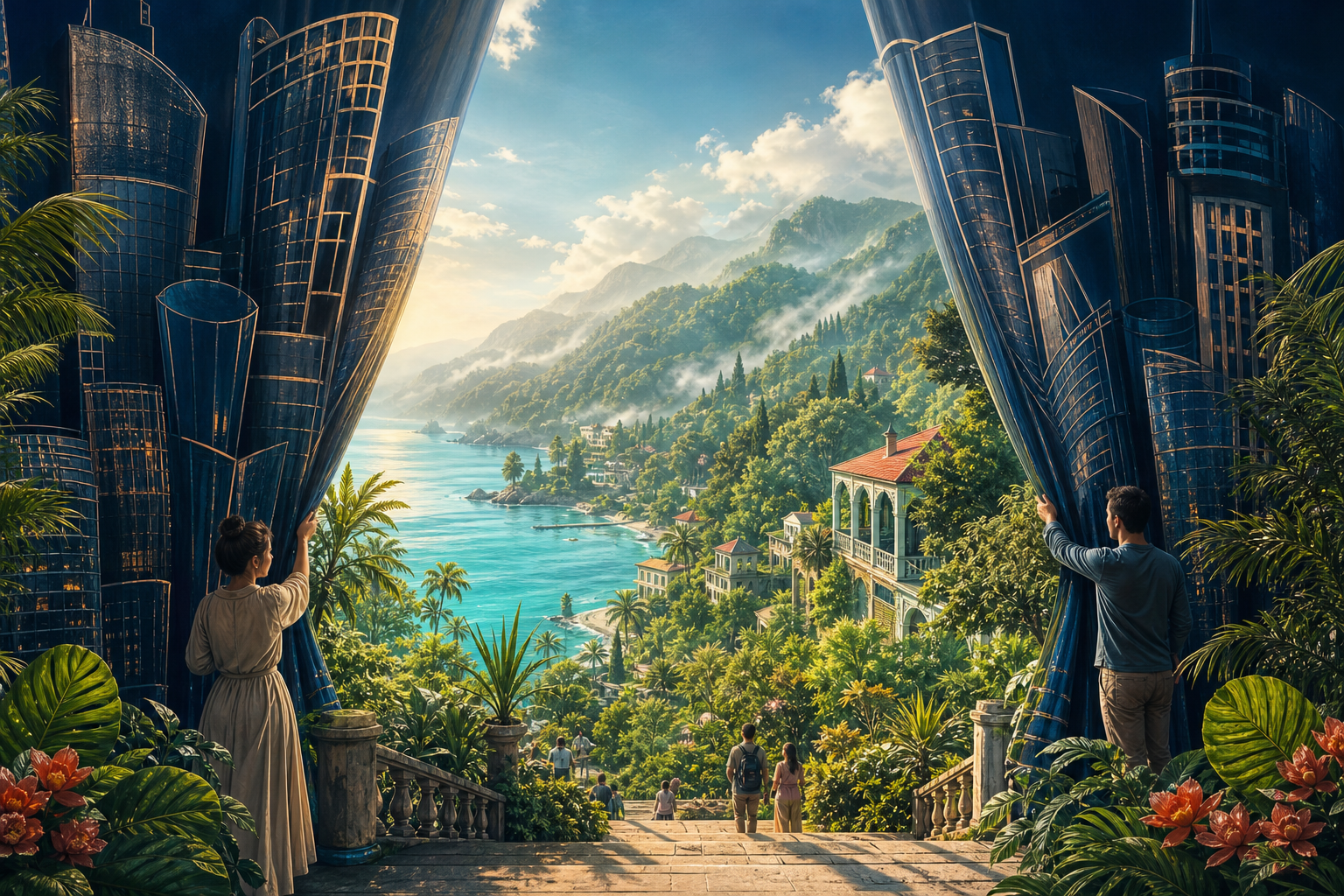
Ask anyone who’s been to Georgia what they think of Batumi and you’ll get a version of the same answer: “It’s fine, but it’s not really Georgia.” The casinos, the tower with the ferris wheel built into it, the beachfront strip that feels borrowed from a mid-2000s Dubai pitch deck — none of it screams authentic Caucasus experience. That characterization isn’t entirely wrong. But it’s not the whole city, and the people repeating it mostly stayed in the Sheraton zone and called it done.
We’ve been looking seriously at the Black Sea coastal corridor as a region — it doesn’t get the same travel attention as the Georgian interior, and there are real reasons to spend time here that have nothing to do with the rotating skyscraper.
The Old Town Is Small but Genuinely Worth It
Batumi’s old quarter covers maybe fifteen square blocks, which means you can do it seriously in a morning rather than spending two days half-heartedly ticking off squares. Piazza Square is the obvious starting point — photogenic in a slightly artificial way, with Italian-influenced facades dating to the period when Batumi was one of the Russian Empire’s main oil export ports. The architectural mix is the actually interesting part: Ottoman-era mosques next to 19th-century European commercial buildings next to Soviet apartment blocks that nobody’s pretending are charming.
That layering happened for a reason. Batumi changed hands repeatedly — Ottoman for centuries, Russian from 1878, briefly independent during the interwar period, then Soviet, then Georgian again. Each administration left something behind without erasing the previous layer. The Batumi Cathedral — originally a Georgian Orthodox church, converted to a mosque, then back to a church — is a more compact version of the same story you’d find in Nicosia or Thessaloniki. Worth a look for that history specifically, not because the building itself is architecturally spectacular.
The Botanical Garden Is the Thing Nobody Tells You About
Nine kilometers north of the city center, perched on cliffs above the Black Sea, the Batumi Botanical Garden covers over 100 hectares with plants from nearly every climate zone on earth. It was founded in 1912 by Russian botanist Andrei Krasnov, and the sub-tropical humidity of Adjara — Batumi is among the wettest cities in the Caucasus — means plants that would struggle in drier climates actually establish here. The Japanese section alone, with bamboo groves running to the cliff edge, is worth the marshrutka ride out.
The garden doesn’t make most Batumi itineraries because it requires leaving the seafront promenade. It should be the first thing you block time for, not a last-afternoon filler — and we’d suggest booking it for your opening morning before the rest of the city gets its hooks in you.
Adjara Is a Region, Not Just a City
The autonomous republic of Adjara surrounds Batumi, and using the city as a base to get into that hinterland is significantly more rewarding than treating the whole trip as a beach holiday. Mtirala National Park starts about 30 kilometers northeast — the name comes from the Georgian word for “crying,” and the park earns it, with some areas receiving over 4,500mm of rainfall annually. That produces a dense colchic forest that looks genuinely unlike anything in the Georgian interior.
The highland villages above Khulo — roughly two hours by shared taxi — have their own distinct culture and cuisine. The ajapsandali (a vegetable stew) made up here is noticeably different from what you’d get in Tbilisi, and the terrain is walkable between villages without a guide if you have a decent paper map. Google Maps coverage goes patchy in parts of the highlands. Downloading an offline tile set before you leave Batumi is not optional.
Practical Notes on Getting Around
Marshrutkas run regularly between Batumi’s central station and most regional towns: Kobuleti, Ureki (the black-sand beach town whose sand is genuinely iron-rich, not just a marketing claim), and Gonio, which sits right at the Turkish border with a Roman-era fortress dating to approximately the 2nd century AD — one of the oldest standing fortifications in the Caucasus and consistently undervisited. The onsite signage is minimal, so reading about it before you go pays off more than usual.
Car hire from Batumi is straightforward and cheaper than Tbilisi rates. For the highland villages specifically, a car is worth it — shared taxis exist but their schedules are unpredictable enough that you’ll lose significant time waiting.
The Food Situation Is Better Than the Casino Strip Suggests
Adjarian cuisine has its own identity distinct from the Georgian mainstream. Adjarian khachapuri — the boat-shaped bread with an egg cracked on top — is what most visitors know, but the cuisine goes well past that single dish. Sinori is a rolled pastry with walnut filling found in local bakeries rather than tourist restaurants. The fish is Black Sea fish, not the trout you’d get inland — mullet and horse mackerel, grilled simply and unsauced, worth finding at the harbor-adjacent spots rather than the promenade.
The honest caveat: the beachfront strip caters heavily to the Russian and Turkish tourists who visit in large numbers, and the restaurants there have calibrated their menus accordingly. A 15-minute walk from the promenade into the residential neighborhoods changes the food-to-price ratio considerably. The further you get from the towers, the better it gets.
When to Go and What That Actually Means
July and August turn Batumi into a Black Sea resort town in the fullest sense — crowded beaches, loud seafront, hotel rates that can double or triple. The sub-tropical climate means shoulder seasons work better here than almost anywhere else in Georgia: May and September are warm, the sea is swimmable in both months, and the botanical garden is in better shape in spring than mid-summer. October is the strongest window for the highlands — dry enough to walk Mtirala without constant rain, and the forest color is real.
Winter is the edge case worth knowing about. Batumi runs wet and mild in December and January rather than cold the way Tbilisi gets cold, and there are almost no tourists. Empty museums and cheap rooms — that case is genuinely there. A Black Sea swim in January is not.
The Question Worth Sitting With
The standard advice is Tbilisi first, then Batumi as a three-day add-on. We’d push back on that framing. If the Adjarian highlands and Mtirala are what you’re actually after rather than just the beach, consider arriving into Batumi and working through the region before the Tbilisi stretch. The Georgian interior is where most of the tourist infrastructure points; Adjara rewards the people who show up with a bit more intention and a schedule that can flex.
Book the botanical garden for your first full morning. It’s the single visit in Batumi that most reliably changes how people feel about the city — and it’s the one that gets skipped most often when you leave it to the end.