
The standard move is to fly into Chiang Mai, spend four or five days on the temple circuit, and then do a day trip to Chiang Rai — if you do it at all. That framing is wrong, and it means most visitors to northern Thailand miss what makes Chiang Rai worth the trip on its own terms.
View larger map | Map data © OpenStreetMap contributors
Chiang Rai is quieter than Chiang Mai, but that’s not actually the interesting thing about it. The interesting thing is its genuinely different character — closer to the Myanmar and Laos borders, ethnically more diverse, and the landscape gets noticeably hillier and cooler as you push further north. Treating it as Chiang Mai-lite is the wrong lens entirely.
The White Temple — Get This Out of the Way First
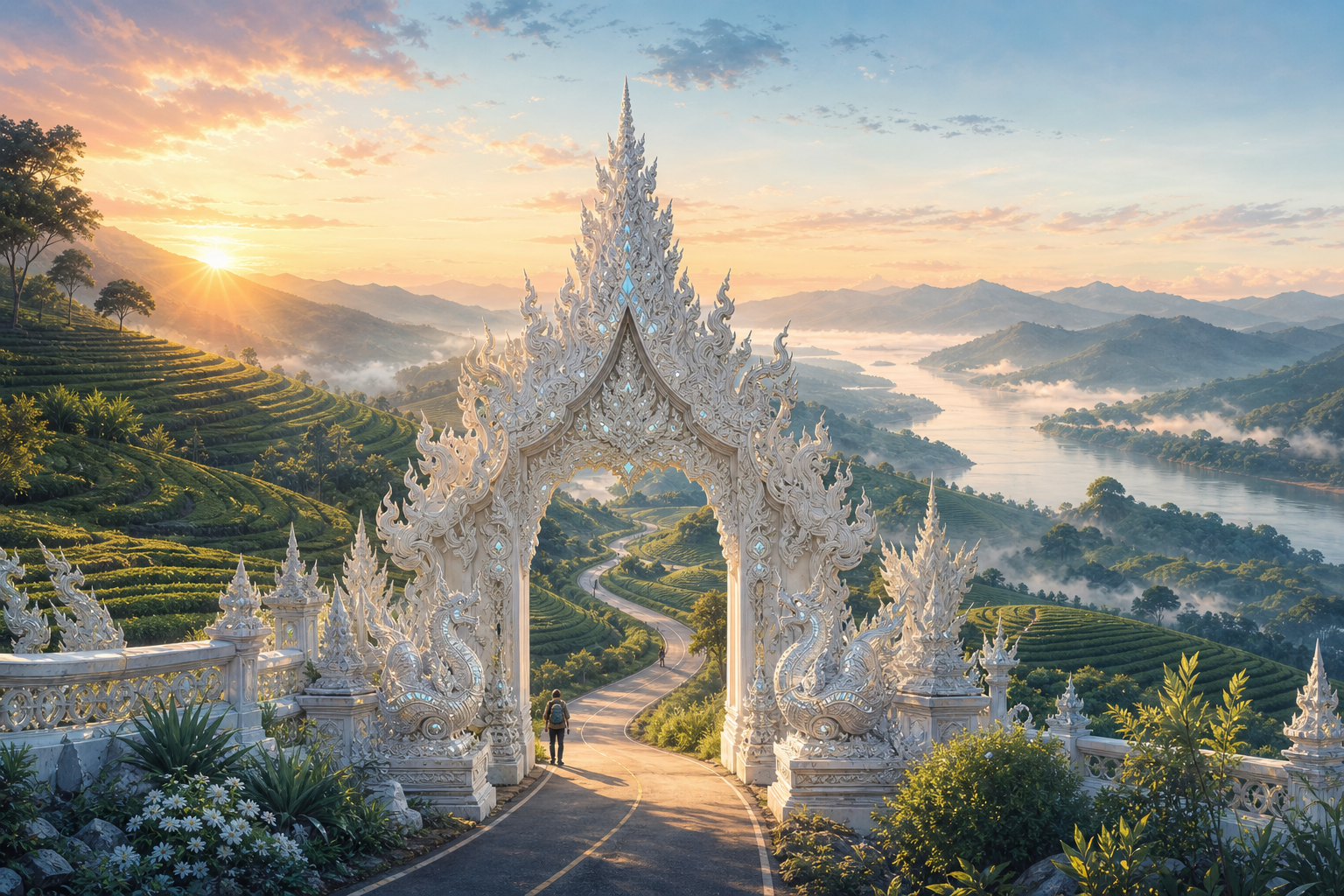
Wat Rong Khun, known abroad as the White Temple, is the single most photographed thing in the province, and it genuinely is spectacular. The entirely white exterior encrusted with mirror fragments, designed by local artist Chalermchai Kositpipat starting in 1997 and still being expanded, doesn’t look like anything else in Southeast Asia. Worth seeing.
Timing matters more here than at most temple sites. By 10am it’s dense with tour groups bused in from Chiang Mai. Arrive at opening (8am) and you get a substantially different experience of the same structure. The complex is also Kositpipat’s ongoing personal project — he’s funding it himself and has said publicly he wants it completed to a specific standard before he dies — which makes it more interesting than a static heritage site if you approach it that way rather than as a backdrop for photos.
One real caveat: it’s religious, not just artistic. The signage inside is explicit about dress code, and there are areas where photography is restricted that aren’t immediately obvious from the entrance. The norms aren’t the same as a conventional Buddhist temple, and the staff will stop you if you miss them.
The Blue Temple Is Less Crowded and Worth More Time
Wat Rong Suea Ten — the Blue Temple — sits about five kilometers from the city center and gets a fraction of Wat Rong Khun’s visitors despite being genuinely striking. The interior especially: deep cobalt and indigo with gold detailing, murals far more elaborate inside than the exterior suggests. It’s a functioning temple with a secondary tourist function, not the other way around, and the atmosphere reflects that.
Go late afternoon — the light hits the exterior differently and the Chiang Mai tour buses are mostly gone by then.
The Hill Tribe Villages: An Honest Assessment
Chiang Rai province has a significant number of hill tribe communities — Akha, Karen, Hmong, Lahu, and others — and this is where the tourism industry gets complicated enough to say plainly: a lot of the village visits sold through guesthouses and tour operators in the city center are extractive in ways that aren’t good for the communities involved.
The long-neck Karen villages in particular have been criticized for functioning essentially as human zoos, with women wearing neck rings specifically because it draws paying visitors. Whether that’s cultural preservation or exploitation depends heavily on who you ask and which specific village you’re talking about — the answer isn’t uniform, and anyone who tells you it is hasn’t looked closely enough.
If this is something you want to engage with honestly, the more defensible approach is booking through operators who work directly with specific communities on community-decided terms. The Chiang Rai tourism office can point you toward vetted options, which is rare enough to be worth noting. Mirror Art Group is one organization in the area with a genuine development focus rather than a tourism veneer, though their programs aren’t always open to drop-in visitors.
Doi Mae Salong: The Village That Doesn’t Feel Like Thailand
About 80 kilometers north of Chiang Rai, at around 1,500 meters elevation, Doi Mae Salong was settled by Kuomintang soldiers and their families who retreated from Yunnan after 1949 and had nowhere else to go. The result is a village that still feels distinctly Yunnanese-Chinese: Mandarin is widely spoken, the food is different (try the khao soi here — it’s made with a recipe closer to the Yunnan original than what you get in Chiang Mai), and the surrounding hillsides are covered in tea plantations rather than rice paddies.
It’s a long drive on winding mountain roads, and the last stretch is steep enough to be rough if you’re prone to carsickness. Worth it anyway. Stay overnight rather than doing it as a day trip — the morning mist over the tea gardens is what most day-trippers miss entirely, and the small guesthouses on the main road are cheap enough that an extra night is basically a trivial cost.
The Golden Triangle and Chiang Saen
The Golden Triangle — the Mekong junction where Thailand, Laos, and Myanmar meet — is about an hour north of Chiang Rai and heavily marketed. The view is genuinely interesting in the specific sense that you can watch cargo boats moving between three countries at once, but the tourism infrastructure around the viewpoint varies considerably in quality, and the opium museum in Sop Ruak is less substantial than its billing suggests.
The more rewarding stop is Chiang Saen, a small town a few kilometers south of the Triangle, with the ruins of a 13th-century Lanna kingdom settlement — crumbling chedis standing in the middle of the modern town, a museum with decent Lanna-era artifacts, and almost no other tourists on a weekday. It takes about two hours to walk the ruins at an unhurried pace. Pair it with the Triangle in a single day trip from Chiang Rai rather than treating either as a standalone full-day destination.
Eating in Chiang Rai
The night bazaar in the city center is the obvious starting point and it’s not wrong — it’s a real local market, not a tourist recreation, and the khao soi, sai ua (northern Thai sausage), and nam prik noom (roasted green chili dip) are all good. The Saturday Walking Street on Thanalai Road, running from around 6pm, is better for food variety and noticeably more local in feel than anything near the tourist guesthouses.
For daytime eating, the cluster of coffee shops around the clock tower (another Kositpipat design, inevitably) is worth the stop. The region grows its own coffee, and the quality difference from mass-market Thai coffee is real and immediately obvious once you’ve had both.
Getting There and How Long to Stay
Chiang Rai has its own airport (CEI) with direct flights from Bangkok on multiple carriers. Flying in and out of Chiang Rai rather than routing everything through Chiang Mai is an underused option worth considering if your itinerary has any flexibility. The bus from Chiang Mai takes about three hours on the main route and is reliable.
Three nights minimum to do this without rushing. Two if you’re cutting Doi Mae Salong and the Golden Triangle. One night — which is what most people allocate — means you’re essentially just doing the White Temple and leaving, which wastes what the area actually has.
November through February is the obvious choice for comfort and visibility in the hills. March and April are hot and sometimes smoky from agricultural burning, which can affect air quality badly enough to matter if you’re sensitive to it — worth checking before you book rather than after you arrive.
If you’re building a northern Thailand trip from scratch, the question worth sitting with is whether Chiang Rai should be your base rather than Chiang Mai. The logistics are slightly less convenient and the flight options from Bangkok are fewer, but the crowds are proportionally smaller, and Doi Mae Salong alone makes the extra travel time easy to justify. If you want to understand what Chiang Mai beyond the temple circuit actually looks like before comparing the two cities, that context helps frame the choice.