
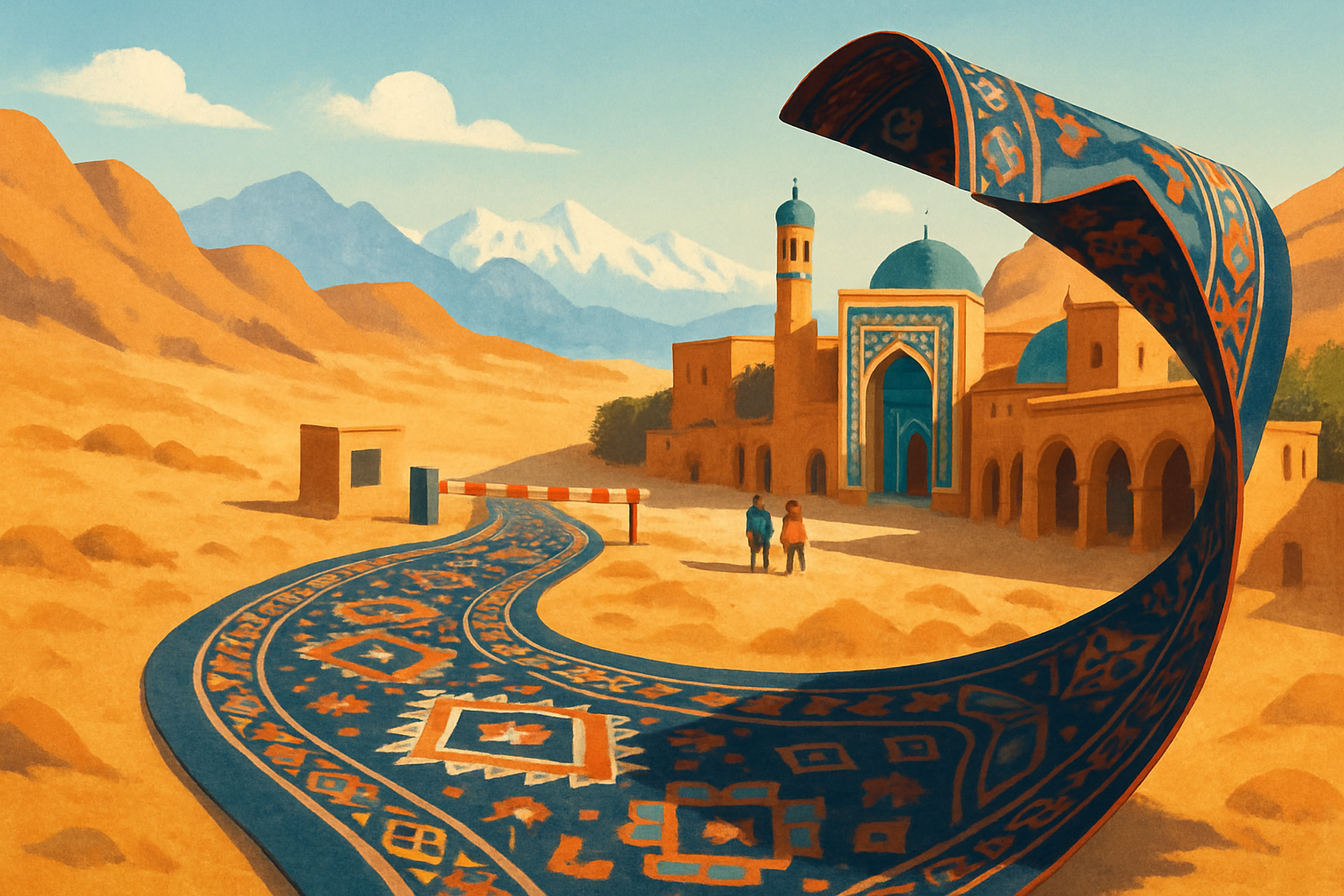
Kashgar is in China the way Anchorage is in the US — technically, unambiguously, but barely. The city sits at the far western end of Xinjiang, closer to Tehran and Baghdad than to Beijing, and the food, architecture, and street life reflect that geography far more than any Han Chinese city you’ve been to. Most Central Asia itineraries route through Almaty, Bishkek, or Tashkent and stop there. Kashgar is the piece they drop, usually because getting a Chinese visa for one city feels disproportionate. It is. Go anyway.
View larger map | Map data © OpenStreetMap contributors
Getting There and the Visa Reality
The practical obstacle is real: you need a standard Chinese tourist visa, and Kashgar has no separate entry regime the way Hong Kong historically did. Coming overland from Kyrgyzstan, the Irkeshtam Pass is the crossing to know — it connects Osh to Kashgar and is open to tourists, though the schedule is irregular and seasonal conditions can close it without much warning. Don’t plan tight connections around it. The Torugart Pass further north is more famous but restricted to third-country nationals traveling with a registered tour operator on the Kyrgyz side, so most independent travelers end up at Irkeshtam by default.
Flying in is easier. Kashgar Airport (KHG) has connections through Urumqi, which connects onward to most major Chinese cities. If you’re already planning time in western China, Kashgar is the logical western endpoint of that loop.
One thing worth being upfront about: Xinjiang has extensive surveillance infrastructure, and the political situation is well-documented. Foreign tourists are not typically restricted from visiting Kashgar, but your movements are likely monitored, and interactions with local Uyghur residents can put them in a difficult position through no fault of either party. That’s not a reason to avoid the city — but go in clear-eyed rather than treating it as a normal tourist destination in every sense.
The Old City — What’s Left of It
The historic core of Kashgar was substantially demolished and rebuilt starting in the late 2000s, officially for earthquake safety reasons. What exists now is a partially reconstructed old city — some of it genuinely old, some of it a cleaned-up facsimile. The Id Kah Mosque at the center is the real thing: one of the largest mosques in China, dating to the 15th century with significant later additions, and still an active place of worship. Arrive outside prayer times if you want to walk through without feeling like you’re interrupting something.
The lanes radiating out from the mosque into the old residential quarters reward slow walking even in their reconstructed state. The craft workshops — copper beaters, knife makers, hat makers — are mostly genuine work rather than tourist performance. The Uyghur knife trade has a long documented history in Kashgar specifically, though buying certain blades can create complications at Chinese airport security, so ask before you commit.
The Sunday Market
The livestock market on the eastern edge of the city used to run only on Sundays and was one of the more extraordinary markets in Central Asia — sheep, horses, and cattle traded by Kyrgyz, Tajik, and Uyghur herders in a working commercial context, not a staging for tourists. It’s technically open daily now, though Sunday still draws the largest volume by a significant margin. The animal market operates separately from the general bazaar, which is large enough that you’ll need a few hours to cover it properly.
The food stalls inside and around the bazaar are the best argument for spending a full morning there. Laghman — hand-pulled noodles with lamb and vegetable sauce — is the dish to eat, and the Kashgar version has more in common with Uzbek lagman than with anything you’d find in eastern China. Samsa (baked lamb dumplings pulled from a tandoor), polo (the Central Asian rice and carrot dish), and cumin-heavy grilled lamb skewers are all present. Eat at stalls with obvious turnover, not at the ones near the tourist entrance.
Abakh Khoja Tomb
About five kilometers northeast of the old city, the Abakh Khoja mausoleum complex is the most significant religious site in Kashgar and arguably in all of Chinese Central Asia. It’s a 17th-century tomb complex for a prominent Naqshbandi Sufi leader, built in a style that reads far more like Samarkand than anything east of Urumqi — glazed tilework in turquoise and white, a large domed main chamber, and a compound that includes a mosque and teaching halls. The site is maintained and accessible, with an entrance fee. Budget more time than you think you need; the tilework alone justifies it.
The complex is also where Iparhan — known in Chinese historical tradition as the “Fragrant Concubine” — is said to be buried, which gives it layered significance in both Uyghur and Han historical memory. The stories told about her differ substantially depending on which version you read, and that gap is itself worth knowing about before you visit.
Karakul Lake and the Karakoram Highway
The Karakoram Highway running south from Kashgar toward the Pakistan border is one of the better mountain drives in the world, full stop. Karakul Lake sits at roughly 3,600 meters elevation and reflects Muztagh Ata — a 7,546-meter peak — on clear mornings. The drive from Kashgar takes two to three hours. A handful of guesthouses operated by Kyrgyz herders sit at the lake; staying overnight gets you the early morning light on the mountain before tour vehicles from Kashgar arrive around midday.
If you’re continuing to Pakistan, the Khunjerab Pass at the top of the highway reaches 4,693 meters and is one of the highest paved border crossings in the world. It’s open seasonally — typically May through November — and crossing requires a Pakistani visa already in hand before you arrive at the border. The scenery from Kashgar through to Gilgit via this route is difficult to overstate and worth planning the whole trip around if you’re inclined.
Practical Notes
Kashgar runs on Beijing time officially, but most locals operate on an informal Xinjiang time two hours behind — restaurants and markets often open and close on local time, not the official clocks. This catches visitors off guard consistently. Ask specifically rather than assuming posted hours mean Beijing time.
Mobile data and most standard apps don’t work in China without a VPN, and VPN reliability from within China has gotten worse in recent years. Download offline maps before you arrive. Google Maps data for Kashgar is thin anyway; Maps.me with the Xinjiang region downloaded is more useful for actual street-level navigation.
April–May and September–October are the most practical months. July and August are hot and crowded; winter temperatures drop hard and the road to Karakul becomes unreliable.
If your Central Asia loop already includes Osh or Bishkek, adding Kashgar via Irkeshtam adds real complexity — but it turns a regional trip into something that’s genuinely hard to replicate anywhere else. The Karakoram Highway south toward Pakistan is its own reason to come. The question worth sitting with before you plan: are you routing through Central Asia, or are you using Central Asia to get here?