
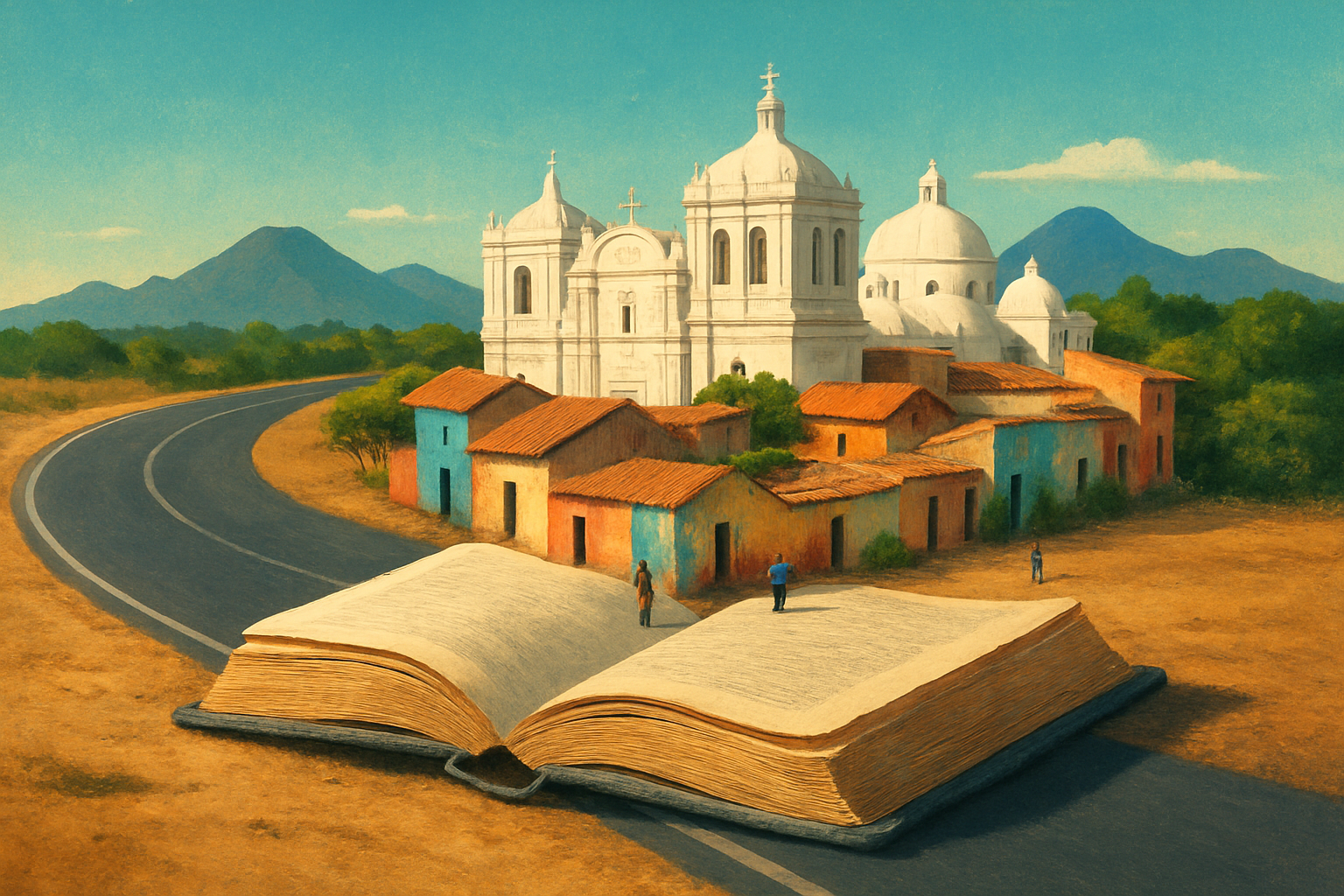
Most Central America itineraries run Guatemala to Costa Rica and call it done. Nicaragua gets skipped for reasons that have more to do with outdated travel advisories than current reality, and León specifically gets skipped even by people who do make it to Granada. That’s backwards. León is the more interesting city — grittier, less polished, and carrying a political and intellectual history that Granada’s colonial prettiness doesn’t really compete with.
View larger map | Map data © OpenStreetMap contributors
Why León and Not Granada
Granada gets the Instagram traffic because the colonial architecture photographs beautifully and it’s an easier trip from Managua. León is 90 kilometers northwest — a 1.5 to 2 hour bus ride from the capital — and it doesn’t have the same lakeside setting. What it has instead is the largest cathedral in Central America, a history as the country’s former capital, and a street-level political texture you won’t find anywhere else in the region. The murals alone are worth the detour. The Sandinista revolutionary history is not a museum artifact here — it’s painted on walls and explained by locals who lived through it.
The Cathedral and the Rooftop Worth Climbing
The Catedral de la Asunción dominates the city center and genuinely earns the UNESCO listing. The exterior is Spanish colonial Baroque, enormous and bone-white. The roof is the reason to pay the small entry fee and climb — from the top you get an unobstructed view across the city to the chain of volcanoes running along the Pacific corridor, including Momotombo, which is still visibly active on clear mornings. Go earlier in the day before haze builds; afternoons can wash the view out entirely.
The cathedral also holds the tomb of Rubén Darío, Nicaragua’s national poet and one of the most significant literary figures in Latin American history. Whether you know his work or not, the way the city treats the tomb — not as a tourist attraction but as a point of genuine civic pride — tells you something about León’s relationship with its own intellectual history.
Volcán Cerro Negro and Who Should Do It
Volcano boarding on Cerro Negro is León’s biggest tourist draw, and it’s genuinely fun if you have any tolerance for discomfort. Cerro Negro is one of the youngest volcanoes in the Western Hemisphere — formed in 1850 — and it erupted as recently as 1999, which means the slopes are black cinder and loose ash rather than the vegetated flanks you’d get on an older cone. You hike to the summit (roughly 45 minutes to an hour) and slide down on a wooden board. The descent takes about two minutes. It’s a lot of setup for a short payoff, but the surrounding landscape — black volcanic field, zero vegetation, active fumaroles nearby — is unlike anything else in the region.
Be honest with yourself about fitness before booking. The climb in midday heat on loose cinder is harder than it looks in photos, and the orange jumpsuits every operator provides don’t do much to keep ash off your face or out of your teeth. Bring a bandana or a dust mask, and goggles if you wear contacts. Every tour operator in León runs this trip and prices are fairly standardized, so the real differentiator is group size — smaller groups make the summit and descent noticeably less chaotic.
The Poneloya and Las Peñitas Day Trip
León sits about 20 kilometers from the Pacific, which most visitors ignore entirely. Poneloya and Las Peñitas are the two beach villages closest to the city — rough Pacific surf, almost no development, and a completely different pace from the city. Neither is a resort beach. The waves are strong and the currents in some sections are not casual-swimmer-friendly, so treat it as a walking and eating day rather than a swimming day unless you actually know the local conditions. The local bus from the market area takes about 40 minutes and costs almost nothing; taxis charge more but are faster.
Eating in León Without Overthinking It
The Mercado Municipal is the obvious answer for breakfast and lunch — vigorón (yuca, pork rinds, cabbage slaw) and quesillo (soft cheese rolled in a tortilla with pickled onion and cream) are both León specialties and cost almost nothing at market stalls. The quesillo in particular is one of those hyper-regional things that tastes noticeably different here than in Managua, mostly because it’s fresher and the cheese-to-tortilla ratio is more aggressive.
For dinner, the streets around the Parque Central have sit-down restaurants pitched at travelers, and quality varies. León is not a destination for serious food tourism — it’s a destination for good, cheap Nicaraguan food eaten at the right places. Adjust expectations accordingly and you won’t be disappointed.
The Museum of the Revolution
The Museo de la Revolución on the Parque Central is worth an hour, specifically because it’s guided by former Sandinista fighters and veterans rather than professional museum staff. That makes the experience inherently partial — you’re getting one side of a complex history, presented without much attempt at balance. But that’s also what makes it valuable: hearing a direct account from people who were in Managua in 1979 is not something you get from a placard. Take it as primary source material, not as complete history.
Practical Logistics
Two nights in León is the right amount. One night leaves you rushing the cathedral, the market, and the revolution museum into a single afternoon. Three nights starts to feel like you’ve exhausted the city proper, unless you’re using it as a base for longer volcano hikes in the surrounding area.
Buses from Managua leave from the Mercado Israel Lewites terminal (sometimes called Boer market) and take 1.5 to 2 hours depending on stops. Chicken buses are cheap and frequent. Express shuttles run from the main Granada and Managua tourist zones if you’re connecting from those points and want a reserved seat.
Accommodation is inexpensive by any regional standard. The city has a solid range of hostels and small guesthouses concentrated near the Parque Central. Book ahead during Semana Santa (Holy Week before Easter) — León’s street processions during that period are among the most elaborate in Central America and the city fills up considerably.
One caveat worth stating plainly: the security situation in Nicaragua has been politically sensitive since 2018, and entry requirements and the general atmosphere for foreign visitors have shifted depending on when you’re reading this. Check current government travel advisories from your home country before booking — not as an automatic reason to skip it, but as a step that genuinely matters more here than it does for most destinations in the region.
If you’re already committed to Guatemala and Costa Rica and trying to decide what fits between them, the question is whether two days in Granada does more for you than two days in León. They’re different cities making different arguments — and León’s is the less obvious one, which is usually a reason to pay attention to it.