
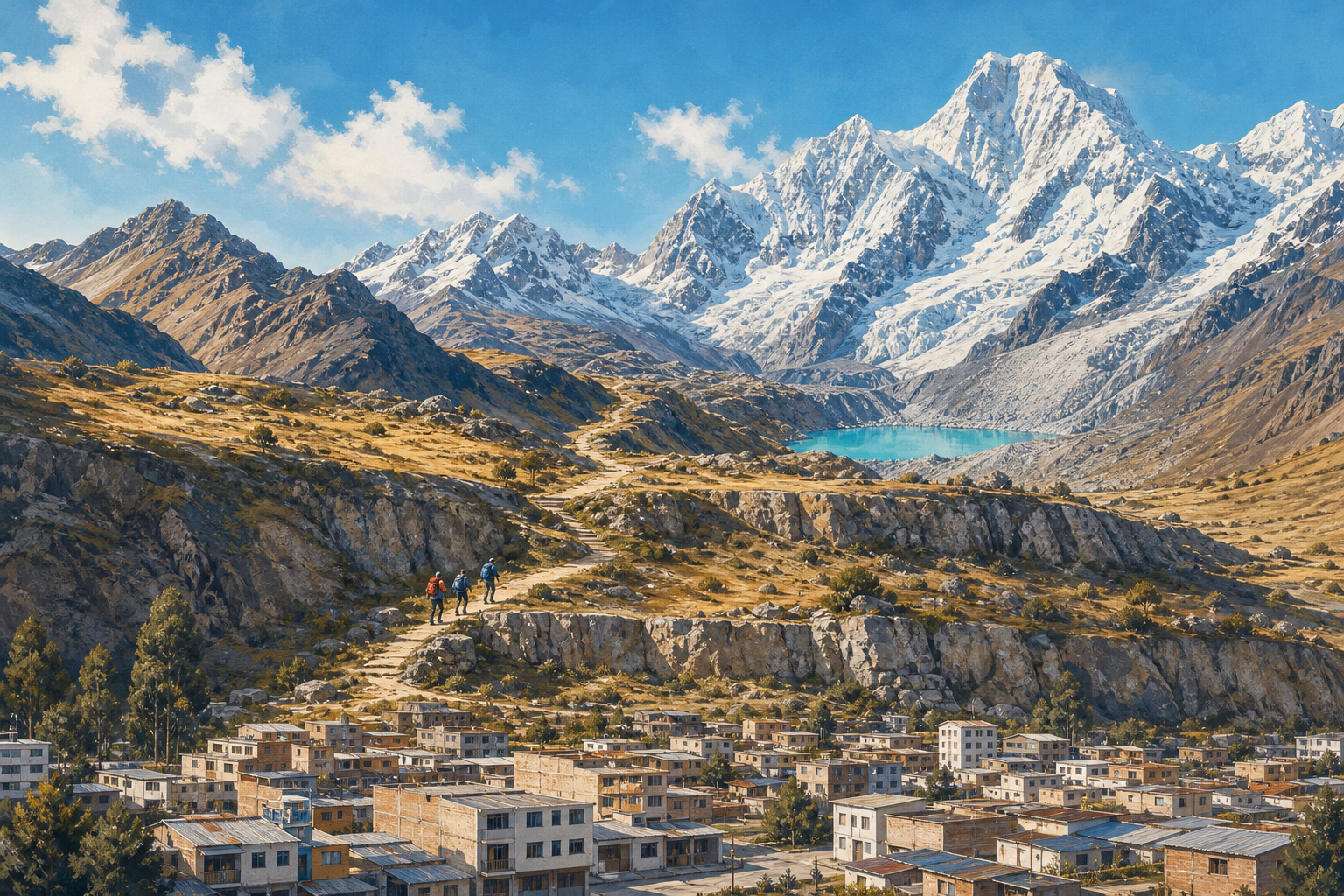
Huaraz Is Not a Backup Plan for Cusco
View larger map | Map data © OpenStreetMap contributors
Most Peru itineraries look the same: Lima, Cusco, Machu Picchu, maybe Arequipa if there’s time. Huaraz doesn’t appear on that list, and that’s a genuine planning failure. The Cordillera Blanca — the range Huaraz sits inside — contains more than 20 peaks above 6,000 meters, including Huascarán, Peru’s highest mountain at 6,768m. This is one of the most concentrated stretches of glaciated tropical mountains on earth, and the town that accesses it gets a fraction of the foot traffic Cusco does.
Huaraz itself is a working Andean city at 3,050 meters. It was almost completely destroyed by the 1970 earthquake and rebuilt in a functional rather than beautiful way — the colonial architecture that draws people to Cusco isn’t here. That’s not a knock on the place; it’s just accurate. What’s here is a very good base for day hikes, multi-day treks, and glacier lakes that don’t require a permit lottery or a six-month lead time.
The Altitude Math Is Different Here Than in Cusco
Cusco sits at 3,400m; Huaraz at 3,050m. That 350-meter difference sounds minor, but Huaraz’s valley position means you can descend into lower terrain to recover — there’s more room to manage acclimatization. The surrounding peaks are significantly higher than Cusco’s immediate environs, so if you’re planning actual hiking rather than sightseeing, you’ll still be gaining serious elevation on any of the main routes.
Plan for at least two full days in town before attempting anything strenuous. The Laguna 69 hike, the most popular single day trip from Huaraz, peaks at around 4,600m, and doing it on day two without acclimatizing is exactly how people end up needing to turn back — or dealing with pulmonary edema symptoms in worse cases. Coca tea, real hydration, and low-exertion time in town for the first 48 hours is the actual protocol, not a suggestion you can skip because you felt fine in Cusco last year.
What the Hiking Is Actually Like
Laguna 69 earns its reputation. The lake sits in a glacial cirque with a turquoise color that looks artificial in photos and is somehow more striking in person. The hike is about 12km round trip from the trailhead near Cebollapampa — if you’re going independently, that means a colectivo or arranged transport from Huaraz’s bus hub on Calle Fitzcarrald, though most people book through a local agency for simplicity. The trailhead parking area gets crowded by 8am; leaving Huaraz by 6am is the difference between a quiet morning and a convoy experience.
The Santa Cruz Trek is the multi-day route that gets serious trekkers through the Cordillera Blanca over four to five days, crossing the Punta Unión pass at 4,750m. Unlike the Inca Trail, it doesn’t require advance permit booking — you register at the national park entrance at Llanganuco. That accessibility is a large part of why long-distance hikers who’ve done the research end up here instead of fighting for Inca Trail slots. The trade-off is that trail conditions vary sharply by season: May through September is the dry season and the only reliable window for anything at higher elevation. Attempting Santa Cruz in January or February through heavy rain is a substantially different and more miserable experience.
Day Trips That Aren’t Just Hikes
The Chavín de Huántar archaeological site is a three-hour drive from Huaraz through the Tunnel of Cahuish, and it’s genuinely undervisited relative to its significance. Chavín was a major pre-Inca ceremonial center dating to around 900 BCE, and unlike the open-air Inca sites most visitors see, parts of it involve underground stone galleries — narrow, low-ceilinged corridors built without mortar in a way that has held through millennia of seismic activity in one of the world’s more active fault zones. The galleries run on a guided circuit; independent wandering isn’t permitted. Go on a weekday if you can; weekend day-trippers from Lima do make it out here.
Lago Llanganuco — actually two lakes, Chinancocha and Orconcocha — is a shorter trip and useful for an acclimatization day where you want altitude gain without serious effort. The drive up into Huascarán National Park reaches around 3,800m, and the queñua trees at that elevation are among the highest-growing trees in the world. Nothing dramatic happens here; that’s the point. It’s a gentler way to let your body adjust before you do something harder.
Food and Staying in Huaraz
The restaurant scene is small-city practical. A few places around Parque Ginebra cater specifically to trekkers and do it competently — big portions, carb-heavy, early closing times. Ceviche is technically on menus but this isn’t Lima; the seafood isn’t what you’re here for. Caldo de cabeza and trucha (trout from highland rivers) are the honest local choices. The second floor of Huaraz’s main market has a row of set-lunch stalls that are worth navigating to — cheaper than anything tourist-facing and more representative of what people in the city actually eat.
Accommodation ranges from basic hostels packed with trekkers to a handful of mid-range hotels that are more comfortable than you’d expect given the town’s size. Book ahead for the May–August peak season — not months in advance the way Machu Picchu requires, but a week out at minimum during the busy stretch. Outside those months, walk-in availability is generally fine.
Getting There and One Honest Caveat
There’s no commercial airport in Huaraz handling regular service. The practical options from Lima are the overnight bus (roughly eight to nine hours on Cruz del Sur or Movil Tours — the quality difference between economy and cama seats on this route is significant enough that cama is worth the price) or a daytime departure if you want the mountain scenery en route. Flying Lima–Trujillo and connecting onward doesn’t save meaningful time once transfers are factored in.
Worth being direct about: Huaraz is not a city with much incidental tourism appeal. If hiking and mountain landscape aren’t your primary interest, the place will feel thin after a day. It earns its reputation entirely through what surrounds it, not through urban character — which is a different calculus than Cusco, where colonial history and food culture justify several days independent of Machu Picchu. Know which trip you’re planning before you reroute your itinerary to include it.
If the Cordillera Blanca is what you’re actually after, put the acclimatization days on the calendar before you book anything else — then Huaraz makes complete sense as a base. Just don’t arrive the day before Laguna 69 and wonder why you’re struggling at 4,600m.