
Moshi Without the Summit Itinerary
View larger map | Map data © OpenStreetMap contributors
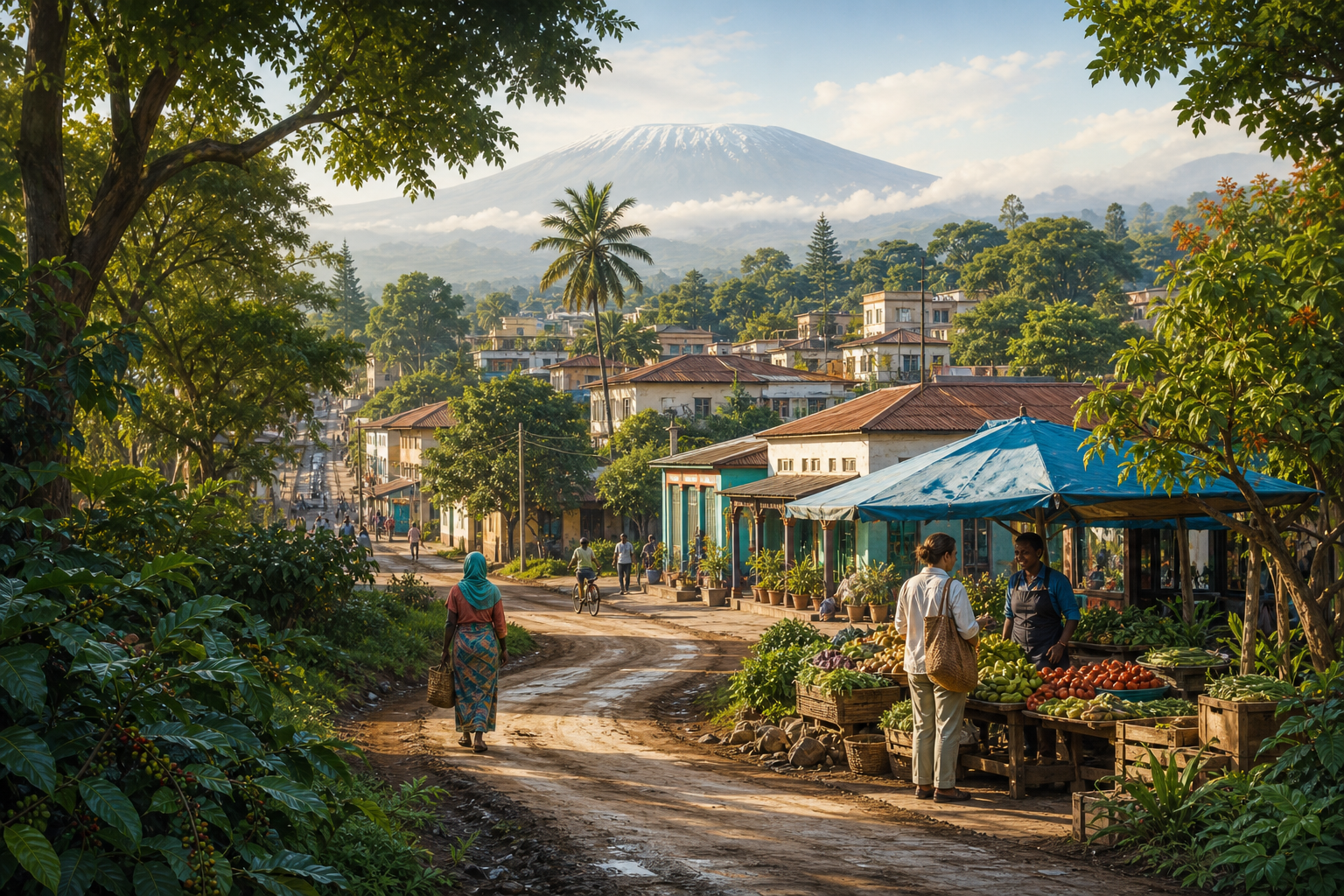
Almost everyone who passes through Moshi is there for Kilimanjaro. The mountain dominates the northern skyline on clear mornings — genuinely dramatic, the kind of view that makes you stop mid-sentence — and most visitors are already thinking in acclimatization days and porter logistics before they’ve unpacked. Which means the town itself gets treated as a staging area, not a destination.
That’s the wrong read. Moshi is worth two or three days on its own terms, and people who give it that time usually come away surprised at how much they underestimated it.
What the Town Actually Has
Moshi sits at around 900 meters in the Kilimanjaro region — high enough to be notably cooler than the coast, low enough that altitude is never a factor for the town itself. It has the feel of a mid-sized Tanzanian market town that hasn’t been completely reshaped by tourism: the main market on Market Street is genuinely functional, not performative. Produce, hardware, secondhand clothing, spices. It’s worth an hour just to orient yourself to what things actually cost before anyone sees you as a tourist with a quote pending.
The coffee is the specific thing most visitors miss. Tanzania produces some of the better Arabica in East Africa — Kilimanjaro-region beans in particular — and Moshi has a handful of small cafes doing actual pour-overs rather than Nescafé. Kahawa ya Mama, near the Clock Tower roundabout, is one worth sitting down at. The coffee cooperative system in the region has been operating since the colonial era, and it shows in how seriously locals treat preparation. If you can find a single-origin cooperative batch labeled as such, order that over anything else on the menu.
Day Trips That Aren’t the Mountain
Materuni Waterfall is the most obvious non-Kili day trip, and it earns the visit rather than just ticking a box. The hike is under two hours each way from the village of Materuni, itself a coffee farming community — you walk through shamba (family farm) plots on the way up, and the guides are usually actual farmers who’ll walk you through the processing steps if you ask. The waterfall drops into a cold pool; swimming is possible and worth it if the season cooperates. This whole trip works without a formal tour company — negotiate directly with a guide in Materuni village rather than booking through a Moshi hotel, where the markup is steep.
Lake Chala sits about 50 kilometers east of Moshi on the Kenya border — a crater lake so uniformly turquoise it looks like a rendering error in the landscape. Kayaking is available. Swimming is technically possible, but the lake has a complicated history with crocodiles and local guidance on the current situation varies depending on who you ask, so factor that uncertainty in before getting in the water.
The village of Marangu, about 40 kilometers from Moshi, has its own appeal separate from being the Coca-Cola route trailhead. The cultural tourism program there is one of the older and better-structured ones in Tanzania — run with actual community involvement rather than just collecting an entrance fee. The waterfalls around Marangu are less visited than Materuni and the farming landscape is different: denser canopy, noticeably lusher.
Timing and Weather
The long rains run roughly March through May. Moshi is wet in that window and the mountain is invisible most of the time — fine for the town itself, but the views that give Moshi its particular drama disappear. The dry season from June through October is the busiest climbing period, so accommodation books up and prices rise, but the town itself stays manageable. January and February are dry, warm, and quieter than the main season — probably the most underrated window for a visit where Kilimanjaro isn’t on the agenda.
One honest note on the mountain views: Kibo (the highest summit) is only visible on genuinely clear mornings, and even in dry season, afternoon clouds typically obscure it by noon. If photographing the summit from town matters to you, set an alarm and be outside early.
Where to Stay
The town center has guesthouses across every price range, most of them fine rather than exceptional. The places that actually earn a recommendation sit slightly outside the center, up toward the lower slopes — better air, less noise, and the views are worth something when your room faces north.
Kilemakyaro Mountain Lodge and Ameg Lodge both occupy that zone and are worth looking at for mid-range budgets. For budget travelers, the guesthouses around Old Moshi Road are perfectly functional — just expect street noise and early-morning market sounds, which is either part of the experience or a reason to buy earplugs, depending on your tolerance.
Book ahead for the June–October window. Outside that period you have more flexibility, but the better places still fill on weekends with visitors from Nairobi and Dar es Salaam using Moshi as a short escape.
Getting There
Kilimanjaro International Airport (ICAO: HTKJ) handles direct flights from several African hubs — Ethiopian Airlines via Addis Ababa, KLM seasonally from Amsterdam, Kenya Airways from Nairobi. Arusha is about 80 kilometers west and shares the airport; most people landing at KIA are going to one town or the other, and the shared shuttle between the two runs regularly and is cheap. If you’re coming from Dar es Salaam, the bus via Arusha is faster than the TAZARA train and runs daily; flying Dar to KIA takes just over an hour and removes the logistics entirely if time is the binding constraint.
What to Eat
Ugali and nyama choma (grilled meat) are everywhere and reliably good. The dish specific to the Kilimanjaro region is ndizi nyama — green banana cooked with meat, usually beef or goat — which shows up at local restaurants in a way it doesn’t elsewhere in Tanzania. Starchy, savory, and worth ordering over anything on a tourist-facing menu if you have the choice.
The Moshi night market near the bus stand runs Thursday through Saturday evenings. It’s loud and busy, and the grilled corn and mishkaki (skewered meat) are as good as street food gets anywhere in East Africa.
If you have five or six days before a Serengeti or Zanzibar leg, resist the instinct to use Moshi as a one-night gateway. The town is worth the extra time — and that’s especially true if the summit was never part of your plan to begin with.