
Mendoza, Argentina: What the City Actually Rewards Beyond the Standard Wine Circuit
View larger map | Map data © OpenStreetMap contributors
Every Mendoza itinerary starts and ends with the same sentence: book a wine tour. The Malbec is real and the bodegas in Luján de Cuyo and Maipú are worth your time. But Mendoza gets treated as a single-activity destination in a way that undersells the place, and the wine-tour-plus-steakhouse formula misses most of what makes staying four or five days here worthwhile.
The city sits at about 750 meters in the Andean foothills. On a clear morning — and most mornings are clear, because Mendoza is one of the driest provincial capitals in Argentina — you can see Aconcagua from the streets. At 6,961 meters, it’s the highest peak outside the Himalayas. Most visitors use it as an Instagram backdrop and leave it at that. That becomes an obvious missed opportunity once you’ve driven an hour west toward the mountains.
The Actual City, Which Most People Rush Through
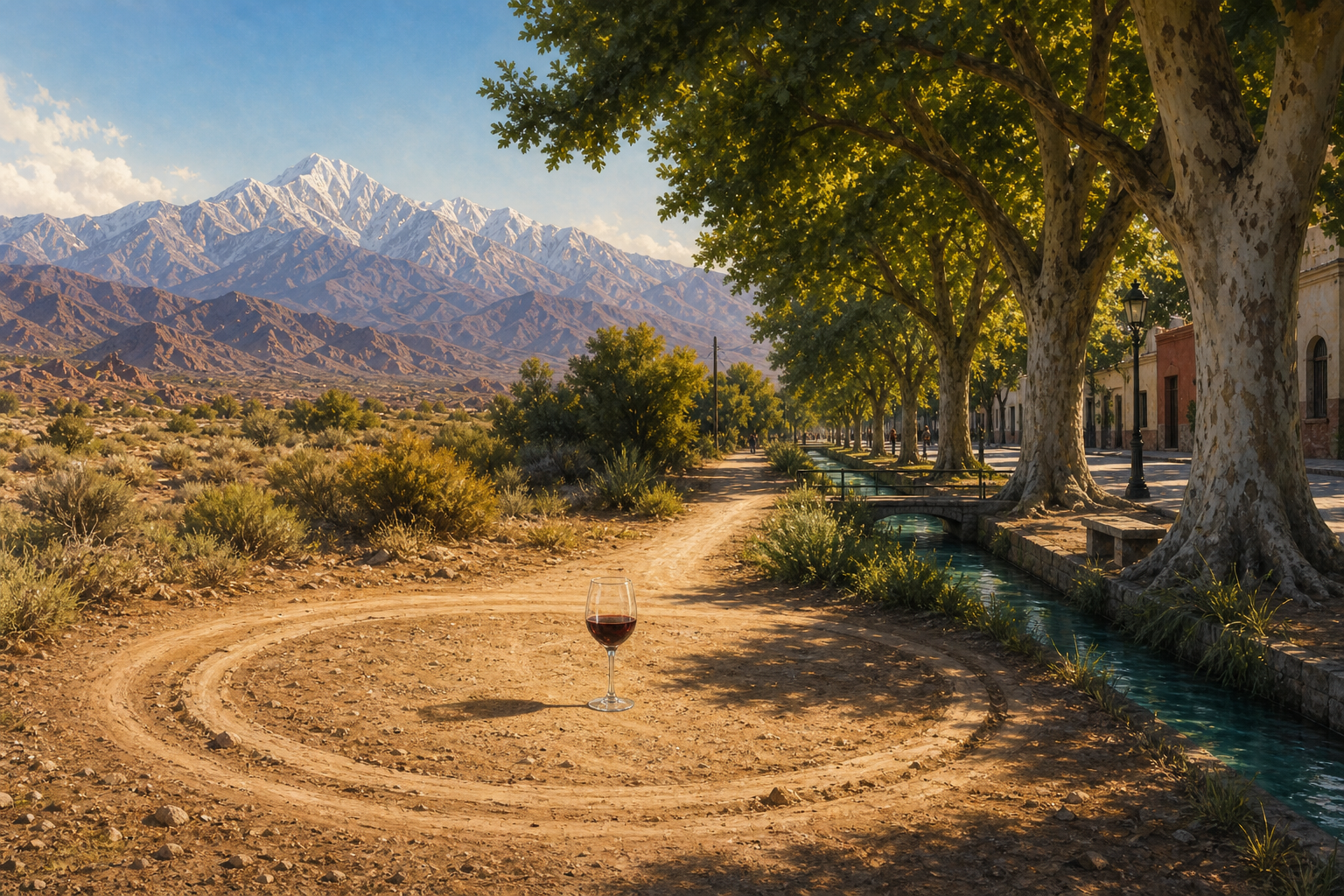
Downtown Mendoza, its plazas, the Aristides neighborhood — all of it rewards a slower first day than most travelers give it. The city was destroyed by an earthquake in 1861 and rebuilt on a grid with wide boulevards and acequia irrigation channels running alongside nearly every street. Those channels are working infrastructure with roots in Huarpe engineering, pre-colonial, and they still feed the enormous population of sycamore trees canopying most downtown blocks. Walking under those trees in late afternoon, when the light is horizontal and everything smells faintly of water and dust, is a specific Mendoza experience that doesn’t photograph well and is one of the more memorable things about being there.
Parque General San Martín runs to roughly 350 hectares — larger than Central Park — and most visitors walk ten minutes in and turn around. Go further. There’s a rose garden, a lake worth renting a boat on, and a small zoo worth skipping, but the hill at the far end, Cerro de la Gloria, gives you a panoramic view of the city and the Andes that most people only see from the departure gate.
The Wine Region: What’s Actually Worth the Drive
The two main zones are Maipú, closer to the city and better for cycling between bodegas, and Luján de Cuyo, farther south with more serious high-altitude producers. Most half-day wine tours lump them together or pick one and rush through four wineries in three hours — a reliable way to drink a lot and remember none of it.
A more useful approach: pick one zone per day, book two bodegas maximum, eat a proper lunch in between. In Maipú, Familia Zuccardi and Achaval Ferrer are both worth the advance reservation. Zuccardi runs an olive oil operation alongside the wine, which sounds precious but is genuinely interesting, and Achaval produces structured Malbecs that hold up against anything in the region. In Luján de Cuyo, Cheval des Andes and Clos de los Siete sit in the same general area with very different registers: one is a serious Franco-Argentine joint venture that will charge you accordingly, the other is a Michel Rolland project spread across seven wineries — more accessible, better tasting-room experience, no sticker shock.
The cycling-between-bodegas thing in Maipú is charming in principle and brutal in practice if you’re not a regular cyclist and the temperature is over 35°C, which it will be from December through February. Rent the bike if you want, but don’t do it in peak summer unless the heat and effort are genuinely part of the appeal.
Going West: The Andes Are the Part Most Itineraries Cut
The drive up Ruta Nacional 7 toward the Chilean border is one of the better day trips in this part of South America, and costs almost nothing beyond a car rental or a shared remis. The road follows the Mendoza River through a canyon that gets progressively more dramatic the further west you go. You pass the thermal baths at Cacheuta (worth a stop if you’re not trying to cover ground), the wine village of Potrerillos, and eventually Uspallata — a dusty crossroads town that reads like a Western set, partly because it functioned as one. The 1997 film Seven Years in Tibet was shot here in part.
Past Uspallata the road climbs toward the Aconcagua Provincial Park boundary and the border crossing at Cristo Redentor. You don’t need to cross into Chile to make the drive worthwhile — the canyon viewpoints alone justify the day. Be clear-eyed about timing, though: altitude gains fast past Uspallata, and if anyone in your group is prone to altitude symptoms, effects become noticeable above 2,500 meters. Mendoza city’s 750 meters gives you no preparation for that jump.
Aconcagua Base Camp: Who This Is Actually For
Hiking to Plaza de Mulas — the base camp at around 4,300 meters — is a multi-day, permit-required trek, not a day trip or casual extension of the drive. Permits run through the Mendoza provincial government and costs vary by season. High season is December through February; outside that window conditions deteriorate fast and the higher routes close. Don’t arrive without confirming permit availability, and don’t underestimate acclimatization if you’re coming from sea level. Ascending from Mendoza city to base camp inside two days is too fast for most people.
Food That Isn’t Just Steak
The Argentine parrilla tradition is real and the beef is excellent, but eating every dinner at one leaves most of the food scene unvisited. The Mercado Central off Avenida Las Heras has produce stalls and prepared food counters that give a more accurate picture of what people in the city actually eat day to day. The blocks around Aristides Villanueva have a concentration of restaurants and bars that skews local rather than tourist-facing — and dinner before 9pm will feel early to everyone around you.
One honest caveat: Mendoza has improved as a food city over the past decade, but it’s still a regional Argentine economy, not a culinary capital. The wine will often be better than the food it’s paired with. Adjust expectations accordingly, and don’t book somewhere off an international food list expecting Buenos Aires-level cooking.
When to Go and What the Weather Actually Does
March through May is harvest season — vendimia — with active vineyards, manageable temperatures in the 20–27°C range, and tourist infrastructure running without the summer crush. The Fiesta Nacional de la Vendimia in early March draws real local energy, not tourist-event energy, and if your dates allow it, that week is worth timing around. Book accommodation well in advance — weeks, not days.
December through February is consistently over 35°C. Everything is open, but the outdoor portions of winery visits and any hiking are noticeably less pleasant. July and August are cold without being prohibitive for the city itself; mountain roads can close with snow, which cuts off the Andes drives entirely.
The single most useful thing to know before you arrive: the best bodegas require advance reservations, and some require a minimum group size for tastings. Book the two or three visits you care most about before you leave home, keep the rest flexible, and you’ll spend less time being turned away at gates and more time actually drinking.