
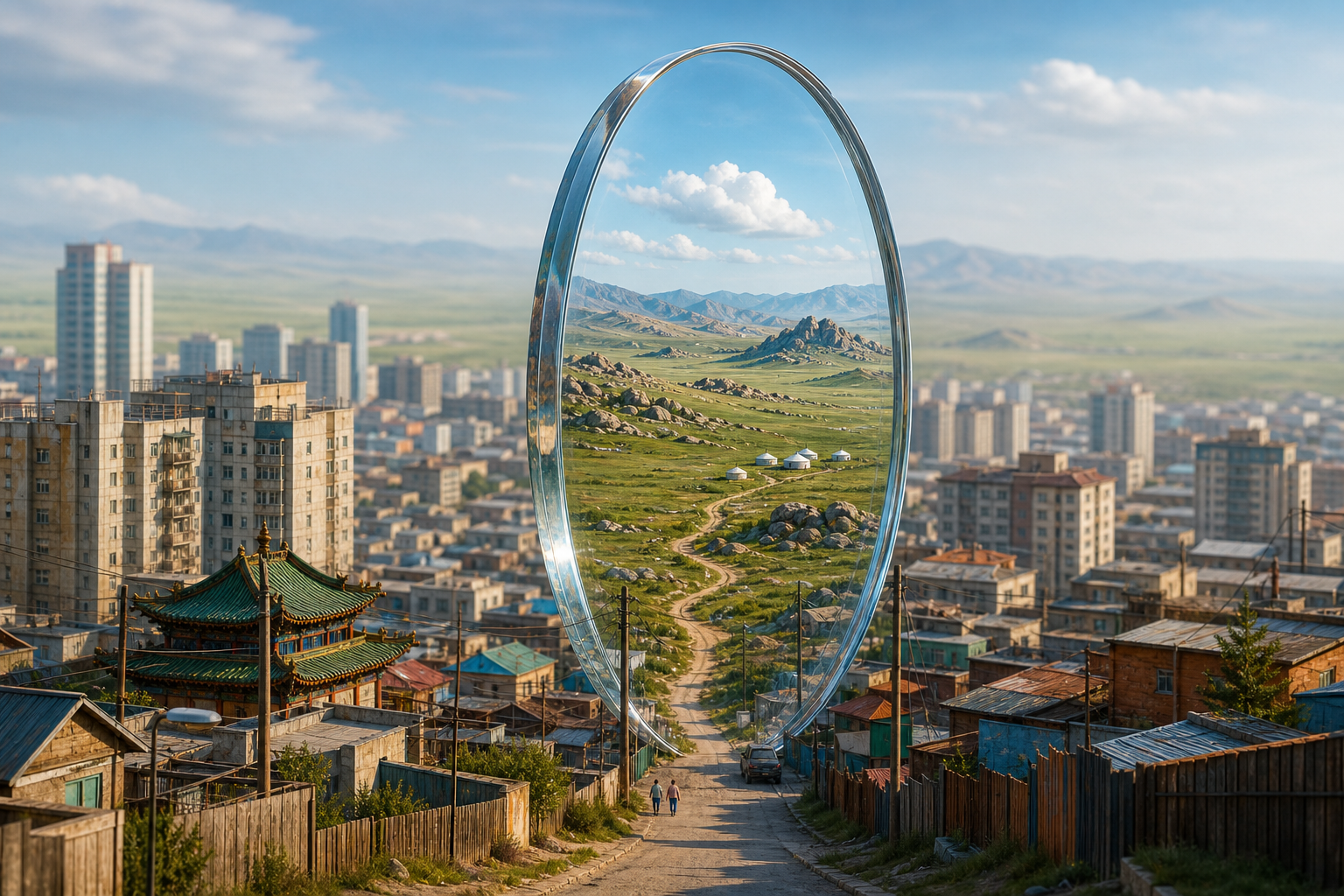
Ulaanbaatar: The Capital You Have to Pass Through (and Why You Should Stay Longer)
View larger map | Map data © OpenStreetMap contributors
Most people who fly into Ulaanbaatar are already thinking past it. The ger camps, the Gobi, Khövsgöl Lake — the actual Mongolia of the imagination. The capital is treated as an unavoidable staging post, and that’s understandable: it’s loud, the traffic is genuinely bad, and large sections of the city look like Soviet-era infrastructure held together by optimism. Writing it off in a single night tends to produce the worst version of a Mongolia trip — rushed logistics, bad gear purchases at inflated prices, and no real sense of where you’ve landed before you disappear into the steppe.
Give it two nights minimum. Here’s why, and what to actually do with the time.
What the City Actually Is
Ulaanbaatar holds roughly half of Mongolia’s entire population — around 1.5 million people in a country of 3.3 million. That concentration isn’t natural; it’s the product of decades of post-Soviet economic migration from the countryside, and it shows. The ger districts that ring the city — informal settlements of traditional felt tents and small wooden houses — house a large share of that population without central heating or connection to the municipal water system. They burn coal through winter, which is why Ulaanbaatar regularly ranks among the world’s most polluted cities by particulate matter from November through March. If your dates fall in that window, the pollution is not a minor inconvenience — it’s a genuine reason to limit outdoor time and rethink your shoulder-season calculus.
The window that actually works is June through early September. Clear skies, manageable temperatures in the city (15–25°C most days), and the steppe around the capital genuinely green rather than the brown scrub you see in photos from either side of that range.
What’s Worth Your Time in the City
The National Museum of Mongolia on Juulchin Street is the single most useful stop before you go anywhere rural. It covers nomadic culture with enough depth and enough English-language context that you’ll read landscapes differently afterward — how gers are oriented, what the horse culture means sociologically, the distinctions between the various ethnic groups spread across Mongolia’s different regions. It’s not flashy, but it functions as a genuine orientation rather than a trophy stop, which is exactly what you need before three days in a ger camp with no frame of reference.
Gandantegchinlen Monastery is the main functioning Buddhist monastery in the city and worth an hour. The 26-meter copper statue of Megjid Janraisig inside the main hall was destroyed by the Soviets in 1937 and rebuilt after independence — the rebuild is part of what the monastery represents, not a footnote to it. Go in the morning when monks are present and it feels like an active religious site rather than a heritage exhibit.
Sukhbaatar Square, the central plaza, is large and photogenic and more or less required — fine for an evening walk. The State Department Store nearby is where most travelers end up buying cashmere. Mongolia produces a significant share of the world’s raw cashmere supply, and the prices here are genuinely lower than you’ll find elsewhere for comparable quality. Go to the fourth floor, feel the weight of the fabric, and buy what you can carry. There’s no secret trick beyond that.
Getting Out: The Terelj Option
Gorkhi-Terelj National Park is about 80 kilometers northeast of the city and the most accessible version of what most people picture when they think of Mongolia — granite formations, river valleys, ger camps, horses. You can do it as a day trip, but there’s limited point; the whole value is sleeping in a ger camp and spending a morning on horseback or hiking to the Turtle Rock formation before the tour buses arrive from the city.
Ariyabal Meditation Temple is worth the climb if you’re in Terelj — 108 steps up a hillside to a small Buddhist temple with views over the valley. The number 108 is significant in Tibetan Buddhism (108 sins, 108 beads on a mala), and the steps are carved with Mongolian and Sanskrit script. It’s a 20-minute detour that most ger camp itineraries skip entirely.
One real caveat on ger camps: quality varies enormously and the term covers everything from a genuine family operation to a large tourist complex that’s basically a hotel in felt form. The bigger operations aren’t necessarily worse — they have more reliable hot water and English-speaking staff — but if the nomadic lifestyle is what you came for, ask specifically whether the family who runs the camp actually lives there year-round or whether it’s a seasonal tourist business. Both are fine; just know which one you’re booking before you get there.
The Logistics That Actually Matter
Getting between Ulaanbaatar and anywhere else in Mongolia requires a real decision. The domestic flight network (MIAT Mongolian Airlines plus a few smaller operators) is limited and frequently delayed. The alternative — hiring a vehicle and driver — is how most independent travelers actually move. Mongolia’s paved road network covers a small fraction of the country; travel beyond the capital typically means dirt tracks where the “road” is whatever path the previous driver took across open steppe.
The standard approach for trips to the Gobi or the central provinces is a Russian-made UAZ minivan — the boxy, utilitarian 4WD that’s been the default rural transport for decades. Prices are negotiable and typically structured per kilometer or per day. A reliable guesthouse in Ulaanbaatar can usually arrange this; the Golden Gobi Guesthouse and the Oasis Guesthouse are names that consistently come up in traveler networks as reasonable starting points, though your guesthouse’s specific driver relationships matter more than the name above the door.
The Trans-Mongolian railway passes through Ulaanbaatar on the Moscow–Beijing route, and taking the train in or out is a legitimate option if your itinerary has room for it. The Beijing to Ulaanbaatar leg takes roughly 30 hours; Moscow to Ulaanbaatar is around 90 hours. Tickets on the popular summer segments sell out months ahead — this is not a last-minute booking situation.
What to Actually Expect
Ulaanbaatar will feel disorienting in a way that’s hard to prepare for. It’s not dangerous — violent crime against tourists is rare — but it’s chaotic, the taxi situation requires attention to metered versus unmetered rides, and a city that’s grown faster than its planning can accommodate means basic navigation takes more energy than it should. The upside of that same growth: a genuine food scene has emerged over the past decade. Korean restaurants are everywhere (a byproduct of strong South Korea–Mongolia economic ties and a significant Korean expat community), and there are now serious coffee shops and a small cluster of wine bars around the Zaisan district that would be unremarkable in Seoul and are genuinely surprising here.
The question worth sitting with before you finalize any itinerary: Mongolia rewards slow travel more than almost anywhere, but most itineraries are built around checking off the Gobi, the lake, and the steppe on a tight loop. The country is roughly the size of Western Europe. The distances are real. If you’re trying to cover all three major regions in under two weeks, you’ll spend more time in vehicles than in any of them. Picking one region and going deep is the more honest trade-off — and usually the more memorable trip.