
Ghent Is Not a Day Trip From Brussels — It’s a Better Base
View larger map | Map data © OpenStreetMap contributors
Most Belgium itineraries look like this: Brussels for two or three nights, a day trip to Bruges, maybe a half-day in Ghent squeezed in between. That structure gets Ghent exactly backwards. Bruges is spectacular and also genuinely exhausting at volume — coach groups on every canal bridge, gift shops selling Belgian waffles in the shape of Manneken Pis, and accommodation prices that don’t match what you’re actually getting. Ghent is a working city, a university city. It has the same medieval architecture and the same canal-cut geography, and on a Tuesday afternoon in October you can walk through Graslei — the medieval guild-house waterfront — without navigating a solid wall of selfie sticks.
The honest case for Ghent isn’t that it’s Bruges without the tourists. It’s that it’s a different kind of place, one that happens to also have exceptional medieval fabric and noticeably better food.
Orientation First, Then Ignore the Skyline
Ghent’s historic center is compact but slightly disorienting because it has three towers — Sint-Baafskathedraal, the Belfort, and Sint-Niklaaskerk — clustered so close together that you can see all three from a single viewpoint on Korenmarkt square. That view northeast across the water is the establishing shot most people have seen. It takes forty seconds to reach from the tram stop. Get it done early and then stop orienting yourself around it, because the city’s actual rewards are in the neighborhoods rather than the skyline.
The Patershol district — a small grid of medieval lanes northwest of Gravensteen castle — is where Ghent’s serious restaurant concentration lives. It’s not a tourist quarter in the hollow sense; people actually live there. But it does have more restaurants per block than almost anywhere else in the city, and booking ahead matters, particularly Thursday through Saturday.
What’s Actually Worth Your Time, Roughly in Order
The Adoration of the Mystic Lamb
Sint-Baafskathedraal has one of the most significant paintings in European art, and it’s actually there, in a dedicated chapel, accessible for a modest entry fee. Jan van Eyck finished the Ghent Altarpiece in 1432. It has been stolen more times than almost any other artwork in history — panels taken by Napoleon, sold off during the Reformation, stolen by the Nazis (it was among the first items on their looting list), and recovered after the war from a salt mine in Austria. Several panels spent decades missing. The entire work has been undergoing a panel-by-panel restoration since 2012, and at any given time some portion of it may be behind glass with conservators working on the other side of a window — which is, honestly, more interesting than a static display would be.
Don’t rush this. Budget at least an hour in the cathedral, and read something about the iconography before you go — the symbolic density in the lower panels only lands if you know what you’re looking at.
Gravensteen
The Castle of the Counts looks like someone dropped a textbook illustration of a medieval fortress into the middle of a city, because that’s essentially what happened — Philip of Alsace built it in 1180 specifically to intimidate the city’s merchant guilds. The audio guide earns its keep here; the castle’s later history as a cotton mill and then a forced-labor site in the 19th century is stranger and more interesting than the medieval material.
The Vrijdagmarkt and the Textile Quarter
Vrijdagmarkt is a large square that still hosts a weekly market, anchored by a statue of Jacob van Artevelde — a 14th-century political figure the city has complicated feelings about. The surrounding streets connect through to the old textile district, now full of independent shops and the kind of mid-range Belgian restaurants (stoofvlees, waterzooi, the occasional genuinely good moules-frites) that aren’t calibrated to extract money from tourists specifically.
Waterzooi is worth seeking out deliberately. It’s a Ghent dish — a cream-based stew, traditionally chicken in Ghent though coastal versions use fish — and what you get in a proper Patershol restaurant is nothing like the reheated approximations near any train station in Belgium.
SMAK and the MSK
Ghent has a contemporary art museum — SMAK, Stedelijk Museum voor Actuele Kunst — in Citadelpark that’s worth a half-morning if you have any tolerance for contemporary work. The permanent collection includes pieces by Broodthaers and Panamarenko alongside international names, and the temporary exhibitions tend toward serious rather than crowd-pleasing. The Museum of Fine Arts (MSK) sits directly next to it in the same park, so you can do both without much transit overhead.
Getting There and Where to Base Yourself
Ghent-Sint-Pieters is about 32 minutes from Brussels-Midi by direct IC train, with frequent departures. Flying into Brussels Airport (BRU) rather than Charleroi, a direct connection to Ghent takes roughly an hour. The SNCB network is well-organized; the Ghent City Card — which bundles transit, museum entries, and a canal boat ride — is worth running the math on if you’re planning two or more museum visits in a day.
Stay in or within walking distance of the historic center if the budget allows. The city is very walkable, and commuting in from a chain hotel near the station costs you more time than it saves money. The Patershol area and the streets around Korenmarkt both have small independent hotels and well-reviewed apartments. Weekend rates run higher than Monday through Thursday because Belgian visitors from Antwerp and Brussels come here deliberately — they know what they’re doing.
When to Go — and What to Know About Ghent Feesten
The Gentse Feesten, a ten-day city-wide festival in mid-July, is either the best or worst time to visit depending on what you want. The historic center goes pedestrian-only and fills with free outdoor concerts, street theater, and crowds that are large but genuinely festive rather than purely touristic. Hotels book out months ahead and prices spike hard. If you want the city at its most alive and can handle density, it’s worth it. If you want quiet canals and the Adoration of the Mystic Lamb essentially to yourself, go in November or February — the architecture doesn’t change.
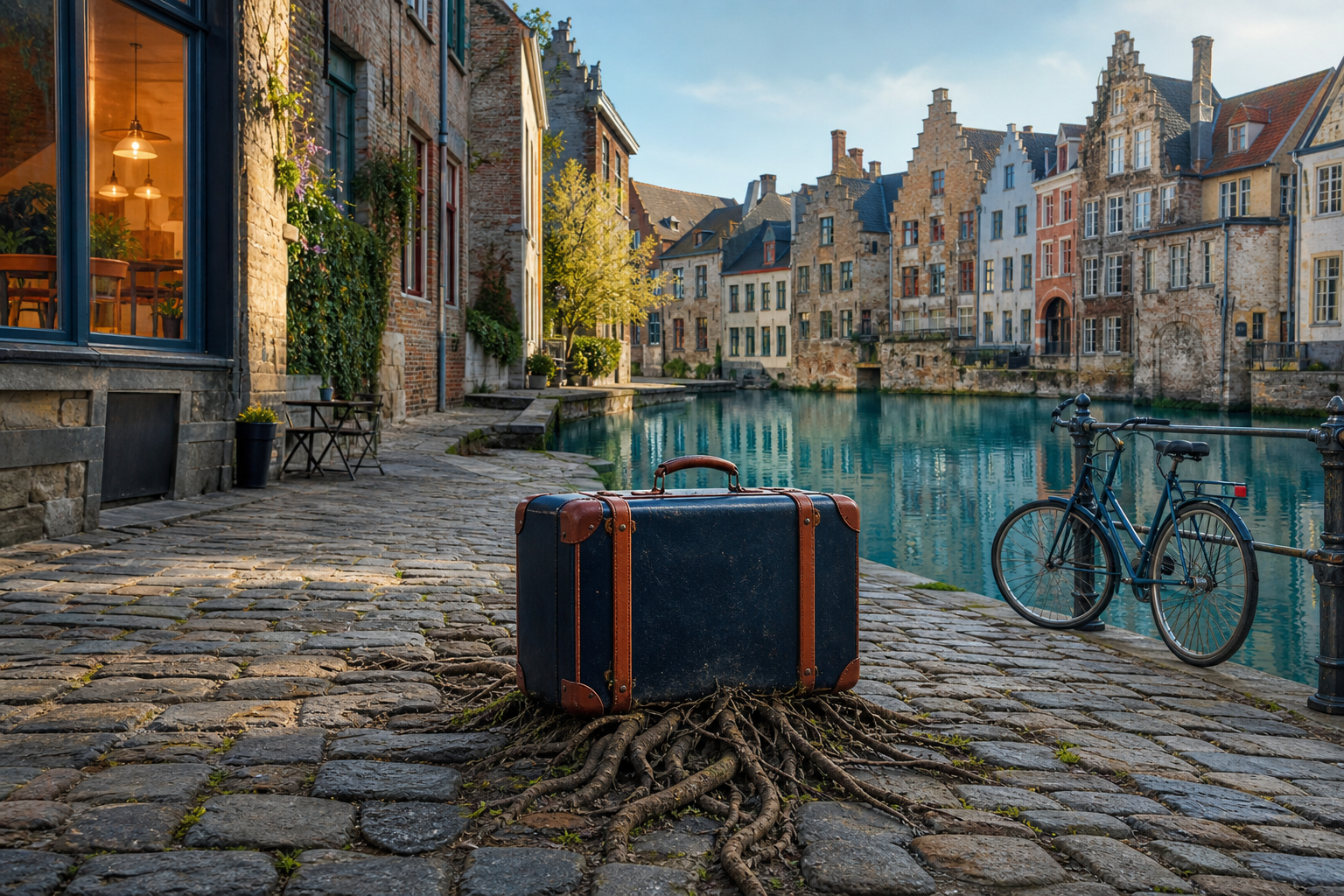
One real caveat: Ghent’s historic center cobblestones are brutal if you have any mobility limitations or if you’re pulling heavy luggage. This is not a city where rolling a suitcase is pleasant. Pack light or arrange to drop bags at your accommodation before you start walking.
Two Days Is the Right Amount
One day and you’ll leave feeling unfinished. Three days and you exhaust the first-tier list and start getting into deep-cut neighborhood wandering, which is fine but requires a different travel energy. Two nights, two full days is the configuration that actually does the city justice.
If you’re currently building a Belgium trip around Brussels plus Bruges, seriously consider swapping Bruges for Ghent. The visual language is mostly the same — medieval guild halls, water, Flemish Gothic — but Ghent hasn’t fully optimized itself around day-trippers. The Altarpiece alone would justify the train ticket. The question worth sitting with before you book: do you want a city that performs itself for visitors, or one that’s still busy doing something else?