
Batumi Gets Written Off Too Fast
View larger map | Map data © OpenStreetMap contributors
The standard Georgia itinerary runs Tbilisi, Kazbegi, maybe Kutaisi if someone’s done their research. Batumi shows up occasionally as a footnote — a beach town on the Black Sea coast, Soviet-era sanatoriums, casinos, done. That framing undersells it badly enough that it’s almost worth arguing the opposite: skip two days of Tbilisi and spend them here instead.
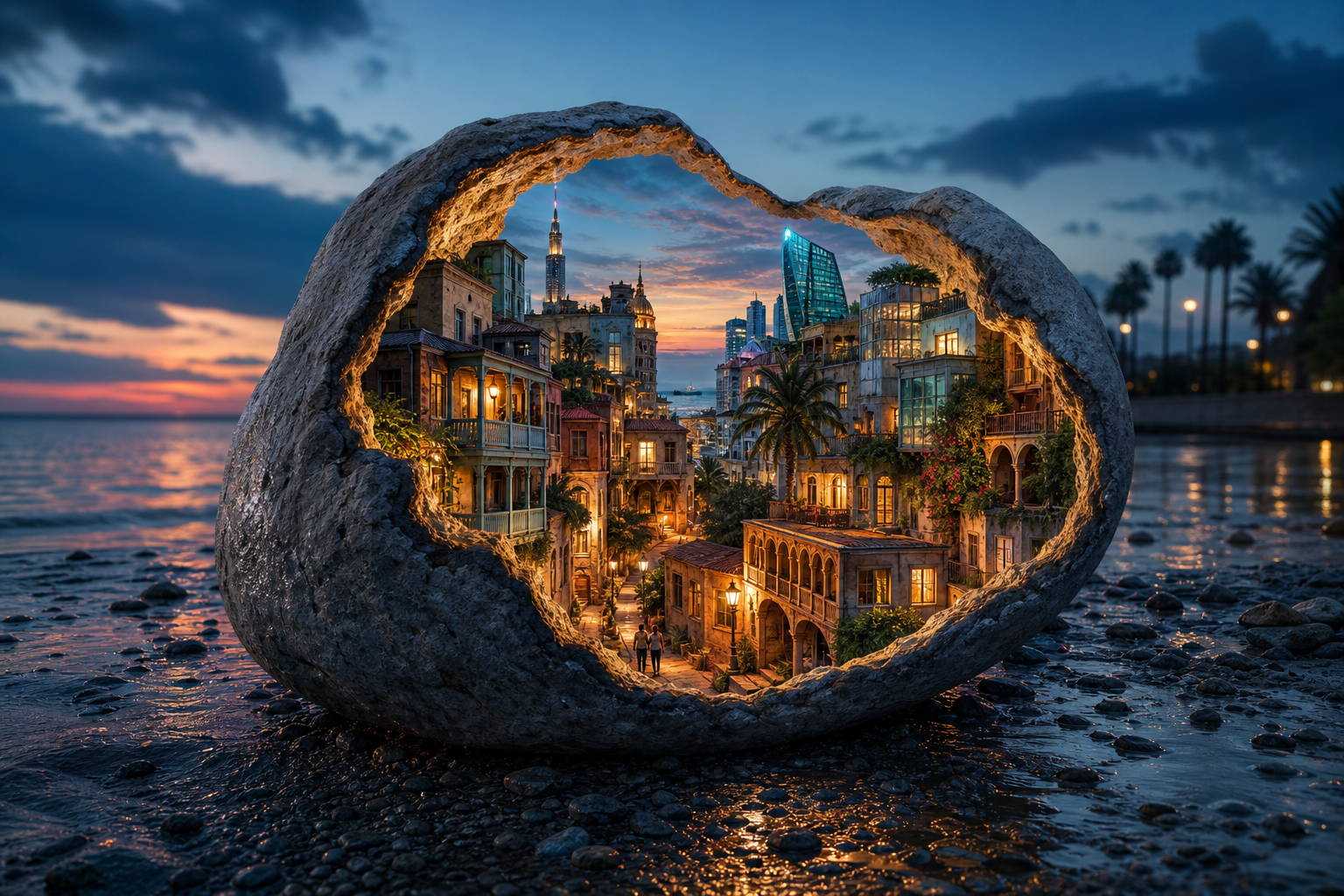
Not quite. But Batumi is genuinely its own thing, and it rewards a specific kind of traveler — one who likes dense, slightly strange cities where 19th-century European architecture sits three blocks from a hypermodern tower shaped like an astronomical sphere, and where the food is different enough from the Tbilisi canon that it actually warrants attention.
What Batumi Actually Is (Architecturally, It’s Bizarre in the Best Way)
The city sits in Adjara, an autonomous republic within Georgia, which explains why the culture tilts slightly differently — more Muslim influence historically, a wetter subtropical climate, and a distinct regional cuisine. The Black Sea coastline means it functions as a domestic resort for Georgians and for Turkish visitors crossing the nearby border, which gives it an energy unlike anywhere else in the Caucasus.
The Old Town is compact and genuinely walkable — Ottoman-era buildings mixed with Belle Époque architecture from the period when Batumi was a major oil export hub for the Russian Empire. The streets around Piazza Square (a slightly theatrical reproduction of an Italian piazza, but it works) are worth an unhurried morning. The real texture is in the residential streets just off the main grid, where crumbling wooden balconies stack above each other in a style common across Georgia but particularly concentrated here.
The Boulevard — a 6km seafront promenade — is the city’s spine, and worth walking end to end once just to understand the scale. It’s not a tourist attraction so much as where people actually go in the evenings. The Ferris wheel on the water becomes an unintentional centerpiece of every photo you take from that stretch.
Then there are the towers. Batumi had an aggressive construction period in the 2010s that produced a skyline belonging to a different city entirely: the Alphabet Tower, a twisted steel structure with Georgian script letters spiraling up it; the Radisson in a shape that genuinely resembles an eye; the astronomical sphere with a hotel inside it. None of it coheres. That’s precisely what makes it fascinating.
The Food Case Is Stronger Than People Realize
Adjaran cuisine isn’t identical to what you’ll eat in Tbilisi, and that distinction is worth seeking out. Adjaran khachapuri — the boat-shaped bread with egg and butter melted into molten cheese — is the version most people know from photographs. But it originates here, and eating it in Batumi at a proper local place rather than a tourist-facing spot in Tbilisi’s Sololaki neighborhood is a meaningful difference. The bread is fresher, the cheese sharper, the butter ratio actually correct.
The Bazar near the port is where to spend an hour before figuring out where to eat. The produce is subtropical in a way that’s genuinely different from anywhere else in Georgia — persimmons, feijoa, local hazelnuts. The vendors are less performative about tourists than Tbilisi’s Dezerter Bazaar has become.
For restaurants: skip anything within 200 meters of the Piazza Square fountains that has a printed multi-language menu displayed outside. The better places are a five-minute walk inland, smaller, and often only have menus in Georgian. Google Translate’s camera function gets you most of the way there.
The Practical Logistics
The overnight train from Tbilisi to Batumi is the right call if you have the time — it departs around 8pm, arrives around 7am, costs very little, and you show up having slept rather than burned a day to transit. Book ahead through the Georgian Railways site; compartment berths sell out faster than you’d expect on summer weekends. The daytime marshrutka is faster (around five hours) and cheaper still, but it’s a marshrutka — no guaranteed seat, crammed in, and the Adjara mountain highway has enough switchbacks that the last stretch gets unpleasant if you’re prone to motion sickness.
Two full days is the minimum that makes the trip feel worth the effort. Three days is the better version: Old Town and the Boulevard on day one, the Botanical Garden on day two (genuinely large and genuinely good — not a tourist-trap garden), and either a day trip to the mountain village of Khulo or a slow market morning followed by a beach afternoon on day three, depending on your tolerance for packed minibuses on mountain roads.
June through September is peak season and the Black Sea coast gets legitimately hot and crowded with domestic tourists. May and October are meaningfully quieter — the sea is still swimmable into early October — and accommodation prices drop noticeably. Batumi receives more rainfall than anywhere else in Georgia by a significant margin, so building a rain day into the plan isn’t overcautious, it’s just realistic. The covered market and the smaller churchkhela and wine shops in the Old Town are solid default options when the weather doesn’t cooperate.
One Honest Caveat
Parts of Batumi feel unfinished in a specific post-boom way — construction projects from the 2010s that were never completed, casino strips aggressively lit and at odds with the Ottoman streetscape around them, beachfront stretches that are more infrastructure than atmosphere. If you’re arriving with expectations shaped by Tbilisi’s visual consistency, Batumi will occasionally underdeliver on coherence. That incoherence is actually part of what makes it interesting, but it’s not what everyone wants from a short trip.
It’s also not a city for people who need obvious highlights to tick. What makes it worth visiting is more diffuse — the architectural collision, the regional food, the Black Sea light in the evening, the particular strangeness of a city still figuring out what it wants to be.
Getting the Hotel Right
Stay in or directly adjacent to the Old Town if you have a choice. The Boulevard-facing hotels are more expensive and the location sounds better than it functions — you’re far from the streets where actual city life happens. The Old Town puts you within walking distance of everything that matters and five minutes from the market. Boutique guesthouses in restored 19th-century buildings exist in the €40–80/night range even in season, and they’re a significantly better version of the city than the tower hotels on the waterfront.
For the broader Georgia trip: Batumi works best as an endpoint, not a starting point. Fly into Tbilisi, spend your main time there, take the overnight train west, give Batumi two or three days, then either fly home from Batumi’s small but functional airport or cross into Turkey at the Sarpi border if the trip continues. That sequencing means you’re moving toward something rather than backtracking — and the overnight train feels like a natural gear change between the two cities rather than just a logistics problem to solve.