
Tallinn Beyond the Cruise Ship Hours
View larger map | Map data © OpenStreetMap contributors
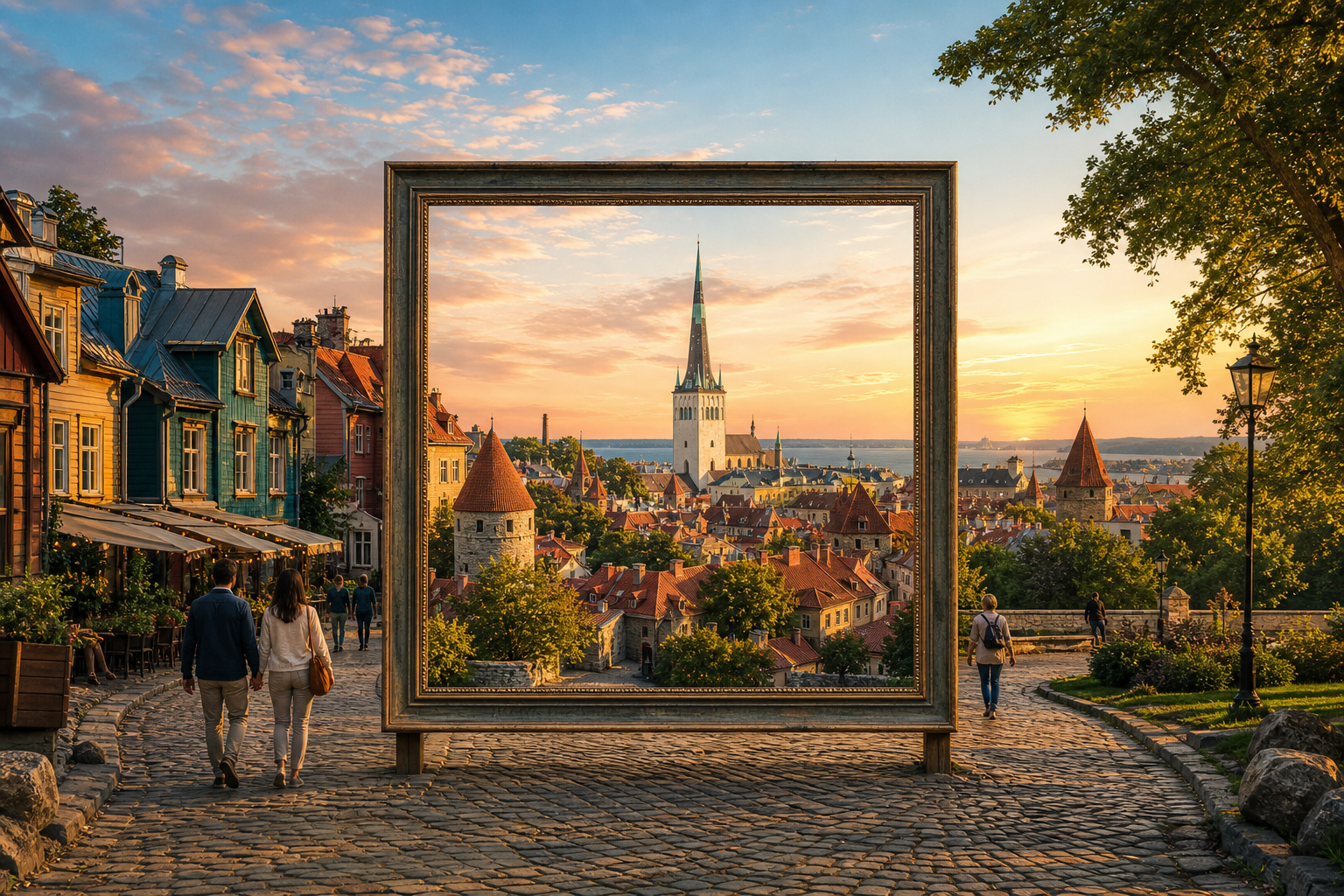
Most people who visit Tallinn spend about six hours there. They arrive on a cruise ship or a morning bus from Helsinki, walk from the port to Toompea Hill, take photos of the terracotta rooftops from the viewing platform, eat something in the Old Town, and leave before dinner. The Old Town is genuinely one of the best-preserved medieval city centres in Europe — UNESCO listed, impressively intact, not a reconstruction — so the instinct to see it makes sense. Doing only that and leaving is the mistake.
Tallinn is a two-night city, minimum. Here’s how to actually use that time.
The Old Town: Yes, But with Timing
The historic centre — Vanalinn in Estonian — divides into two levels: the upper town (Toompea), where the castle and parliament are, and the lower town, which is where the merchant houses, guild buildings, and most of the streets people photograph are located. The two are connected by a handful of steep narrow passages.
Toompea’s viewing platforms at Kohtuotsa and Patkuli fill up by 10am in summer and stay busy until late afternoon. Go at 8am or after 6pm. The view doesn’t change; the crowd density does. The lower town’s main square, Raekoja plats, follows the same pattern — the restaurant terraces around it are genuinely nice places to sit, but the prices are calibrated to cruise traffic. Eating one street back from the square cuts the bill without meaningfully reducing the atmosphere.
The Church of St Olaf — Oleviste kirik — has a tower you can climb for what is actually a better view of the Old Town than either official platform, because you’re looking across rooftops rather than down from above them. Worth the few euros and the very narrow spiral staircase.
The Parts Most Itineraries Don’t Reach
Kalamaja is the neighbourhood immediately northwest of the port, and it’s where you actually understand what Tallinn has become over the last decade. It was a Soviet-era working-class district — timber houses, a quiet grid, nothing remarkable. It’s now the city’s most interesting neighbourhood to walk: independent coffee shops, a genuine food market at Balti jaam (the main rail station, immediately adjacent), street art that doesn’t try too hard, and the Telliskivi Creative City, a former factory complex turned into market stalls, studios, and food vendors. Telliskivi is not undiscovered, but it’s also not on the six-hour cruise itinerary.
Balti jaam market deserves a morning on its own. It’s part indoor, part outdoor, sells everything from Soviet-era kitchenware to good rye bread, and has a food stall section that’s a better lunch than anything in the Old Town at a fraction of the price. Go on a Saturday if you can — the outdoor stalls are fuller.
The Kadriorg neighbourhood — about 2km east of the Old Town along Narva maantee — has the park and palace Peter the Great built after taking Tallinn from the Swedes in 1710. The palace now houses the foreign art museum, which is fine but skippable if museums aren’t your focus. The park is worth the walk regardless. The KUMU art museum at the top of the park is Estonia’s main contemporary art institution and worth a half-day if that’s your interest — the building itself is genuinely good architecture.
Getting the Logistics Right
Tallinn’s Old Town is walkable from the port in about fifteen minutes; from most city-centre hotels, similar. You don’t need a car or taxi for anything in the central areas. The tram network is useful for reaching Kadriorg without walking — tram 1 or 3 from the Old Town area gets you there in about ten minutes.
The Helsinki ferry crosses the Gulf of Finland in two to two-and-a-half hours (Tallink and Viking Line both run it multiple times daily). That makes a Tallinn–Helsinki combination genuinely easy to build into a broader Scandinavia or Baltics trip without backtracking. The ferry terminal sits right at the edge of the Old Town, so you’re not losing time on transfers at either end.
Riga and Vilnius are both reachable by Lux Express bus — Riga is around four and a half hours, Vilnius closer to six. The bus is comfortable enough and far cheaper than flying. One honest caveat on the full Baltic sweep: doing Tallinn, Riga, and Vilnius in a single week means covering a lot of ground fast, and none of them rewards that pace. Tallinn plus one other Baltic capital is a more realistic anchor for two weeks than all three rushed.
When to Go
June through August is peak season — cruise ship traffic is heaviest in July and early August, and the Old Town shows it. The tradeoff is genuinely long days (Tallinn sits at 59 degrees north, so midsummer evenings stretch past 10pm) and the best weather for sitting outdoors. May and September are the stronger months if you have flexibility: fewer cruise ships, still decent temperatures, same city with a fraction of the foot traffic.
Winter is cold — January averages around -4°C — but Tallinn runs a Christmas market in the Old Town with records going back to the 1440s. That’s not a tourism board claim; it shows up in the city’s medieval merchant records. The market is small and not aggressively commercialized by European standards. If that window fits your schedule, it’s worth factoring in.
Where to Eat Beyond the Square
Old Town restaurants are aimed almost entirely at visitors — not aggressively bad, but overpriced for what they are. The better eating is in Kalamaja and Telliskivi, or in the Estonian-focused places that have opened in recent years leaning on local ingredients rather than a generic European menu.
Black bread — must leib in Estonian — is worth seeking out fresh. It’s denser and more sour than most rye bread you’ll find elsewhere, and Balti jaam market is the most reliable place to get a good version. The same goes for dairy: Estonian kefir and cultured milk products are cheap, ubiquitous, and considerably better than the packaging suggests.
One thing worth being straight about: Tallinn’s restaurant scene has improved noticeably, but it hasn’t become a food destination the way Riga or Helsinki have for some travellers. The city rewards curiosity and walking slightly off the main paths, but if serious dining is the primary goal, you’ll find the city working against you more than with you.
Two nights gives you enough time to see the Old Town properly — which means not just Toompea and the main square, but the back streets around Katariina käik and the Dominican Monastery courtyard — and still spend a morning in Kalamaja without rushing. If you’re already routing through the Baltics, arrive a day earlier than you’d planned.